
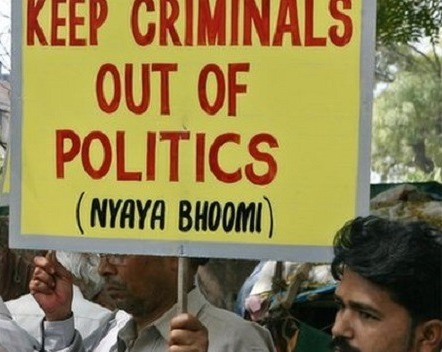
Supreme Court Reaffirms Disclosure of Criminal Records in Elections
Transparency in Candidate Backgrounds Strengthened
Voters’ Right to Know Prevails Over Secrecy
By Legal Reporter
New Delhi: June 16, 2026:
The Supreme Court of India has consistently emphasised the importance of transparency in electoral processes, particularly regarding candidates’ criminal records. The recent spotlight on Meenakshi Natarajan’s case has reignited debate on the disclosure obligations of candidates under the Representation of the People Act, 1951 (RPA) and judicial precedents. This article analyses the legal framework, judicial interventions, and implications for democratic accountability.
Case Background
Candidate Profile: Meenakshi Natarajan, a Congress politician, faced scrutiny over disclosure of criminal cases.
Issue Raised: Whether candidates must disclose all pending criminal cases, including minor or politically motivated ones.
Judicial Context: Supreme Court has repeatedly ruled that voters have a fundamental right to know candidates’ backgrounds.
Key Legal Issues
Disclosure under RPA
Section 33A mandates disclosure of criminal antecedents at the time of nomination.
Candidates must declare pending charges where cognizance has been taken by a court.
Right to Know (Article 19(1)(a))
Supreme Court in Union of India v. Association for Democratic Reforms (2002) held that voters’ right to know is part of freedom of speech and expression.
Affidavit Requirements
Candidates must file affidavits detailing criminal cases, assets, liabilities, and educational qualifications.
Non-disclosure amounts to misrepresentation and can lead to disqualification.
Court’s Observations
Transparency is Non-Negotiable: Voters must have access to full information to make informed choices.
No Distinction Between Minor and Major Cases: All pending criminal cases must be disclosed.
Deterrence Against Criminalisation of Politics: Disclosure acts as a check on candidates with serious charges.
Relevant Laws and Precedents
Representation of the People Act, 1951
Section 33A: Disclosure of criminal antecedents.
Section 125A: Penalty for false statements in affidavits.
Supreme Court Judgments
ADR Case (2002): Voters’ right to know recognised.
PUCL v. Union of India (2003): Upheld disclosure requirements.
Lily Thomas v. Union of India (2013): Immediate disqualification upon conviction.
Public Interest Foundation v. Union of India (2018): Directed political parties to publish criminal records of candidates.
Wider Implications
For Candidates: Mandatory disclosure of all criminal cases, irrespective of severity.
For Political Parties: Duty to publicise candidates’ criminal backgrounds on websites and media.
For Voters: Enhanced ability to make informed electoral choices.
For Democracy: Strengthens accountability and reduces criminalisation of politics.
Comparative Perspective
India: Mandatory disclosure under RPA; judicially enforced.
US: Criminal records often public; disclosure varies by state.
UK: Candidates must disclose disqualifying convictions; transparency mechanisms exist.
Inference: India’s judiciary-driven disclosure regime is among the strongest globally.
Conclusion
The Supreme Court’s consistent stance on disclosure of criminal records is a cornerstone of electoral transparency. The Meenakshi Natarajan case illustrates the judiciary’s determination to uphold voters’ right to know, reinforcing democratic accountability. While challenges remain in enforcement, the legal framework ensures that secrecy cannot shield candidates from scrutiny.
FAQs (Searchable Index Format)
1. What does Section 33A of RPA require?
It mandates disclosure of criminal antecedents, including pending cases where cognizance has been taken.
2. What happens if a candidate fails to disclose?
Non-disclosure can lead to disqualification and penalties under Section 125A of RPA.
3. Is voters’ right to know a fundamental right?
Yes. The Supreme Court held it is part of freedom of speech under Article 19(1)(a).
4. Do minor cases need to be disclosed?
Yes. All pending criminal cases must be disclosed, regardless of severity.
5. What affidavits must candidates file?
Details of criminal cases, assets, liabilities, and educational qualifications.
6. What role do political parties play?
They must publicise candidates’ criminal records on websites and media platforms.
7. Which landmark case established disclosure obligations?
Union of India v. Association for Democratic Reforms (2002).
8. What did the Lily Thomas case decide?
Immediate disqualification upon conviction of a legislator.
9. How does India compare globally?
India has one of the strongest disclosure regimes, judicially enforced.
10. What is the broader impact of disclosure?
It deters criminalisation of politics and empowers voters to make informed choices.