
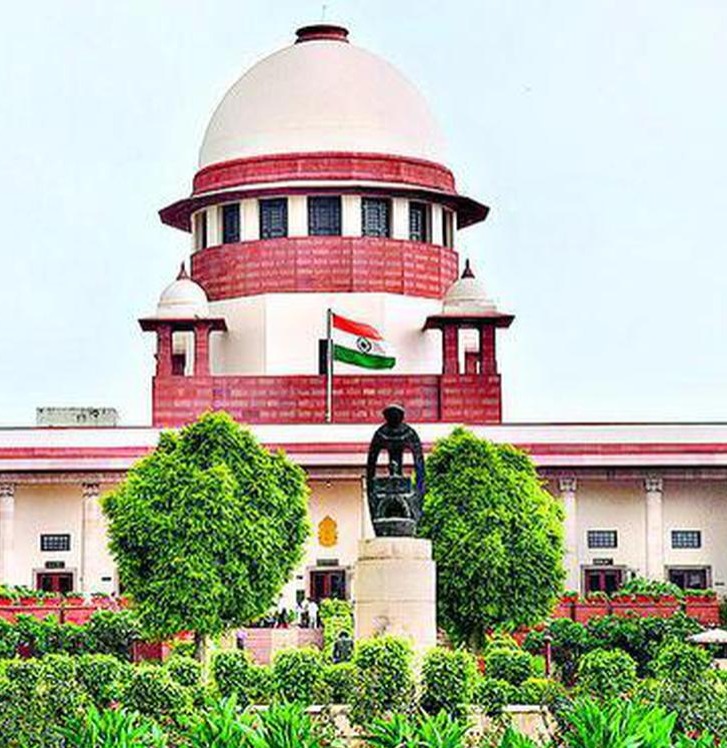
Supreme Court Warns Against Threats to Judges
“No Judge Will Be Able to Pass a Judgment”
Attacks on Justice GS Patel’s Family Spark National Concern
By Legal Reporter
New Delhi: June 10, 2026:
The Supreme Court of India has strongly condemned the threats and attacks on retired Bombay High Court judge Justice Gautam S. Patel and his family, warning that such intimidation undermines judicial independence and the administration of justice. The Court’s remarks came while hearing a bail plea in a related case, underscoring the urgent need to protect judges and their families from coercion.
Background of the Case
- Incident: Justice Gautam Patel, who retired in April 2024, delivered a landmark judgment in the Dawoodi Bohra succession dispute. Since then, he and his family have faced sustained threats and violence across India and the UK.
- Recent Developments:
- His daughter in London was physically assaulted in April 2026.
- Threatening letters demanded that Patel recant his judgment via a YouTube video.
- UK police have provided security to his family. Hindustan Times Hindustan Times Moneylife
- Supreme Court’s Intervention: While hearing a bail plea of an accused who attacked a magistrate’s residence in Madhya Pradesh, the Court linked the incident to broader intimidation of judges, citing Patel’s case.
Key Legal Principles Discussed
1. Judicial Independence
- Protected under Article 50 of the Indian Constitution (separation of judiciary from executive).
- Threats to judges’ compromise impartiality and undermine the rule of law.
- The Court emphasized that intimidation prevents judges from discharging duties fearlessly.
2. Contempt of Court
- Attacks on judges and their families may amount to criminal contempt under the Contempt of Courts Act, 1971.
- Contempt includes acts that scandalize or lower the authority of the court, or obstruct justice.
3. Criminal Law Provisions
- Threats and violence against judges fall under:
- Sections 186 & 189 IPC – Obstructing public servant in discharge of duty, threatening public servant.
- Section 353 IPC – Assault or criminal force to deter public servant.
- Section 506 IPC – Criminal intimidation.
4. International Dimension
- UK police treating the assault on Patel’s daughter as a terrorist incident.
- Highlights cross-border implications of judicial intimidation.
Broader Implications
For Judiciary
- Reinforces need for institutional safeguards for judges post-retirement.
- Judicial independence cannot survive if judges fear retaliation.
For Legal Fraternity
- Bombay Bar Association condemned the threats, calling them an assault on rule of law.
For Society
- Public trust in judiciary depends on judges’ ability to decide cases without fear.
- Threats linked to religious or community disputes pose risks to social harmony.
Frequently Asked Questions (FAQ)
Q1: Why is judicial independence important?
It ensures judges decide cases impartially, free from external pressure or intimidation.
Q2: Can threats to judges be prosecuted?
Yes. Under IPC Sections 186, 189, 353, and 506, such acts are punishable.
Q3: What is contempt of court in this context?
Threatening or attacking judges amounts to criminal contempt as it obstructs justice.
Q4: Why did Justice Patel face threats?
His 2024 judgment in the Dawoodi Bohra succession dispute angered certain factions.
Q5: Can retired judges be protected by law?
Yes. Though retired, they remain vulnerable; police protection can be extended.
Q6: How did the Supreme Court respond?
It warned that intimidation would prevent judges from delivering judgments, undermining justice.
Q7: What role did UK authorities play?
UK police provided security and treated the assault on Patel’s daughter as a terrorist incident.
Conclusion
The Supreme Court’s remarks highlight a grave challenge: judicial independence is under siege when judges and their families face threats for their rulings. The attacks on Justice Gautam Patel’s family underscore the need for stronger legal and institutional safeguards. Protecting judges is not just about individual safety—it is about preserving the integrity of India’s justice system.