
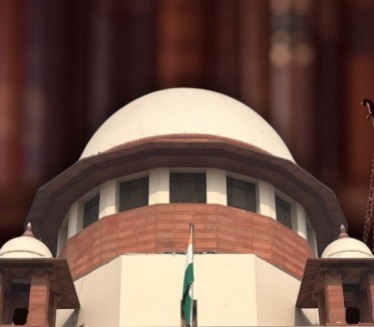
Sanctity of Court Time: Supreme Court Slams Misuse of Judicial Forum and Misconduct
Fiduciary Duties, Privilege Breaches, and Escalating Costs for Wasteful Litigation
Supreme Court Rebukes Abuse of Legal Process, Reaffirming Judicial Integrity and Attorney-Client Confidentiality
By Legal Editor
New Delhi: August 22, 2026:
The Supreme Court of India in issued a severe indictment against the misuse of judicial time for personal disputes and public relations battles. The Division Bench, comprising Justice Vikram Nath and Justice Sandeep Mehta, delivered a unanimous judgment dismissing Civil Appeal No. 12256/2025, Civil Appeal No. 7959/2026, and Transfer Case No. 30/2026. Finding both the appellant, actress Rehana Khan (alias Rozlyn Khan), and the respondent, advocate Rizwan Siddiquee, guilty of material suppression, embellishment, and clean-hands doctrine violations, the apex court imposed ₹5 lakh in exemplary costs on each party. The ordered sums are payable to the Supreme Court Legal Services Committee within four weeks, subject to recovery under civil execution law upon default.
1. Architectural Blueprint of the Legal Framework
To fully comprehend the Supreme Court’s critical ruling in , one must examine the legal statutes governing legal ethics, privilege, and judicial administration in India:
Section 35, Advocates Act, 1961: Empowers the State Bar Councils and the Bar Council of India (BCI) to initiate disciplinary proceedings against an advocate upon receiving a complaint or suo motu when there is reason to believe that an advocate has been guilty of "professional or other misconduct." Statutory remedies range from reprimand and temporary suspension from practice to permanent removal from the roll of advocates.
Section 126, Indian Evidence Act, 1872: Forms the bedrock of legal professional privilege in Indian jurisprudence. It explicitly bars any barrister, attorney, pleader, or vakil from disclosing any communication made to them in the course of and for the purpose of their employment or stating the contents or conditions of any document with which they have become acquainted in the course of professional employment, unless express client consent is granted.
Rule 17, Chapter II, Part VI, Bar Council of India Rules: Reinforces the statutory command of Section 126 by stating that an advocate shall not commit any breach of the obligations imposed by the Indian Evidence Act. Ethical duties dictate that this prohibition endures even after the attorney-client relationship terminates or transforms into an adversarial dynamic.
The Clean Hands Doctrine: A foundational principle of equitable jurisprudence and writ jurisdiction holding that a litigant who seeks judicial remedies must come to court with clean hands, presenting full, frank, and untainted disclosures without suppressions, falsehoods, or post-facto fabrications.
2. Comprehensive Case Analysis: Chronology, Disciplinary Action, and Judicial Findings
The origins of this eleven-year saga date back to a complaint lodged by actress Rehana Khan under Section 35 of the Advocates Act, 1961, against Mumbai-based advocate Rizwan Siddiquee. Khan alleged that Siddiquee breached his fiduciary duty by disclosing confidential client details to media outlets, issuing public notices without her consent, and issuing derogatory press statements.
Upon reviewing the evidence, the Disciplinary Committee of the Bar Council of India found Advocate Siddiquee guilty of severe professional misconduct. The BCI ordered a two-year suspension of his law license alongside monetary directions compelling him to pay ₹3 lakh in compensation to the complainant and ₹2 lakh to the Bar Council. Subsequent challenges were filed before the High Court and ultimately escalated to the Supreme Court of India.
In evaluating the arguments, Justice Vikram Nath and Justice Sandeep Mehta highlighted that neither party presented their case candidly. The bench noted:
"It is sometimes said that in a trial the parties already know the truth and it is the judge on trial... Before us are two litigants, each of whom have approached the court in the confident expectation of vindication, and neither of whom has been candid with it. Every fact of consequence has had to be prised out of a record in which suppression, embellishment and afterthought are the common currency of both sides. The machinery of justice is not a facility placed at the disposal of parties to settle scores, to salvage reputations they themselves imperilled, or to extract advantage from a controversy of their own making."
The court emphasized that judicial time is a scarce public resource designated for litigants seeking genuine and timely intervention. Depriving genuine litigants of court resources to facilitate personal rivalries or media strategies constitutes a clear abuse of process.
Following the oral pronouncement of the judgment, counsel appearing for one of the parties requested that the court redact the names of the litigants from the published judgment. Refusing the plea outright, Justice Vikram Nath remarked that parties who actively wage public battles and give interviews on social media throughout a dispute cannot retroactively seek privacy protection or name redaction in official court orders.
3. Judicial Policy on Court Time, Public Ethics, and Systemic Integrity
The judgment in establishes key guidelines on court management, professional accountability, and digital media usage by officers of the court:
Preservation of Judicial Resources: Courts are not private resolution centers for personal feuds. The consumption of 11 years of court bandwidth across three tiers of the judicial system for reputation management damages the system's ability to deliver timely remedies to bona fide litigants.
Absolute Non-Negotiability of Client Confidentiality: An advocate's duty under Section 126 of the Evidence Act is absolute. Even when a client becomes hostile or initiates legal proceedings against their lawyer, the lawyer is legally prohibited from breaching client privilege or resorting to media disclosures.
Equitable Estoppel Regarding Privacy Claims: Litigants and legal counsel who take their disputes to social media and news broadcasts forfeit any equitable claim to name redaction or court anonymity.
Searchable Legal Index & Frequently Asked Questions
Index Categories
[ADV-01] Advocates Act, Disciplinary Oversight & Misconduct Standards
[PRIV-02] Legal Professional Privilege & Confidentiality Obligations
[EQU-03] Judicial Time Management & Clean Hands Doctrine
[COST-04] Exemplary Costs, Execution Mechanisms & Privacy Redactions
[ADV-01] Advocates Act, Disciplinary Oversight & Misconduct Standards
Q1: What constitutes professional misconduct under Section 35 of the Advocates Act, 1961?
Answer: Professional misconduct encompasses actions that violate the ethical codes established by the Bar Council of India. Key violations include breaches of fiduciary trust, disclosing client secrets, creating conflict of interest, making illegal public statements, and engaging in conduct that undermines the dignity of the court or administration of justice.
Q2: What is the statutory procedure and appellate hierarchy for lawyer misconduct complaints?
Answer: Misconduct complaints are initially examined by the Disciplinary Committee of the State Bar Council under Section 35. If the complaint is transferred or appealed, it goes to the Disciplinary Committee of the Bar Council of India under Section 36 or 37. Final statutory appeals are heard directly by the Supreme Court of India under Section 38 of the Advocates Act.
Q3: Can an advocate be suspended from practice while financial penalties are imposed simultaneously?
Answer: Yes. Under Section 35(3) of the Advocates Act, the Disciplinary Committee possesses broad powers to suspend an advocate from practice for a specified period, reprimand them, remove their name from the roll, or order restitution and financial costs.
Q4: How does the Bar Council of India enforce ethical compliance across state lines?
Answer: The Bar Council of India functions as the apex regulatory body governing the legal profession in India. It establishes uniform rules under Part VI of the BCI Rules, oversees State Bar Councils, and exercises statutory appellate authority over state-level disciplinary orders.
[PRIV-02] Legal Professional Privilege & Confidentiality Obligations
Q5: Does an advocate's duty of confidentiality continue after the professional relationship ends?
Answer: Yes. Under Section 126 of the Indian Evidence Act, 1872 and Rule 17, Chapter II, Part VI of the Bar Council of India Rules, an advocate's duty to maintain client confidences continues indefinitely. It survives the termination of employment and applies even if the client becomes hostile or an adversary in subsequent litigation.
Q6: What are the statutory exceptions to attorney-client privilege in India?
Answer: Section 126 contains two explicit exceptions:
Communications made in furtherance of any illegal purpose.
Any fact observed by an advocate in the course of employment showing that a crime or fraud has been committed since the commencement of their engagement.
Q7: Is an advocate permitted to issue public notices or press releases containing client confidences?
Answer: No. Issuing press releases, media notes, or public notices containing confidential client disclosures without explicit, written consent violates Section 126 of the Evidence Act and constitutes actionable professional misconduct under the Advocates Act.
Q8: What civil or regulatory remedies does a client have if their advocate breaches privilege?
Answer: A client can file a disciplinary complaint under Section 35 of the Advocates Act, seek damages for breach of fiduciary duty in civil court, initiate criminal proceedings under privacy and defamation laws where applicable, or request injunctive relief to restrain further unauthorized disclosures.
[EQU-03] Judicial Time Management & Clean Hands Doctrine
Q9: What is the "Clean Hands Doctrine" and how is it applied by the Supreme Court?
Answer: The Clean Hands Doctrine is a principle of equity requiring litigants seeking relief to act with complete honesty and transparency. If a party suppresses material facts, exaggerates claims, or presents fabricated arguments, the court may dismiss their case under this doctrine regardless of its underlying merits.
Q10: Why does the Supreme Court view the wasting of judicial time as a public wrong?
Answer: Judicial time is a limited public resource. When litigants drag out trivial disputes or use courts to settle personal feuds, they consume bandwidth that would otherwise be used to resolve urgent cases for bona fide litigants, contributing to case backlogs.
Q11: What constitutes "material suppression" during court proceedings?
Answer: Material suppression occurs when a litigant intentionally omits, conceals, or misrepresents crucial facts, documents, or prior proceedings that could influence the court's judgment or the outcome of the dispute.
Q12: How do courts distinguish between genuine legal disputes and personal vendettas?
Answer: Courts evaluate the record for evidence of clean hands, consistent pleadings, candid disclosures, and proportional claims. Where the record demonstrates post-facto fabrications, media-driven posturing, and suppression of facts, courts classify the litigation as a personal vendetta or abuse of process.
[COST-04] Exemplary Costs, Execution Mechanisms & Privacy Redactions
Q13: How are exemplary costs enforced if a litigant fails to pay within the court's deadline?
Answer: When the Supreme Court orders costs payable to entities like the Supreme Court Legal Services Committee, failure to deposit the amount within the specified timeframe triggers recovery proceedings under civil execution laws. This can include attaching assets, wage garnishment, or executing decree warrants through the appropriate trial court or district collector.
Q14: Under what conditions will the Supreme Court grant a request for name redaction in reported judgments?
Answer: Name redaction is an extraordinary remedy typically reserved for sensitive matters involving sexual assault victims, minors, matrimonial privacy, or sensitive national security issues. It is not granted to litigants who have previously publicized their dispute across news outlets and social media platforms.
Q15: What authority do courts have to penalize both the appellant and the respondent in a single matter?
Answer: Supreme Court powers under Article 142 of the Constitution of India, combined with provisions of the Code of Civil Procedure (such as Section 35A), allow the court to pass orders and impose punitive costs on both sides to ensure complete justice and penalize shared abuse of court processes.
Q16: Can appellate courts overturn lower disciplinary findings while increasing financial penalties?
Answer: Yes. Appellate courts, including the Supreme Court under Section 38 of the Advocates Act, can affirm the underlying findings of misconduct while modifying, increasing, or supplementing financial costs and directions to address bad faith or prolonged litigation.
Case Dimension — Strategic Detail & Legal Outcome
Case Title & Citation — Rehana Khan v. Rizwan Siddiquee (C.A. No. 12256/2025) & Rizwan Siddiquee v. Rehana Khan (C.A. No. 7959/2026)
Presiding Bench — Justice Vikram Nath and Justice Sandeep Mehta
Duration of Dispute — 11 years spanning the Bar Council of India, High Court, and Supreme Court
Core Allegations — Unauthorized disclosure of confidential client information to news media, unilateral public notices, and derogatory public remarks
BCI Disciplinary Order — Professional misconduct under Section 35; 2-year license suspension; ₹3 lakh payable to client; ₹2 lakh payable to BCI
Supreme Court Disposition — Upheld impugned BCI order; dismissed appeals and transfer case; imposed ₹5 lakh costs on both sides; denied oral plea for name redaction