
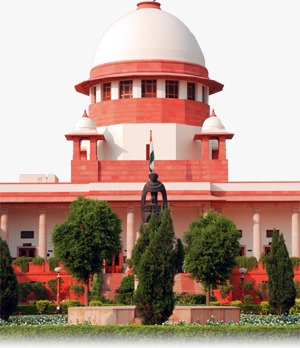
Fresh Start for Decree Execution: Supreme Court Expands Limitation Window
Appeal Dismissal Resets the Clock
Execution Petitions Gain New Leverage
By Legal Reporter
New Delhi: April 08, 2026:
The Supreme Court of India has clarified a crucial aspect of civil procedure law: dismissal of an appeal provides a fresh starting point for the limitation period to execute a decree. This ruling strengthens decree holders’ rights and ensures that procedural delays do not extinguish substantive entitlements.
For a detailed analysis of probate and testamentary law, refer to this landmark Supreme Court judgment on wills and probate law in India in the case of Clarence Pais and Others vs Union of India, which discusses crucial principles governing probate proceedings and validity of wills.
Background: Limitation in Execution of Decrees
- Under the Limitation Act, 1963, execution of a civil decree must be filed within 12 years from the date the decree becomes enforceable.
- A common question arises: does the limitation period restart if an appeal against the decree is dismissed?
- The Court has now affirmed that dismissal of an appeal indeed resets the limitation clock, giving decree holders a new opportunity to enforce their rights.
Key Legal Provisions Discussed
- Limitation Act, 1963 – Article 136
- Provides a 12‑year period for execution of decrees.
- The period begins when the decree becomes enforceable.
- Civil Procedure Code (CPC), 1908 – Appeals Framework
- Appeals are considered a continuation of the original proceedings.
- Dismissal of an appeal finalizes the decree, making it executable afresh.
- Judicial Precedents
- Earlier rulings had created ambiguity on whether limitation restarts after appeal dismissal.
- The present judgment resolves this by affirming a fresh limitation period, aligning with principles of justice.
Court’s Reasoning
- Appeal as Continuation: The Court reiterated that an appeal is not a separate proceeding but an extension of the original suit.
- Finality of Decree: When an appeal is dismissed, the decree attains finality at that point.
- Fresh Limitation Period: Therefore, the limitation period for execution begins anew from the date of appeal dismissal.
Implications of the Ruling
- For Decree Holders:
- Provides extended time to enforce decrees.
- Prevents injustice caused by prolonged appellate litigation.
- For Judgment Debtors:
- Increases exposure to execution proceedings.
- Limits the strategy of delaying appeals to exhaust limitation periods.
- For Courts:
- Clarifies procedural ambiguities, reducing litigation over limitation disputes.
- Ensures smoother execution processes.
[RECOMMENDED RESEARCH RESOURCES]
📘 Legal professionals and students alike will benefit from Will Writing Simplified, which covers procedure and case law in detail.
🔹 Buy on Amazon
🔹 Buy on Flipkart
Check all testamentary cases here. Click the link here: https://www.courtkutchehry.com/pages/blog/123-supreme-court-judgments-on-wills/
Broader Impact
This ruling balances fairness and efficiency. It recognizes that decree holders should not suffer due to appellate delays beyond their control. By resetting the limitation period, the Court ensures that substantive rights are preserved, while discouraging frivolous appeals intended merely to run down the clock.
FAQ: Supreme Court Ruling on Limitation Period
Q1. What is the limitation period for executing a decree?
Under Article 136 of the Limitation Act, 1963, the period is 12 years from the date the decree becomes enforceable.
Q2. Does filing an appeal affect the limitation period?
Yes. Since an appeal is a continuation of the original proceedings, the limitation period is recalculated once the appeal is decided.
Q3. What happens when an appeal is dismissed?
Dismissal of an appeal gives a fresh starting point for the limitation period to execute the decree.
Q4. Why did the Supreme Court allow a fresh limitation period?
To prevent decree holders from losing rights due to appellate delays and to uphold fairness in execution.
Q5. Does this benefit decree holders?
Yes. They gain additional time to enforce decrees, ensuring their rights are not extinguished prematurely.
Q6. How does this affect judgment debtors?
They remain liable for execution even after prolonged appeals, reducing the incentive to delay proceedings.
Q7. Which laws were discussed in the ruling?
The Limitation Act, 1963 (Article 136) and the Civil Procedure Code, 1908 (appeals framework).
Q8. Is this ruling consistent with past precedents?
It clarifies ambiguities in earlier rulings, firmly establishing that appeal dismissal resets limitation.
In summary: The Supreme Court’s ruling that appeal dismissal resets the limitation period for decree execution is a landmark clarification. It strengthens decree holders’ rights, discourages dilatory tactics, and ensures that substantive justice prevails over procedural technicalities. This decision will have far‑reaching implications for civil litigation and execution proceedings across India.