
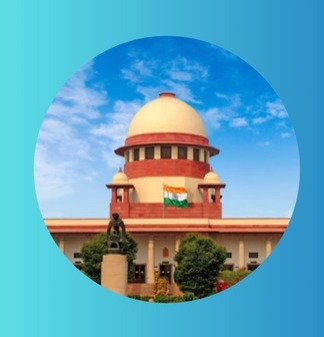
Supreme Court 2026: Cases That Could Redefine Indian Law
Online Gaming, Religious Freedom, and Electoral Integrity
Evictions, Judicial Accountability, and Data Rights
By Vishwas Kumar
New Delhi: May 26, 2026:
India’s Supreme Court in 2026 is set to hear landmark cases on online gaming regulation, anti-conversion laws, electoral roll revisions, and eviction disputes. These matters are among the most searched and debated legal topics, with implications for constitutional freedoms, digital governance, and public rights.
The Supreme Court judgment in Pushpavathi vs Chandraraja Kadamba is an important authority on proof of wills, inheritance disputes, and succession law in India. The Court discussed the legal standards for proving execution and attestation of testamentary documents, while emphasizing that suspicious circumstances surrounding a will must be satisfactorily explained before courts can accept its validity. This ruling is widely cited in probate proceedings, family property disputes, and litigation involving contested testamentary succession and inheritance rights.
Key Legal Issues
1. Online Gaming Regulation
- Law in Question: Promotion and Regulation of Online Gaming Act, 2025.
- Challenge: Whether Parliament can regulate skill-based games like rummy and poker as gambling.
- Impact: Could reshape India’s digital entertainment industry and taxation policies.
2. Anti-Conversion Laws
- States Involved: Uttar Pradesh, Madhya Pradesh, Gujarat, Uttarakhand, Haryana.
- Petitioners’ Argument: These laws interfere with religious freedom, privacy, and personal choice.
- Impact: A ruling could redefine the balance between state regulation and constitutional rights.
3. Electoral Roll Revision
- Issue: Alleged large-scale deletion of voters’ names during Election Commission’s Special Intensive Revision.
- Impact: Directly affects voting rights and electoral integrity.
4. Railways Land Eviction
- Case: Eviction of nearly 50,000 residents from Delhi’s Gafoor Basti and Dholak Basti.
- Impact: Balances property rights vs. human rights, with strong implications for urban housing law.
5. Judicial Accountability
- Case: Justice Yashwant Verma challenging a Lok Sabha Speaker-appointed probe into corruption allegations.
- Impact: Raises questions about separation of powers and judicial independence.
FAQs on Supreme Court 2026 Cases
Q1. Why is the Online Gaming Act under scrutiny?
Because companies argue skill-based games are not gambling, and Parliament may have exceeded its constitutional powers.
Q2. What is at stake in anti-conversion law challenges?
The right to religious freedom, privacy, and personal autonomy versus state interest in regulating conversions.
Q3. How does electoral roll revision affect citizens?
If voter names are wrongly deleted, it undermines the fundamental right to vote and electoral fairness.
Q4. What makes the railway eviction case significant?
It highlights the tension between government land use policies and the human cost of mass evictions.
Q5. Why is Justice Verma’s case unusual?
It questions whether Parliament can probe sitting judges, raising concerns about judicial independence.
Q6. How do these cases affect everyday citizens?
They touch on digital rights, religious freedoms, housing security, and voting rights—all core to democratic life.
Q7. Could these rulings have global relevance?
Yes. India’s handling of online gaming, privacy, and religious freedom will influence international investors and human rights discourse.
Conclusion
The Supreme Court’s 2026 docket is one of the most consequential in recent years. From regulating online gaming to protecting religious freedom and electoral rights, these cases will reshape India’s constitutional landscape. For law graduates and practitioners, following these developments offers deep insights into emerging areas of practice—digital law, constitutional litigation, and human rights advocacy.