
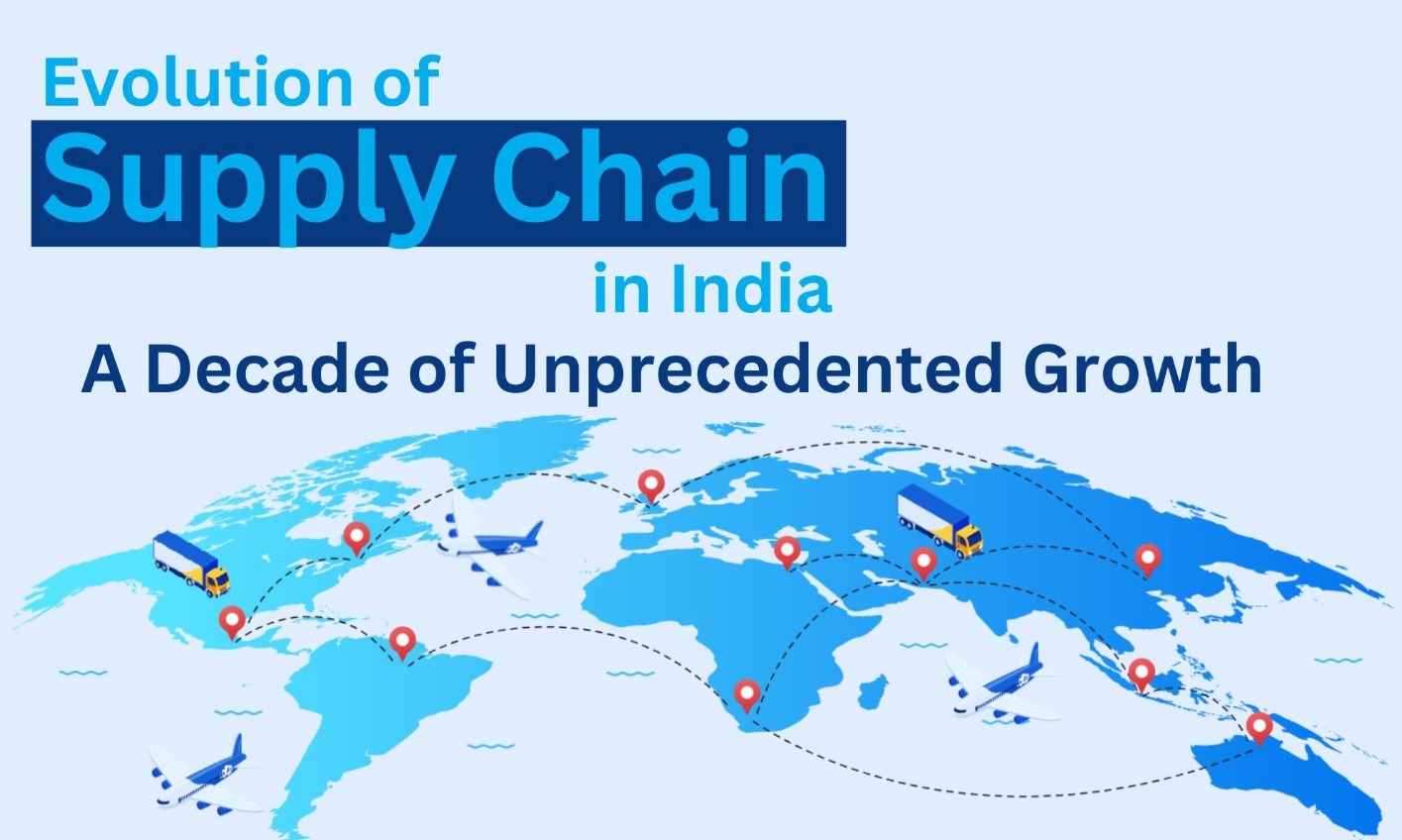
Securing the Flow: Supply Chain Resilience in Global Trade
How nations and corporations are rethinking supply chains after global shocks.
India’s role in building resilient, secure, and diversified trade networks.
By Vishwas Kumar
New Delhi: June 05, 2026:
Global trade thrives on interconnected supply chains, but recent crises have exposed their fragility. The COVID-19 pandemic disrupted everything from medical supplies to semiconductors. Geopolitical tensions, including the Russia-Ukraine conflict and US-China trade disputes, further highlighted vulnerabilities. Natural disasters, cyberattacks, and climate change add layers of risk.
Supply chain resilience — the ability to withstand shocks and recover quickly — has become a strategic priority. Trade security, ensuring that supply chains are protected from disruptions and manipulation, is now central to economic policy. For India, these issues are critical. As a major exporter of pharmaceuticals, IT services, and textiles, and an importer of energy and technology, India must navigate global uncertainties while strengthening domestic capacity.
This article explores the evolution of supply chain resilience, India’s strategies, case studies of disruptions, and the future of secure trade networks.
Section 1: Evolution of Supply Chain Resilience
Global supply chains have long been the invisible arteries of international commerce, quietly ensuring that goods, services, and raw materials flow seamlessly across borders. Yet the way these chains are designed and managed has undergone a dramatic transformation over the past few decades. What began as a relentless pursuit of efficiency has now evolved into a strategic focus on resilience and security.
Early Globalization: Efficiency Above All
In the late 20th century, globalization reshaped trade. Corporations embraced “just-in-time” models, minimizing inventory and relying on complex, interconnected networks of suppliers spread across continents. The goal was simple: reduce costs, maximize efficiency, and leverage comparative advantages. A car assembled in Europe might rely on semiconductors from Taiwan, steel from India, and design expertise from the United States.
This system worked brilliantly in times of stability. Companies saved billions by cutting storage costs and streamlining logistics. Consumers benefited from cheaper goods and faster innovation. But beneath the surface, vulnerabilities were building. The heavy reliance on single suppliers, concentrated production hubs, and lean inventories meant that any disruption — natural disaster, political crisis, or logistical bottleneck — could ripple across the globe.
Pandemic Exposes Fragility
The COVID-19 pandemic shattered the illusion of invulnerability. As borders closed and factories shut down, supply chains collapsed. Shortages of personal protective equipment (PPE), ventilators, and vaccines highlighted the risks of overdependence on specific regions. The semiconductor crisis, triggered by pandemic-related shutdowns and surging demand, crippled industries from automotive to consumer electronics.
For India, the pandemic revealed critical weaknesses. Its pharmaceutical industry, a global leader in generics, struggled due to dependence on imported Active Pharmaceutical Ingredients (APIs) from China. Logistics bottlenecks disrupted exports of textiles and agricultural products. The crisis underscored that efficiency without resilience is a recipe for vulnerability.
Shift Toward Resilience
In the aftermath, governments and corporations began rethinking supply chain strategies. The focus shifted from pure efficiency to resilience — the ability to withstand shocks and recover quickly. This meant diversifying suppliers, building redundancy into networks, and even stockpiling essential goods.
Regionalization became a key trend. Instead of relying on far-flung suppliers, companies began sourcing closer to home or within trusted trade blocs. Strategic reserves of energy, food, and medical supplies were established to cushion against future crises. Digital technologies like blockchain and AI were deployed to enhance transparency and predict risks before they materialized.
India responded with initiatives like Make in India and Production-Linked Incentive (PLI) schemes, aimed at boosting domestic manufacturing in sectors such as electronics, pharmaceuticals, and renewable energy. These policies reflect a broader global movement: resilience is now as important as efficiency.
Trade Security Emerges as a Priority
Resilience alone is not enough; supply chains must also be secure. The rise of geopolitical tensions — from US-China trade disputes to the Russia-Ukraine war — has made trade security a central concern. Nations worry about overdependence on rivals for critical goods like semiconductors, energy, and defence equipment. Cybersecurity threats add another layer of risk, as digitalized supply chains become vulnerable to hacking and data breaches.
India, situated in the Indo-Pacific, faces unique challenges. Its reliance on imported energy and technology makes it vulnerable to geopolitical shocks. At the same time, its growing role in pharmaceuticals, IT services, and renewable energy positions it as a key player in building secure, diversified supply chains. Collaborations through frameworks like the Quad emphasize secure and trusted supply chains, reflecting the strategic importance of trade security in today’s world.
The Bigger Picture
The evolution of supply chain resilience tells a larger story about globalization itself. The era of efficiency-driven, just-in-time models has given way to a new paradigm where resilience and security are paramount. For India, this shift is both a challenge and an opportunity. By investing in domestic capacity, diversifying imports, and strengthening trade security, India can position itself as a hub for resilient supply chains in Asia.
The lesson is clear: supply chains are not just logistical networks; they are strategic assets. Their resilience and security will define the stability of global trade in the decades to come.
Section 2: India’s Supply Chain Challenges
India’s position in global trade is both promising and precarious. As one of the world’s largest emerging economies, it plays a vital role in pharmaceuticals, IT services, textiles, and agriculture. Yet beneath this strength lies a web of vulnerabilities that expose India to supply chain shocks. Understanding these challenges is essential to grasp why resilience and trade security have become national priorities.
Pharmaceutical Dependency on China
India is often called the “pharmacy of the world,” producing affordable generic medicines for global markets. However, this strength is undermined by a critical weakness: dependence on Active Pharmaceutical Ingredients (APIs) imported from China. Nearly 70% of India’s API requirements are sourced externally, leaving the sector exposed to geopolitical tensions and logistical disruptions. During the COVID-19 pandemic, supply bottlenecks in China threatened India’s pharmaceutical exports, highlighting the risks of overreliance on a single supplier.
Efforts are underway to reduce this dependency through Production-Linked Incentive (PLI) schemes and domestic API manufacturing, but progress is gradual. Until India achieves self-sufficiency, its pharmaceutical supply chain remains vulnerable.
IT Services: Cybersecurity and Data Localization
India’s IT services sector is globally renowned, powering back-office operations, software development, and digital transformation for multinational corporations. Unlike manufacturing, IT services are less dependent on physical supply chains, but they face unique challenges. Cybersecurity threats loom large, as digital supply chains become prime targets for hacking, ransomware, and data theft.
Additionally, global debates over data localization — requiring data to be stored within national borders — complicate India’s IT exports. Countries imposing strict rules create compliance burdens for Indian firms, while India itself has considered localization policies to protect sovereignty. These tensions highlight the delicate balance between global integration and national security in digital supply chains.
Textiles and Agriculture: Climate and Logistics Risks
India’s textile industry, one of its oldest export sectors, faces challenges from both climate change and logistics bottlenecks. Extreme weather events disrupt cotton production, while rising sustainability standards in markets like the EU demand cleaner, more ethical supply chains. Small and medium enterprises (SMEs) struggle to meet these requirements, risking exclusion from lucrative markets.
Agriculture exports face similar vulnerabilities. India is a major supplier of rice, spices, and tea, but climate variability — droughts, floods, and heatwaves — threatens production. Logistics infrastructure, including cold storage and transport networks, remains underdeveloped, leading to wastage and delays. These weaknesses reduce India’s competitiveness and highlight the need for investment in resilient agricultural supply chains.
Energy Imports: Strategic Vulnerability
India’s energy security is another critical challenge. The country imports over 80% of its crude oil, making it highly vulnerable to global price fluctuations and geopolitical tensions. Conflicts in the Middle East or sanctions on major suppliers can disrupt India’s energy supply, with cascading effects on industries and households.
Efforts to diversify energy sources through renewable investments — solar, wind, and hydrogen — are promising but not yet sufficient. Until India reduces its reliance on imported fossil fuels, energy supply chains will remain a strategic vulnerability.
Defence and Technology Imports
India’s defence sector, despite ambitious modernization plans, relies heavily on imports of advanced equipment and technology. This dependency creates risks in times of geopolitical conflict, as suppliers may restrict access to sensitive technologies. Similarly, India’s electronics sector depends on imports of semiconductors and components, exposing it to global shortages like the one triggered during the pandemic.
The Bigger Picture
India’s supply chain challenges are multifaceted: pharmaceutical dependency, cybersecurity risks, climate vulnerabilities, energy imports, and defence reliance. Each sector faces unique pressures, but the common thread is exposure to external shocks. These vulnerabilities underscore why resilience and trade security are not abstract concepts but urgent necessities.
By addressing these challenges through domestic investment, diversification, and regional cooperation, India can transform its weaknesses into strengths. The path forward requires not just policy reforms but a holistic rethinking of how supply chains are built, managed, and secured in an uncertain world.
Section 3: Strategies for Resilience
- Diversification of suppliers and markets.
- Investment in domestic manufacturing (Make in India, Production-Linked Incentives).
- Building strategic reserves (energy, medical supplies).
- Digitalization of supply chains: blockchain, AI, predictive analytics.
- Regional cooperation: Quad, Indo-Pacific frameworks for secure supply chains.
Section 4: Case Studies of Disruptions
- COVID-19: PPE and vaccine shortages.
- Semiconductor crisis: impact on automotive and electronics industries.
- Russia-Ukraine war: energy and food supply shocks.
- India’s pharmaceutical sector: API dependency exposed.
Section 5: Emerging Issues
- Cybersecurity threats to digital supply chains.
- ESG-linked supply chains: sustainability and ethical sourcing.
- Climate change: extreme weather disrupting logistics.
- AI-driven supply chain management: opportunities and risks.
Section 6: The Road Ahead
- India’s FTAs with EU, UK, GCC: supply chain resilience clauses.
- Need for stronger domestic infrastructure and logistics.
- Recommendations: diversify imports, invest in green supply chains, enhance cybersecurity.
- India’s potential to become a hub for resilient supply chains in Asia.
Conclusion
Supply chain resilience and trade security are no longer optional; they are essential for survival in a volatile world. India’s challenge is to reduce dependency, strengthen domestic capacity, and integrate into secure global networks. The future lies in balancing efficiency with resilience, ensuring that trade flows remain steady even in times of crisis. If India can achieve this, it will not only safeguard its economy but also position itself as a trusted partner in global commerce.
40 FAQs with Short Answers
- What is supply chain resilience?
Ability to withstand and recover from disruptions. - What is trade security?
Protecting supply chains from risks and manipulation. - Why did COVID-19 expose fragility?
Global shortages of medical supplies and semiconductors. - What is “just-in-time” model?
Efficiency-focused supply chain with minimal inventory. - Why is diversification important?
Reduces dependency on single suppliers or regions. - What is India’s API challenge?
Dependence on China for pharmaceutical inputs. - What is Make in India?
Policy to boost domestic manufacturing. - What are Production-Linked Incentives (PLIs)?
Schemes to encourage local production in key sectors. - What is Quad’s role in supply chains?
Framework for secure Indo-Pacific supply chains. - What is Indo-Pacific cooperation?
Regional collaboration for resilient trade networks. - What is semiconductor crisis?
Shortages affecting automotive and electronics industries. - What is Russia-Ukraine war’s impact?
Energy and food supply disruptions. - What is ESG-linked supply chain?
Sustainability and ethical sourcing requirements. - What is blockchain in supply chains?
Technology for transparency and traceability. - What is AI in supply chains?
Predictive analytics for risk management. - What is cyber risk in supply chains?
Threats to digital infrastructure and logistics. - What is India’s textile challenge?
Climate risks and logistics bottlenecks. - What is India’s agriculture export issue?
Exposure to weather and global price volatility. - What is strategic reserve?
Stockpiling essential goods like energy and medicines. - What is India’s IT services risk?
Cyberattacks and data localization rules. - What is green supply chain?
Environmentally sustainable logistics and production. - What is resilient infrastructure?
Strong logistics and transport systems. - What is India’s pharma strength?
Global leader in generic medicines. - What is India’s pharma weakness?
Dependency on imported APIs. - What is climate risk in supply chains?
Extreme weather disrupting production and transport. - What is WTO’s role in supply chains?
Framework for fair and secure trade. - What is India’s logistics challenge?
Infrastructure gaps in transport and warehousing. - What is India’s energy import issue?
Heavy reliance on foreign oil and gas. - What is India’s renewable energy opportunity?
Diversifying energy supply with solar and wind. - What is India’s defense import issue?
Dependence on foreign suppliers for equipment. - What is India’s defense resilience strategy?
Domestic production under Make in India. - What is India’s FTA role in resilience?
Embedding supply chain security clauses. - What is India’s cyber resilience need?
Protecting digital supply chains from attacks. - What is India’s ESG opportunity?
Positioning as a sustainable trade partner. - What is India’s SME challenge?
High compliance costs for resilience standards. - What is India’s logistics modernization?
Digitalization and smart infrastructure. - What is India’s global role?
Potential hub for resilient supply chains in Asia. - What is India’s policy challenge?
Balancing efficiency with resilience. - What is India’s resilience opportunity?
Attracting investment through secure supply chains. - What is the future of supply chains?
Resilient, diversified, and digitally managed networks.