
Succession Rules for Hindu Women: Understanding Distribution of Property
Priority Among Heirs Explained
Special Rules for Lineage-Based Property
By Vishwas Kumar
New Delhi: April 24, 2026:
The Hindu Succession Act, 1956, provides a detailed framework for how the property of a female Hindu devolves when she dies intestate (without a will). Section 16 of the Act elaborates on the order of succession and manner of distribution, ensuring clarity in inheritance while balancing marital and natal family claims.
Disputes involving inheritance and validity of claims between legal heirs are often complex—this case provides a clear judicial perspective: Supreme Court judgment on inheritance disputes and legal heir property rights in India
Rule 1: Priority Among Heirs
The law establishes a hierarchical order of heirs. Those listed earlier in Section 15(1) are given preference over those in subsequent entries. For example, sons, daughters, and the husband (Entry 1) inherit before the heirs of the husband (Entry 2). Within the same entry, heirs inherit simultaneously and equally.
This rule ensures that immediate family members are prioritized, while also preventing disputes among heirs of the same category by mandating equal distribution.
Rule 2: Rights of Grandchildren
If a son or daughter of the deceased woman pre-deceased her, leaving children alive at the time of her death, those grandchildren inherit the share their parent would have taken. This principle of representation ensures that the lineage continues, and grandchildren are not excluded simply because their parent passed away earlier.
For instance, if a woman dies leaving behind one living son and two grandchildren from a pre-deceased daughter, the son and the grandchildren share the property. The grandchildren together take the share their mother would have received.
Rule 3: Property Reverts to Lineage
The third rule addresses property inherited from specific sources. If the property devolves upon heirs of the husband, father, or mother (as per Section 15(1)(b), (d), (e), and Section 15(2)), it is distributed as if the property originally belonged to that person.
For example:
- If a woman inherited property from her father and dies childless, the property devolves upon the father’s heirs as though the father had died intestate immediately after her.
- Similarly, property inherited from the husband or father-in-law reverts to the husband’s heirs if she dies without children.
This rule safeguards lineage-based property rights, ensuring that ancestral property remains within the family line from which it originated.
Analytical Perspective
The succession rules for Hindu women reflect a careful balance between equity and lineage preservation. Rule 1 emphasizes fairness among heirs of the same category, Rule 2 ensures continuity of inheritance through representation, and Rule 3 protects ancestral property from being diverted outside its original family line.
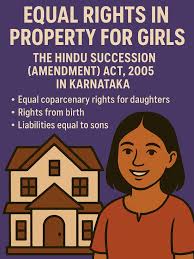
However, critics argue that the prioritization of the husband’s heirs over the woman’s parents (in Section 15) reflects patriarchal bias. While the 2005 amendment to the Hindu Succession Act gave daughters equal coparcenary rights, the rules of succession for women remain distinct and sometimes restrictive compared to men.
Contemporary Relevance
In modern India, where women increasingly own property independently, these provisions are significant. They highlight the importance of drafting a will to avoid disputes and ensure property distribution according to personal wishes. Courts continue to interpret these rules, especially in cases involving complex family structures and blended inheritances.
The law thus remains both a safeguard and a subject of debate in the evolving discourse on gender equality and property rights.
[RESEARCH RESOURCES
EXTRACTS FROM BOOK, WILL WRITING SIMPLIFIED, By Dr Ravinder Kumar Anand. [📘 Buy Will Writing Simplified online: Amazon | Flipkart ]
Order of succession and manner of distribution among heirs of a female Hindu.―The order of succession among the heirs referred to in section 15 shall be and the distribution of the intestate’s property among those heirs shall take place according to the following rules, namely:―
Rule 1. Among the heirs specified in sub-section (1) of section 15, those in one entry shall be preferred to those in any succeeding entry and those included in the same entry shall take simultaneously.
Rule 2. If any son or daughter of the intestate had pre-deceased the intestate leaving his or her own children alive at the time of the intestate’s death, the children of such son or daughter shall take between them the share which such son or daughter would have taken if living at the intestate’s death.
Rule 3. The devolution of the property of the intestate on the heirs referred to in clauses (b), (d) and (e) of sub-section (1) and in sub-section (2) of section 15 shall be in the same order and according to the same rules as would have applied if the property had been the father’s or the mother’s or the husband’s as the case may be and such person had died intestate in respect thereof immediately after the intestate’s death.
FAQs on Succession Rules for Hindu Women
Q1. Who inherits first when a Hindu woman dies intestate?
Her sons, daughters (including children of pre-deceased children), and husband inherit simultaneously.
Q2. What if she has no children or husband?
The property passes to the heirs of the husband.
Q3. How is property shared among heirs in the same category?
They inherit equally and simultaneously, without preference among them.
Q4. Do grandchildren have rights if their parent died earlier?
Yes. They inherit the share their parent would have received, through the principle of representation.
Q5. What happens to property inherited from parents?
If she dies childless, it reverts to the heirs of her father, not to the husband’s heirs.
Q6. What happens to property inherited from husband or father-in-law?
If she dies without children, it devolves upon the heirs of the husband.
Q7. Why is Rule 3 important?
It ensures that property inherited from parents or husband remains within the original lineage, preventing diversion outside the family.
Q8. Can a woman override these rules?
Yes, by making a valid will, she can distribute her property as she wishes.
Q9. Why do critics call the law patriarchal?
Because it prioritizes the husband’s heirs over the woman’s own parents, reflecting traditional biases.
Q10. How does this differ from male succession?
Men’s succession rules are more straightforward, without lineage-based exceptions. Women’s succession rules are distinct and more conditional.
Key Takeaway
The Hindu Succession Act provides a structured order for inheritance of a Hindu woman’s property, balancing fairness among heirs with preservation of lineage-based property rights. While progressive in parts, the law still reflects patriarchal influences. For women, awareness of these provisions—and the drafting of wills—remains essential to exercise control over their assets.