
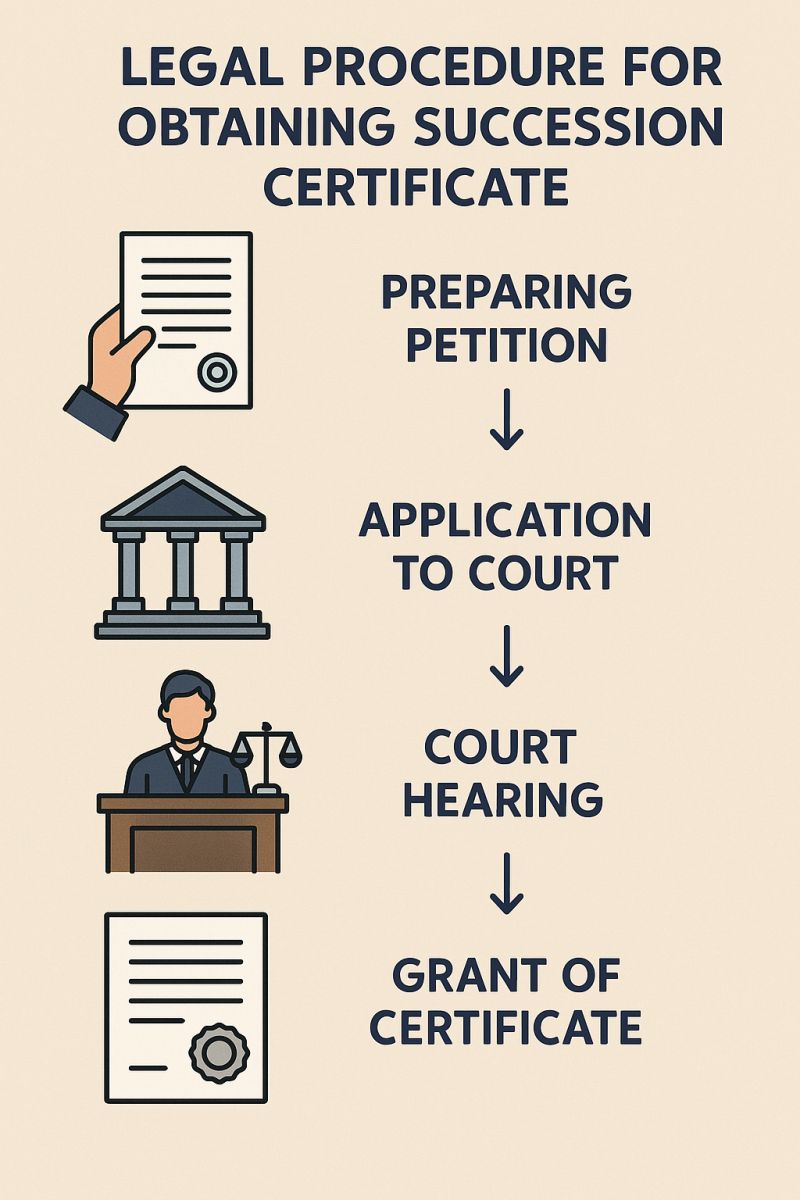
CHECKLIST OF DOCUMENT & PROCEDURAL STAGES FOR OBTAINING SUCESSION CERTIFICATE IN INDIA
INDIAN SUCCESSION ACT, 1925 PROVIDES LEGAL ROAD MAP
DOCUMENTATION IS KEY TO AVOID REJECTION
By Legal Reporter
New Delhi: April 22, 2026:
Here’s a step-by-step checklist of documents and procedural stages for obtaining a succession certificate under the Indian Succession Act, 1925. This will help you see the entire process clearly and practically:
If you’re looking to understand how Indian courts interpret wills, probate, and succession disputes, it’s essential to refer to authoritative case law. A comprehensive resource is 👉 123 Supreme Court judgments on wills, which compiles key rulings on testamentary validity, suspicious circumstances, and legal heir rights—making it a must-read for anyone dealing with inheritance law in India.
Checklist for Succession Certificate Application
1. Documents Required
- ✅ Death Certificate of the deceased.
- ✅ Proof of relationship (birth/marriage certificate, family register, etc.).
- ✅ Identity and address proof of applicant (Aadhaar, Passport, Voter ID).
- ✅ List of debts and securities (bank deposits, shares, bonds, debentures, etc.) with supporting documents.
- ✅ Details of other legal heirs with addresses.
- ✅ Any nomination papers (if applicable).
2. Filing the Petition (Section 372)
- Draft petition with particulars:
- Time of death.
- Residence or property location.
- Family details.
- Right claimed by petitioner.
- Confirmation of no legal impediment.
- List of debts/securities.
- Petition must be signed and verified like a plaint under CPC, 1908.
- Submit petition to the District Judge having jurisdiction.
3. Court Procedure (Section 373)
- Judge examines if petition is maintainable.
- Court issues public notice:
- Served to interested parties.
- Posted in court premises.
- May be published in newspapers.
- Hearing is fixed.
- Judge decides entitlement in a summary manner.
- If multiple applicants, certificate may be issued jointly.
4. Grant of Certificate (Section 374)
- Certificate specifies debts and securities.
- Powers conferred:
- Receive interest/dividends.
- Negotiate or transfer securities.
- Or both.
5. Security Requirement (Section 375)
- Judge may require applicant to furnish a bond with sureties.
- Purpose: safeguard interests of other heirs and indemnify them.
- Bond may be assigned to trustees for recovery if needed.
6. Extension of Certificate (Section 376)
- Holder can apply to extend certificate to cover additional debts/securities not originally listed.
- Same powers and security requirements apply.
7. Amendment of Certificate (Section 378)
- If powers were not initially granted, applicant can request amendment.
- Judge may confer additional powers (e.g., transfer rights).
8. Forms (Section 377)
- Certificates and extensions must follow prescribed forms in Schedule VIII of the Act.
[RESEARCH RESOURCES
BUY & READ THE BOOK, WILL WRITING SIMPLIFIED, By Dr Ravinder Kumar Anand. [📘 Buy Will Writing Simplified online: Amazon | Flipkart ]
Practical Flow
- Prepare documents → Collect death certificate, proof of relationship, list of securities.
- File petition → Submit to District Judge with required particulars.
- Court notice → Public notice issued, objections invited.
- Hearing → Judge decides entitlement in summary manner.
- Bond requirement → Applicant may need to furnish surety bond.
- Certificate issued → Specifies debts/securities and powers.
- Extension/amendment → Apply later if new securities discovered or powers need modification.