
Shashi Kumar Banerjee & Ors. v. Subodh Kumar Banerjee (1963): Supreme Court Restores Faith in Testamentary Freedom
Expert Opinion Cannot Override Substantive Proof
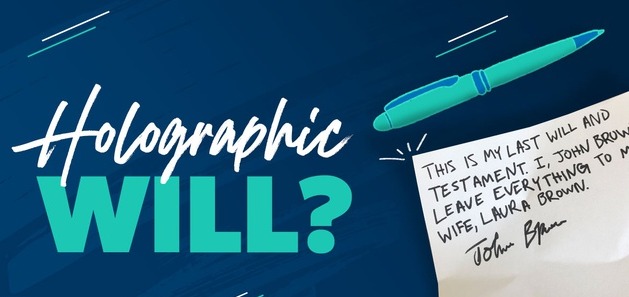
Holograph Wills Enjoy Higher Presumption of Authenticity
By Vishwas Kumar
New Delhi: April 09, 2026:
The 1963 Supreme Court judgment in Shashi Kumar Banerjee & Ors. v. Subodh Kumar Banerjee (Since Deceased) Through His Legal Representatives & Ors. (Civil Appeal No. 295 of 1960) remains a landmark in Indian succession law. It clarified the evidentiary standards for proving Wills, especially when allegations of antedating, undue influence, or suspicious circumstances are raised. Lawyers continue to cite this case because it firmly established that oral testimony and intrinsic consistency outweigh speculative expert opinion, and that holograph Wills (written entirely in the testator’s own hand) carry a strong presumption of genuineness.
For a deeper understanding of probate law and testamentary rights, explore this Supreme Court judgment on probate rights and testamentary succession in India in Clarence Pais and Others etc. Vs Union of India.
Analytical Overview
Antedating Allegation Rejected
The High Court had accepted the handwriting expert’s view that the Will was antedated and not signed in 1943. The Supreme Court dismissed this theory as “extremely improbable” (Paras 8–9). It emphasized that the testator remained mentally alert until his death in 1947, and there was no rational reason for him to antedate his own Will. This precedent underscores that courts must demand logical explanations before accepting claims of antedating.
Expert Evidence vs. Substantive Proof
The handwriting expert relied on tremors and pen-control issues to cast doubt on the signature. The Supreme Court found this inconclusive, noting that tremors appeared in earlier signatures and were absent in later ones. Variations could be explained by age, illness, or pen differences. Importantly, the Court reiterated that expert evidence under Section 45 of the Evidence Act is merely opinion and “cannot take the place of substantive proof” (Paras 21–24). This principle remains vital: expert testimony must be corroborated by stronger evidence.
Attesting Witnesses and Minor Discrepancies
Two attesting witnesses differed slightly about the time of execution (3 p.m. vs 4:30 p.m.) after nine years. The Court held these were trivial inconsistencies, natural after a long lapse of time, and did not undermine the core fact that execution and attestation occurred properly (Paras 18–19). It also rejected the claim that witnesses were “interested persons,” finding them respectable and independent despite their relationships (Paras 16–20). This reinforced the rule that credibility is not destroyed merely by acquaintance or kinship unless collusion is proved.
Chance Witnesses Theory
Respondents argued that the witnesses were “chance visitors,” making the Will suspicious. The Court rejected this, holding that the testator simply took advantage of their presence for attestation (Para 17). Far from being suspicious, this spontaneity supported genuineness.
Sealed Envelope and Holograph Will
The Will was found in a sealed envelope endorsed by the testator with the words “Soshi — Preserve this my Will.” It was opened after his death in the presence of heirs, strongly corroborating authenticity (Paras 7 & 23). Moreover, the Will was wholly in the testator’s handwriting, with corrections initialled by him (Para 6). The Court held that holograph Wills stand on higher footing, as they directly reflect the testator’s volition.
Natural and Rational Dispositions
The testator had already distributed property worth ₹60 lakhs during his lifetime. The Will dealt only with the small residue of ₹3 lakhs, with rational reasons for exclusions. Thus, no unnatural or unfair disposition existed (Para 6). Testamentary capacity was also proved: despite being 93 at execution, he remained active and alert, serving as President of the Alipore Bar Association until 1946 (Para 6).
Intrinsic Evidence of Date
Internal recitals—such as references to his wife being alive and property not yet gifted—corresponded with 1943 facts, not 1946. This intrinsic evidence confirmed the Will’s date of 29 August 1943 (Paras 9–15).
Supreme Court’s Criticism of High Court
The Court criticized the High Court for relying solely on expert evidence while ignoring oral testimony and internal consistency (Paras 16 & 25). It restored the principle that positive testimony of attesting witnesses and intrinsic evidence must prevail over speculative expert opinion.
Key Precedent Established
- Expert opinion is secondary: It cannot override substantive oral and documentary proof.
- Minor discrepancies are natural: They do not invalidate execution if core facts are consistent.
- Holograph Wills carry strong presumption: They reflect the testator’s own volition.
- Chance witnesses are valid: Spontaneous attestation does not make a Will suspicious.
- Natural dispositions matter: Rational distribution supports authenticity.
LEGAL RESEARCH RESOURCES:
Access detailed inheritance cases here.. Click the link here: https://www.courtkutchehry.com/pages/blog/123-supreme-court-judgments-on-wills/
EXTRACTS FROM BOOK, WILL WRITING SIMPLIFIED, By Dr Ravinder Kumar Anand. [📘 Buy Will Writing Simplified online: Amazon | Flipkart ]
Case Title Shashi Kumar Banerjee & Ors. v. Subodh Kumar Banerjee (Since Deceased) Through His Legal Representatives & Ors., (1963) 09 SC CK 0012: Civil Appeal No. 295 of 1960.
One witness (Manmathanath Mookerjee) was father-in-law of one propounder’s son; the other (Sambhunath Munshi) was his tenant. The Court found both to be respectable independent witnesses, not under influence of the propounders. Relationship alone does not taint credibility unless evidence shows collusion. [Paras 16–20]
Respondents argued that witnesses being “chance visitors” made the Will suspicious. The Court rejected this, accepting the explanation that the testator took advantage of their accidental presence for attestation. The fact that they were not called in advance did not invalidate execution; rather it showed spontaneity. [Para 17]
| Suspicious Circumstance | Court’s Observation & Para Reference in the Judgement |
| Allegation that Will was antedated — signature not of 1943 | The Supreme Court rejected the theory of antedating as extremely improbable, noting no rational reason for such conduct. [Paras 8–9] |
| Handwriting expert’s opinion | Held inconclusive and only opinion evidence under Section 45 Evidence Act; cannot replace substantive proof. [Paras 21–24] |
| Minor discrepancies in witness statements | Differences in time were natural after long lapse and not material. [Paras 18–19] |
| Witnesses alleged to be interested | Relationship alone does not affect credibility unless collusion is proven. [Paras 16–20] |
| “Chance witnesses” theory | Court accepted explanation of accidental presence—does not invalidate Will. [Para 17] |
| Sealed envelope with endorsement | Strong corroboration of genuineness; excludes fabrication. [Paras 7 & 23] |
| Holograph Will | Written by testator himself → strong presumption of authenticity. [Para 6] |
| Natural disposition of property | No unfair exclusion; distribution was rational and justified. [Para 6] |
| Old age of testator | Despite age, testator was mentally sound and active. [Para 6] |
| Internal recitals confirming date | Intrinsic evidence supported 1943 execution. [Paras 9–15] |
| High Court reliance on expert only | SC criticized ignoring oral + documentary evidence. [Paras 16 & 25] |
| No proof of undue influence | Allegations abandoned; Will held free and voluntary. [Paras 3 & 6] |
FAQ: Key Issues from the Case
Q1. Why did the Supreme Court reject the antedating theory?
Because it was improbable, unsupported by evidence, and contradicted by internal recitals confirming the 1943 date.
Q2. How did the Court treat handwriting expert evidence?
It held that expert evidence is only opinion and cannot replace substantive proof from witnesses and intrinsic consistency.
Q3. Do minor discrepancies in witness testimony invalidate a Will?
No. Small differences in time or sequence after years are natural and do not affect credibility.
Q4. Why is a holograph Will considered stronger?
Because it is entirely in the testator’s handwriting, showing authenticity and free volition.
Q5. What role did the sealed envelope play?
It corroborated genuineness, proving the Will was preserved by the testator himself and not fabricated later.
Q6. Why is this case still cited today?
It sets enduring standards: expert evidence must be weighed cautiously, holograph Wills enjoy higher presumption, and natural dispositions strengthen authenticity.
FINAL NOTE:
This judgment remains a cornerstone in succession law, reminding courts and lawyers alike that authenticity of a Will rests on substantive proof, not speculative doubts.