
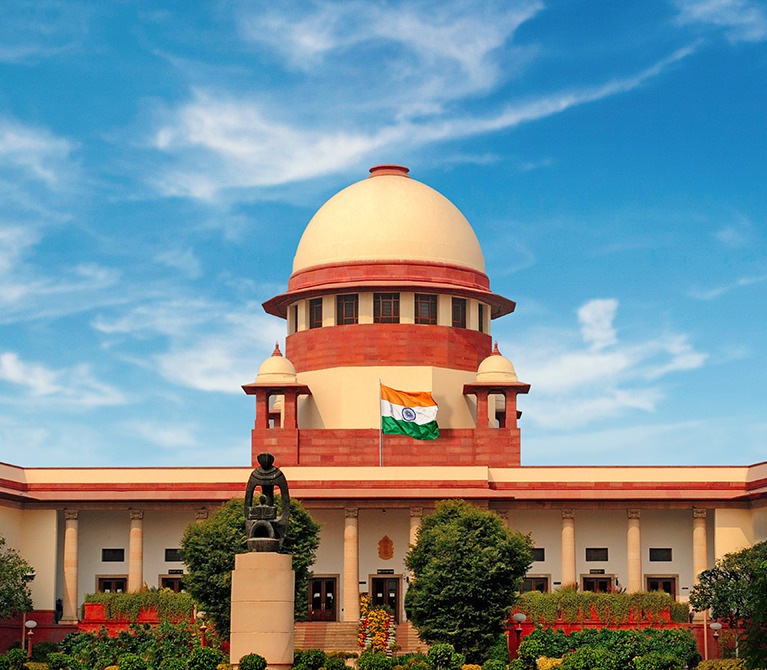
Supreme Court Precedents Cement Equality in Hindu Succession
Daughters’ rights upheld across ancestral and self-acquired property
Judicial clarity reduces disputes in intestate inheritance cases
By Vishwas Kumar
New Delhi: April 28, 2026:
Several landmark Supreme Court rulings have clarified how property is inherited under the Hindu Succession Act, especially in cases of intestate succession and daughters’ rights. The most influential precedents include Vineeta Sharma v. Rakesh Sharma (2020), which cemented daughters’ equal coparcenary rights, and subsequent rulings that distinguished ancestral from self-acquired property, ensuring clarity in succession disputes.
Readers researching inheritance disputes, probate proceedings, suspicious circumstances in wills, attesting witness requirements, and landmark succession rulings should also explore 123 Supreme Court Judgments on Wills, a comprehensive legal resource covering leading Supreme Court decisions on testamentary succession, execution of wills, family property disputes, and interpretation of the Indian Succession Act.
Inheritance disputes in India often hinge on the interpretation of the Hindu Succession Act, 1956 and its 2005 amendment. Over the years, the Supreme Court has delivered several landmark judgments that clarified ambiguities, especially regarding daughters’ rights, intestate succession, and the distinction between ancestral and self-acquired property. These rulings have reshaped family law and succession planning.
Key Supreme Court Precedents
- Vineeta Sharma v. Rakesh Sharma (2020)
- Key Point: Daughters are coparceners by birth, with equal rights in ancestral property.
- Clarification: Their rights are not dependent on whether the father was alive when the 2005 amendment came into force.
- Impact: Unified interpretation of daughters’ rights, resolving conflicting earlier rulings. Court Kutchehry
- Prakash v. Phulavati (2016)
- Key Point: Initially held that daughters could claim coparcenary rights only if the father was alive on 9 September 2005.
- Impact: Created confusion later corrected in Vineeta Sharma. Court Kutchehry
- Danamma v. Amar (2018)
- Key Point: Allowed daughters’ rights even though the father had died before 2005.
- Impact: Contradicted Prakash v. Phulavati, paving the way for a larger bench ruling in Vineeta Sharma. Court Kutchehry
- Govindbhai Chhotabhai Patel v. Patel Ramanbhai Mathurbhai (2019)
- Key Point: Property inherited through a will or gift is self-acquired, not ancestral.
- Impact: Reinforced the distinction between ancestral and self-acquired property. Court Kutchehry
- Angadi Chandranna v. Shankar (2025)
- Key Point: Self-acquired property does not automatically become joint family property merely because children exist.
- Impact: Prevented misuse of claims by distant relatives and safeguarded individual ownership. Court Kutchehry
- Landmark Ruling (2025): Daughters’ Priority Over Nephews
- Key Point: Daughters’ claims to their father’s property takes precedence over nephews if the father dies intestate.
- Impact: Retrospective application ensures daughters’ rights even in pre-1956 partitions. legalassure.in
- Mukatlal v. Kailash Chand (2024)
- Key Point: For a Hindu woman to claim full ownership under Section 14(1), she must possess the property.
- Impact: Clarified that mere entitlement without possession does not confer absolute ownership. Law Web
[RESEARCH RESOURCES]
EXTRACTS FROM BOOK, WILL WRITING SIMPLIFIED, By Dr Ravinder Kumar Anand. [📘 Buy Will Writing Simplified online: Amazon | Flipkart ]
FAQ: Quick Legal Guide
Q1: Do daughters have equal rights in ancestral property?
Yes. Since the 2005 amendment, daughters are coparceners by birth, confirmed in Vineeta Sharma (2020).
Q2: What is the difference between ancestral and self-acquired property?
- Ancestral property: Undivided across four generations.
- Self-acquired property: Purchased, gifted, or inherited through a will.
Q3: Can nephews inherit before daughters if a father dies intestate?
No. The Supreme Court (2025) ruled that daughters’ rights override nephews’ claims.
Q4: Does self-acquired property automatically become ancestral?
No. It remains individual unless voluntarily blended into the joint family pool.
Q5: What happens after partition of ancestral property?
Each share becomes self-acquired property of the recipient.
Q6: Can a Hindu widow claim absolute ownership of property?
Only if she possesses the property under Section 14(1) of the Hindu Succession Act.
Context for Citations
The precedents cited are drawn from authoritative Supreme Court rulings between 2016 and 2026, including Vineeta Sharma v. Rakesh Sharma (2020), Prakash v. Phulavati (2016), Danamma v. Amar (2018), and later clarifications in 2024–2025. These judgments collectively define the contours of intestate succession, daughters’ rights, and the distinction between ancestral and self-acquired property.