
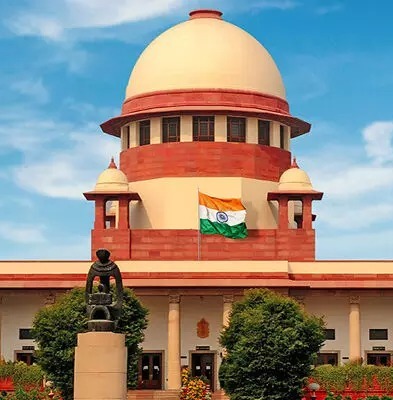
Supreme Court Bars Charges for Unreceived Services
Consumers’ Interests Take Center Stage in Tariff Rules
Delhi Power Plant Case Highlights Regulatory Balancing
By Legal Reporter
New Delhi: May 08, 2026:
The Supreme Court of India has ruled that consumers cannot be charged for services they no longer receive, setting aside an Appellate Tribunal for Electricity (APTEL) order that allowed recovery of capital costs for a non-operational Delhi power plant. This landmark judgment reinforces consumer protection under the Electricity Act, 2003.
Family property and inheritance disputes frequently revolve around the authenticity and legal validity of testamentary documents. In Ashutosh Samanta (D) By LRs & Ors Appellant Vs Sm. Ranjan Bala Dasi & Ors Respondent , the Supreme Court discussed critical legal principles governing proof of Wills, attestation requirements, and the evidentiary burden placed upon parties in probate and succession proceedings. The ruling is an important authority for contested inheritance matters, family settlement disputes, and interpretation of testamentary succession law in India.
Key Highlights of the Judgment
- Case Background: The dispute centered on the Rithala Combined Cycle Power Plant in Delhi, set up temporarily to meet demand during the 2010 Commonwealth Games.
- APTEL Order (2025): Allowed recovery of the plant’s capital cost over 15 years, even though electricity supply ceased in March 2018.
- Supreme Court Ruling (2026): Set aside APTEL’s order, restoring the Delhi Electricity Regulatory Commission (DERC)’s 2019 decision that barred cost recovery beyond the plant’s operational period.
- Legal Principle: Consumers cannot be required to pay for services they no longer receive.
Laws and Rules Discussed
1. Electricity Act, 2003 – Section 61
- Governs tariff determination.
- Section 61(d): Mandates safeguarding consumer interests while allowing reasonable cost recovery for utilities.
- Court emphasized that consumer welfare is a central statutory principle, not a peripheral consideration.
2. Power Purchase Agreement (PPA)
- Tata Power Delhi Distribution Limited (TPDDL) agreed to supply electricity for six years only.
- Plant’s operational tenure was expressly limited, with land reverting to Delhi Development Authority (DDA) afterward.
3. Tariff Determination Principles
- Not a mere mathematical exercise.
- Requires balancing utility cost recovery with consumer protection.
- Depreciation allowed only until 2017–2018, when the plant supplied electricity.
Analytical Insights
- Consumer Protection Strengthened: The ruling ensures that utilities cannot pass on costs of defunct projects to consumers.
- Regulatory Balancing: Courts reaffirmed that tariff-setting must weigh both utility viability and consumer rights.
- Precedent Value: Sets a benchmark for future disputes involving temporary or discontinued projects.
- Policy Implication: Encourages utilities to plan projects with realistic operational timelines and cost recovery mechanisms.
FAQ: Supreme Court Ruling on Consumer Payments
Q1: What was the dispute about?
A: Whether consumers should bear the capital cost of the Rithala power plant after it stopped supplying electricity in 2018.
Q2: What did APTEL decide earlier?
A: It allowed recovery of the plant’s cost over 15 years, despite its limited operational tenure.
Q3: What did the Supreme Court rule?
A: Consumers cannot be charged for services they no longer receive. The DERC’s 2019 order restricting depreciation to the plant’s active years was upheld.
Q4: Which law guided the decision?
A: Section 61(d) of the Electricity Act, 2003, which prioritizes consumer interests in tariff determination.
Q5: Why is this ruling significant?
A: It prevents utilities from burdening consumers with costs of non-functional projects, reinforcing consumer rights.
Q6: Does this apply only to electricity?
A: While the case involved electricity tariffs, the principle has broader implications for consumer protection across regulated services.
Q7: What happens to the remaining capital cost of the plant?
A: The unrecovered cost cannot be passed on to consumers since the plant ceased operations in 2018.
Conclusion
The Supreme Court’s ruling is a milestone in consumer law, ensuring that tariff determination remains a regulatory balancing act rather than a one-sided recovery mechanism. By prioritizing consumer welfare under the Electricity Act, 2003, the judgment sets a strong precedent against unfair cost impositions in utility services.