
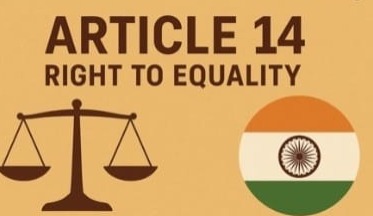
Right to Equality: Constitutional Guarantees and Judicial Pathways in India
From caste discrimination to gender justice, courts are redefining equality in the 21st century.
How Articles 14–18 shape India’s democracy, and what landmark cases reveal about the evolving meaning of equality.
By Vishwas Kumar
New Delhi: June 04, 2026:
Equality is one of the cornerstones of the Indian Constitution. Articles 14 to 18 enshrine guarantees against discrimination, ensuring equal protection of laws, equality of opportunity, and abolition of untouchability and titles. Yet, the lived reality of equality in India is complex, shaped by caste, gender, religion, and socio‑economic divides.
The regulation of petroleum products plays a crucial role in ensuring uninterrupted fuel availability and preventing unfair trade practices. For a detailed understanding of the legal framework governing the supply, storage, and distribution of petroleum products in India, readers may refer to the Oil Regulation of Supply and Distribution Order, 1998, which prescribes important compliance requirements for stakeholders in the petroleum sector.
The judiciary has played a pivotal role in interpreting and expanding these guarantees. From striking down discriminatory laws to upholding affirmative action, courts have consistently emphasized that equality is not just formal but substantive. Landmark cases on reservations, gender rights, and LGBTQ+ equality have transformed the constitutional landscape, making equality a dynamic principle rather than a static promise.
Globally, India’s jurisprudence on equality is studied for its balance between individual rights and social justice. As debates on affirmative action, digital equality, and intersectionality grow, the judiciary’s role will only deepen. This article explores the constitutional foundations of equality, landmark cases, judicial activism, global comparisons, citizen activism, and the future of equality in India.
Section 1: Constitutional Foundations
- Article 14: Equality before law and equal protection of laws.
- Article 15: Prohibition of discrimination.
- Article 16: Equality of opportunity in public employment.
- Article 17: Abolition of untouchability.
- Article 18: Abolition of titles.
- Judicial interpretation of substantive vs. formal equality.
Section 2: Landmark Equality Cases
1. Indra Sawhney v. Union of India (1992)
This landmark case, popularly known as the Mandal Commission case, tested the limits of affirmative action. The Supreme Court upheld reservations for Other Backward Classes (OBCs) but introduced a 50% cap to prevent excessive quotas. It also excluded the “creamy layer” from benefits, ensuring that affirmative action reached the truly disadvantaged. The judgment balanced meritocracy with social justice, redefining equality as substantive rather than formal.
2. Navtej Singh Johar v. Union of India (2018)
In a historic ruling, the Supreme Court struck down Section 377 of the IPC, decriminalizing homosexuality. The Court emphasized that equality under Article 14 extends to LGBTQ+ citizens, affirming dignity and autonomy. This judgment was celebrated globally as a milestone in human rights, making equality inclusive of sexual orientation.
3. Vishaka v. State of Rajasthan (1997)
Sparked by the gang rape of a social worker, this PIL led the Supreme Court to establish guidelines against workplace sexual harassment. Known as the Vishaka Guidelines, they filled a legislative vacuum until the 2013 law was enacted. The case expanded equality to include safe workplaces, linking gender justice to constitutional rights.
4. N.M. Thomas v. State of Kerala (1976)
This case upheld affirmative action in promotions for disadvantaged groups. The Court ruled that equality is not just about treating everyone the same but about addressing historical disadvantages. It marked a shift toward substantive equality, recognizing that fairness sometimes requires differential treatment.
5. Shayara Bano v. Union of India (2017)
This PIL challenged the practice of instant triple talaq. The Supreme Court struck it down as unconstitutional, affirming gender equality in personal laws. The judgment reinforced that religious practices cannot override constitutional guarantees of equality and dignity.
6. State of Madras v. Champakam Dorairajan (1951)
One of the earliest equality cases, it struck down caste‑based reservations in educational institutions. The ruling led to the First Constitutional Amendment, which allowed special provisions for disadvantaged groups. It highlighted the tension between formal equality and social justice in India’s early constitutional history.
7. E.P. Royappa v. State of Tamil Nadu (1974)
This case expanded Article 14 by linking equality with non‑arbitrariness. The Court ruled that arbitrary state action violates equality, making fairness a constitutional requirement. It transformed equality from a narrow concept into a broad principle of governance.
8. Maneka Gandhi v. Union of India (1978)
Though primarily about personal liberty, this case linked Article 14 with Article 21, ensuring equality in due process. The Court ruled that laws must be fair, just, and reasonable, embedding equality into procedural safeguards.
9. Olga Tellis v. Bombay Municipal Corporation (1985)
Pavement dwellers challenged their eviction, arguing it deprived them of livelihood. The Court recognized the right to livelihood as part of the right to life, linking equality to socio‑economic justice. It expanded constitutional protections to marginalized communities.
10. Ashoka Kumar Thakur v. Union of India (2008)
This case upheld OBC reservations in educational institutions. The Court reinforced affirmative action as a tool for substantive equality, while also emphasizing the exclusion of the creamy layer. It balanced access to education with fairness.
11. National Legal Services Authority (NALSA) v. Union of India (2014)
In a groundbreaking judgment, the Court recognized transgender persons as a third gender. It affirmed their right to equality, dignity, and non‑discrimination. The ruling was a milestone in expanding constitutional protections to marginalized identities.
12. Joseph Shine v. Union of India (2018)
This case struck down the adultery law, which treated women as property of men. The Court ruled it violated gender equality and autonomy. The judgment modernized personal laws, aligning them with constitutional values of dignity and equality.
13. Indian Young Lawyers Association v. State of Kerala (2018, Sabarimala Case)
This PIL challenged the ban on women’s entry into the Sabarimala temple. The Supreme Court ruled the ban unconstitutional, affirming equality in religious practices. The case sparked national debate but reinforced that constitutional guarantees override discriminatory traditions.
14. Lt. Col. Nitisha v. Union of India (2021)
Women officers in the Army challenged discriminatory promotion criteria. The Supreme Court ruled in their favor, addressing gender bias in military service. The judgment expanded equality into defense services, ensuring that women receive equal opportunities in national institutions.
Section 3: Judicial Activism in Equality
Judicial activism has been a defining feature of India’s constitutional journey, particularly in the realm of equality. Courts have consistently expanded the meaning of equality beyond its textual boundaries in Articles 14–18, interpreting it as a principle that encompasses dignity, fairness, and non‑discrimination. This dynamic approach has allowed the judiciary to respond to evolving social realities, ensuring that equality is not confined to formal legal guarantees but extends to substantive justice. For instance, rulings on gender rights, LGBTQ+ equality, and workplace harassment demonstrate how courts have infused dignity into the constitutional promise of equality, making it a lived experience rather than an abstract principle.
A central challenge has been balancing affirmative action with meritocracy. The judiciary has upheld reservations as a means to achieve substantive equality, recognizing that disadvantaged groups require special measures to overcome historical injustices. At the same time, it has introduced safeguards such as the “creamy layer” exclusion to prevent misuse and ensure fairness. This balancing act reflects the Court’s effort to harmonize social justice with efficiency, acknowledging that equality sometimes requires differential treatment to achieve genuine fairness.
However, judicial activism in equality has not been without criticism. Detractors argue that courts often encroach upon policy domains, issuing directives that should be the prerogative of legislatures or executives. For example, guidelines on workplace harassment or interventions in reservation policies have raised concerns about judicial overreach. Critics caution that excessive activism risks undermining democratic processes, while supporters contend that it fills governance gaps and protects vulnerable groups.
Ultimately, judicial activism in equality illustrates the evolving nature of constitutional law in India. By expanding equality to include dignity and non‑discrimination, while carefully balancing affirmative action with merit, the judiciary has ensured that constitutional promises remain relevant in a diverse and changing society.
Section 4: Global Comparisons
- US: Equal Protection Clause of the 14th Amendment.
- South Africa: Explicit constitutional equality guarantees.
- EU: Equality embedded in charters and directives.
- India’s unique blend of social justice and individual rights.
Section 5: Citizens, NGOs & Equality Activism
- PILs on caste discrimination, gender justice, and LGBTQ+ rights.
- Role of NGOs in advancing equality.
- Digital activism and intersectional equality movements.
Section 6: Future Outlook
- Equality in the digital age: access to internet, AI bias.
- Intersectionality: caste, gender, and class overlaps.
- India’s potential to lead global equality debates.
Conclusion
Equality in India reflects the adaptability of constitutional law. By interpreting Articles 14–18 dynamically, courts have ensured that equality is not just a promise but a lived reality. Landmark cases have reshaped governance, holding governments accountable for discrimination and inequality.
Globally, India’s jurisprudence is studied as a model for balancing social justice with individual rights. Yet, challenges remain: enforcement gaps, resource constraints, and balancing judicial activism with policy. The future will require integrating constitutional values with technological innovation, ensuring that equality remains accessible, inclusive, and dignified.
40 FAQs on Right to Equality
Basics of Equality
1. What is the Right to Equality?
It is a constitutional guarantee under Articles 14–18 ensuring equal treatment and protection under the law.
2. Which Articles cover equality?
Articles 14, 15, 16, 17, and 18.
3. What does Article 14 say?
It guarantees equality before law and equal protection of laws.
4. What does Article 15 prohibit?
Discrimination on grounds of religion, race, caste, sex, or place of birth.
5. What does Article 16 ensure?
Equality of opportunity in public employment.
Specific Provisions
6. What does Article 17 abolish?
Untouchability, making its practice a punishable offense.
7. What does Article 18 abolish?
Titles, except military or academic distinctions.
8. Is equality absolute?
No, reasonable classifications are allowed if they serve public interest.
9. What is substantive equality?
Ensuring fairness by addressing social and economic disadvantages.
10. What is formal equality?
Treating everyone the same, regardless of circumstances.
Landmark Cases
11. What was Indra Sawhney v. Union of India (1992)?
It upheld Mandal Commission reservations, balancing affirmative action with merit.
12. What was Navtej Singh Johar v. Union of India (2018)?
It decriminalized homosexuality, expanding equality to LGBTQ+ citizens.
13. What was Vishaka v. State of Rajasthan (1997)?
It established workplace sexual harassment guidelines.
14. What was N.M. Thomas v. State of Kerala (1976)?
It upheld affirmative action in promotions.
15. What was Shayara Bano v. Union of India (2017)?
It struck down triple talaq, advancing gender equality.
Constitutional Dimensions
16. How do courts interpret equality?
They expand it to include dignity, fairness, and non‑discrimination.
17. Can reservations violate equality?
No, they are considered measures to achieve substantive equality.
18. Is equality linked to dignity?
Yes, courts consistently connect equality with human dignity.
19. Can equality be enforced through PILs?
Yes, citizens and NGOs often file PILs on discrimination.
20. Is equality part of democracy?
Yes, it is a foundational principle of democratic governance.
Global Comparisons
21. How does India compare to the US?
The US relies on the Equal Protection Clause, while India uses Articles 14–18.
22. How does India compare to South Africa?
South Africa explicitly guarantees equality in its Constitution.
23. How does India compare to the EU?
EU equality is embedded in charters and directives.
24. Is India’s approach unique?
Yes, it blends social justice with individual rights.
25. Is India studied globally?
Yes, as a model for balancing affirmative action with equality.
Citizens & Activism
26. Can NGOs file equality PILs?
Yes, many have done so on caste, gender, and LGBTQ+ rights.
27. Do citizens campaign for equality?
Yes, activism has driven constitutional change.
28. Was digital activism important for equality?
Yes, online movements amplified voices for LGBTQ+ and gender justice.
29. Can workplace equality be enforced?
Yes, through PILs and labor rights cases.
30. Do courts recognize intersectionality?
Increasingly, yes—acknowledging overlapping forms of discrimination.
Challenges
31. Are enforcement gaps a problem?
Yes, rulings often face delays in implementation.
32. Do courts risk overreach?
Critics argue they sometimes encroach on policy domains.
33. Can equality slow policy?
It can, but ensures accountability and fairness.
34. Is inequality a challenge in India?
Yes, caste, gender, and economic divides persist.
35. Is balancing merit and reservations difficult?
Yes, courts often navigate this tension.
Future Outlook
36. Will AI bias affect equality?
Yes, courts may face petitions on algorithmic discrimination.
37. Is digital access part of equality?
Yes, internet access is increasingly seen as essential.
38. Will intersectionality shape future cases?
Yes, courts will address overlapping forms of discrimination.
39. Can India lead global equality debates?
Yes, given its proactive judiciary and diverse society.
40. Why is equality vital for democracy?
Because without equality, citizens cannot fully exercise rights or dignity.