
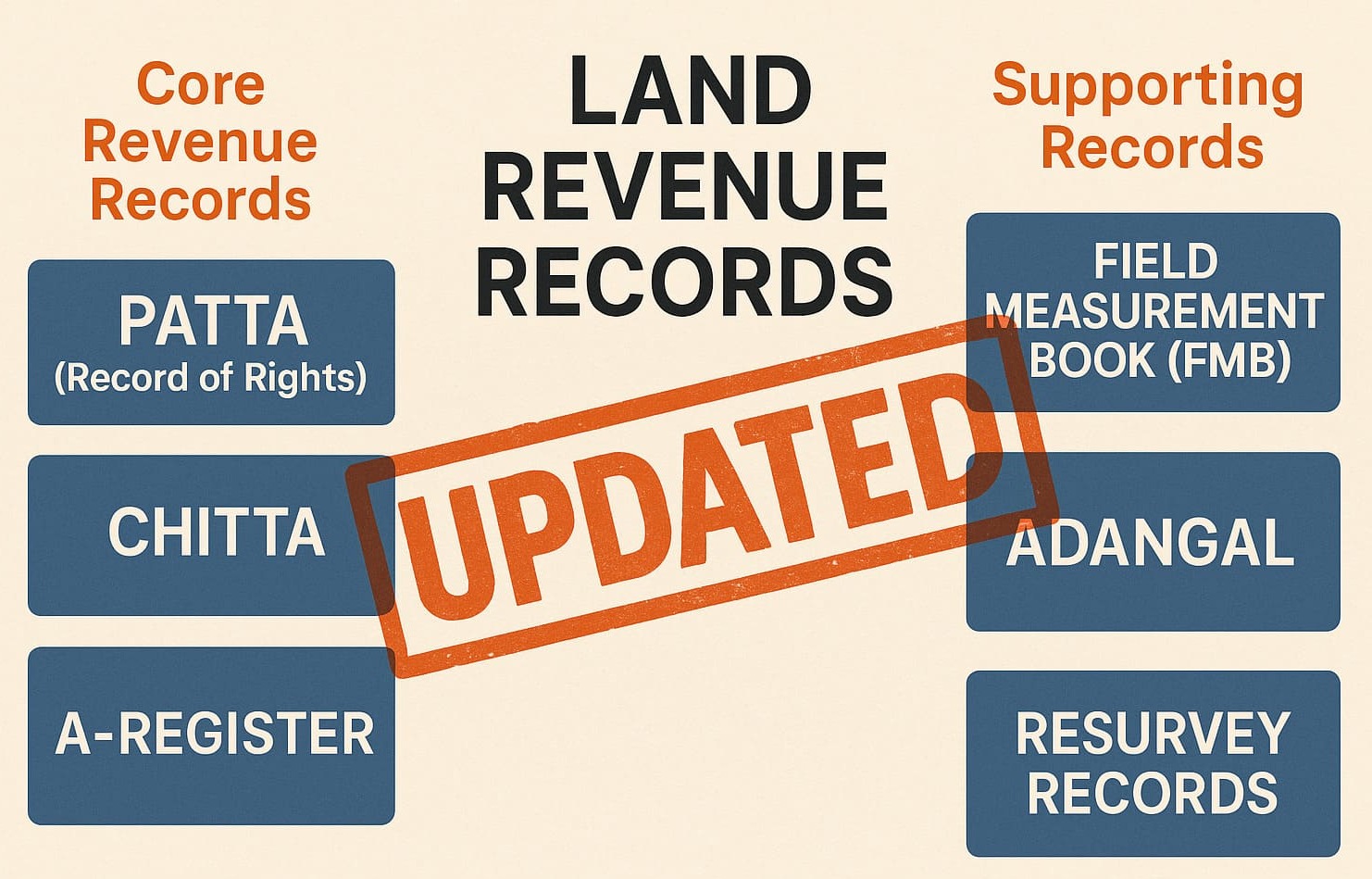
Revenue Records at the Root: Why India’s Land Disputes Begin in the Tehsil Office
Supreme Court questions revenue officers’ authority in title adjudication
Defective documentation and lack of legal training fuel 66% of civil cases
By Vishwas Kumar
New Delhi: May 02, 2026:
Revenue departments in India play a central role in maintaining land records, mutations, and property rights, but their lack of legal training and reliance on defective documentation has made them a major source of disputes. The Supreme Court has repeatedly flagged this issue, stressing that revenue officers without judicial expertise cannot conclusively adjudicate ownership.
In cases involving disputed wills, attestation compliance, and evaluation of suspicious circumstances, the decision in Lakshmi Amma vs Talengalanarayana Bhatta highlights how courts assess the genuineness of a will, the importance of proper execution and attesting witnesses, and the burden on the propounder to establish validity under Indian succession law.
Analytical Article
Role of Revenue Department
- Mutation of Records: Revenue officers handle mutation (updating ownership in land records after sale, inheritance, or transfer).
- Maintenance of Land Records: They issue pattadar passbooks, record-of-rights, and certify ownership for loans or compensation.
- Quasi-Judicial Functions: They adjudicate disputes over succession, inheritance, and possession, often acting like civil courts.
Why Revenue Records Cause Disputes
- Defective Documentation: Records are often outdated, incomplete, or based on oral transfers.
- No Legal Training: Officers lack judicial qualifications, leading to inconsistent and erroneous decisions.
- Multiple Records: Conflicting entries in registry, municipal, and revenue records create confusion.
- Excessive Litigation: Nearly 66% of civil cases in India relate to land disputes, many originating from defective revenue records. Hindustan Times
Landmark Supreme Court Judgments
- Yerikala Sunkalamma v. State of Andhra Pradesh (2025)
- Issue: Revenue department dispossessed landowners without notice.
- Clarification: Courts held that revenue records cannot override ownership rights; proper legal adjudication is required. api.sci.gov.in
- Significance: Reinforced that defective revenue actions violate constitutional rights under Article 300A (right to property).
- Ashwini Kumar Upadhyay PIL (2026)
- Issue: Petition sought creation of a Revenue Judicial Service with legally trained officers.
- Clarification: Supreme Court issued notice to Centre and States, acknowledging that entrusting judicial functions to untrained revenue officers violates Article 50 (separation of judiciary from executive). The Hindu Bar and Bench Hindustan Times UNITED NEWS OF INDIA SME Times
- Significance: Recognized systemic flaws in revenue adjudication as a major contributor to land disputes.
Why Revenue System Fuels Litigation
- Arbitrary Decisions: Officers decide ownership without legal expertise.
- Frequent Transfers: Lack of continuity in handling cases prolongs disputes.
- Overlap of Jurisdiction: Civil courts and revenue offices often issue conflicting orders.
- Constitutional Concerns: Entrusting judicial functions to executive officers undermines fairness and access to justice.
FAQ
Q1: What is mutation and why is it important?
Mutation updates ownership in revenue records. Without it, buyers may lose compensation or loan eligibility.
Q2: Can revenue records prove ownership?
No. Supreme Court has held revenue records are administrative, not conclusive proof of title.
Q3: Why are revenue officers criticized?
Because they lack legal training yet adjudicate complex disputes, leading to inconsistent decisions.
Q4: What reforms has the Supreme Court suggested?
Creation of a Revenue Judicial Service with legally trained officers, supervised by High Courts.
Q5: Why do revenue records cause most disputes?
Defective documentation, outdated entries, and arbitrary decisions make them unreliable, contributing to over half of civil litigation.
In summary: The revenue department’s defective documentation and quasi-judicial role without legal training are a major source of India’s land disputes. Supreme Court judgments have highlighted the need for systemic reform, including legally trained adjudicators and conclusive titling, to reduce litigation.