
Property vs. Patient Autonomy: Untangling India’s Two Wills
Succession Act clarifies inheritance wills; Supreme Court defines medical directives
Families must distinguish estate planning from end-of-life care
By Vishwas Kumar
New Delhi: May 06, 2026
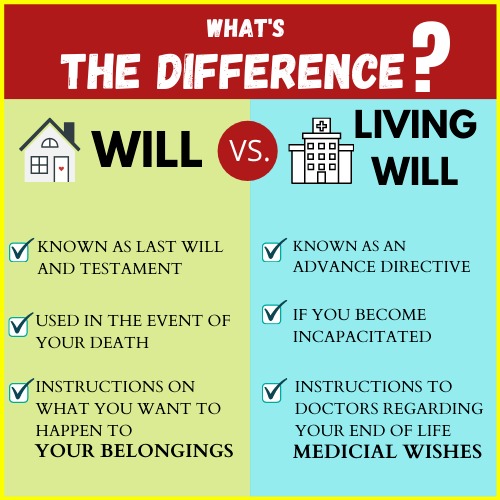
Under Indian law, a Registered Will and a Non-Registered Will both deal with property succession under the Indian Succession Act, 1925, while a Living Will is entirely different—it governs medical treatment choices at the end of life. They do not overlap: a Living Will cannot become an inheritance document, as it is about healthcare autonomy, not asset distribution.
For readers dealing with property succession, settlement deeds, and inheritance disputes within families, the Supreme Court judgment in Pappammal (Died Through LR) R. Krsna Murtii Vs Jothi & Anr provides important legal clarity on ownership rights, transfer of immovable property, and interpretation of family arrangements. The ruling discusses the evidentiary value of documents, succession claims, and rights arising from settlement transactions, making it highly relevant for understanding Indian property law and family inheritance litigation.
Registered vs. Non-Registered Wills
Under the Indian Succession Act, 1925, a Will is a legal declaration of how a person’s property should be distributed after death.
- Registered Will:
- Executed as per Section 63 of the Succession Act (signed by testator, attested by two witnesses).
- Registered voluntarily under the Registration Act, 1908 with the Sub-Registrar.
- Provides prima facie proof of authenticity, reduces disputes, and ensures safe custody.
- Courts give higher evidentiary weight during probate. LawBhoomi indianlawpress.com
- Non-Registered Will:
- Also, valid if executed properly under Section 63.
- No compulsory registration required.
- Relies on witness testimony for proof, making it more vulnerable to disputes.
- Supreme Court rulings (e.g., Saroja v. Santhil Kumar, 2010) confirm enforceability if execution is proven. LawBhoomi
Key takeaway: Registration is optional but strengthens enforceability. Both types are valid, but registered wills are harder to challenge.
Living Will: A Different Legal Instrument
A Living Will, also called an Advance Medical Directive, is not about property but healthcare.
- Recognized in Common Cause v. Union of India (2018) as part of the right to die with dignity under Article 21.
- Simplified by the Supreme Court’s 2023 guidelines:
- Can be executed before a Notary or Gazetted Officer (no magistrate countersignature needed).
- Requires two witnesses.
- Enforced only after review by two medical boards within 48 hours.
- Stored with family, physicians, or digitally (e.g., Maharashtra’s MahaULB portal). advocategandhi.com I A P C
Purpose: It specifies whether life support should be continued or withdrawn when recovery is medically futile. It protects patient autonomy and reduces family disputes in ICUs. Mint fountainheadlegal.com
Do They Overlap?
- No overlap:
- Inheritance Wills (registered or not) deal with property distribution after death.
- Living Wills deal with medical treatment during incapacity before death.
- A Living Will cannot become an inheritance Will. It has no role in succession law under the Indian Succession Act.
- However, both instruments reduce disputes: one in hospitals, the other in courts.
Why the Distinction Matters
- Inheritance disputes: Over 1.5 million pending cases in 2025, many triggered by unclear wills. Mint
- Medical disputes: Families fracture over ICU decisions without living wills, leading indirectly to inheritance battles.
- Legal clarity: Citizens should execute both—a property will for succession, and a living will for healthcare autonomy.
[LEGAL HELP]
CONTENTS FROM BOOK, WILL WRITING SIMPLIFIED, By Dr Ravinder Kumar Anand. [📘 Buy Will Writing Simplified online: Amazon | Flipkart ]
Draft of Petition for Probate of a complex Will containing posthumous Trust creation, appointment of Trustees, trust structure, substitutional bequests, and extensive asset distribution.
IN THE HON’BLE COURT OF THE DISTRICT JUDGE / COMPETENT PROBATE COURT
(Civil Original Jurisdiction)
PROBATE PETITION NO._____ OF 20
In the matter of the Estate of:
Ms./Mrs. [Name of Deceased]
[Aadhaar No.__/PAN No./Passport No. _____, issued on _____ at ____],
Son/Daughter/Wife of [Father’s or Husband’s Name],
Residing at [Full Residential Address].
… Deceased
THE HUMBLE PETITION OF
Mr./Ms./Mrs. [Petitioner’s Full Name],
[Aadhaar No.___/PAN No./Passport No. ____, issued on ____ at _____]
Son/Daughter/Wife of [Father’s or Husband’s Name],
Residing at [Full Residential Address].
… Petitioner
VERSUS
State & Other
…Respondents
Petition for Probate of Last Will and Testament dated _________ under Sections 276 & 278 of the Indian Succession Act, 1925
MOST RESPECTFULLY SHOWETH:
1. That the Petitioner, namely Mr./Ms./Mrs. _______ (holder of Aadhaar No. _____ / PAN No. ____ / Passport No. __________, issued on ____ at ___), residing at ____________, is filing the present Petition under Sections 276 and 278 of the Indian Succession Act, 1925, for the grant of Probate of the Last Will and Testament dated ____ executed by the deceased Testator, Mr./Ms./Mrs. ______, S/D/W of _____ (holder of Aadhaar No. ____ / PAN No. ____ / Passport No. ___, issued on _____ at ___).
2. That the Petitioner is filing the present Petition in the capacity of the Executor / Executrix / Beneficiary named under the said Last Will and Testament dated_____ of the above-named deceased Testator.
3. That the Testator, [Full Name], son/daughter/wife of [Name], residing at [Address], hereinafter referred to as “the Deceased,” expired on [Date] at [Place], aged about [Age], having executed his/her Last and Final Will dated [Date], duly attested and annexed hereto.
4. That the Deceased, at the time of execution of the said Will, was of sound and disposing mind, memory, and understanding and executed the Will voluntarily, without coercion, undue influence, misrepresentation, or compulsion, and the said Will was attested by competent witnesses in accordance with Section 63 of the Indian Succession Act, 1925.
5. That the Deceased declared under Clause No.__ of the Will that he/she was the absolute owner of various movable and immovable properties, forming the entire estate described under Annexure A(i) to A(iv) for movable properties and Clause Nos.__ to __ for immovable properties.
6. That the Will bequeaths a part of the estate to a Trust, namely “XYZ Trust,” to be constituted posthumously by [Name], for the collective benefit of the sons, daughters, and lineal descendants of the Deceased, under Clause No.__.
7. That the Deceased nominated certain persons as Trustees as per Clause No., with [Name] appointed as the Managing Trustee, entitled to receive a monthly honorarium of Rs. [Amount], under Clause No.
8. That the Will contains provisions for succession and continuity of trusteeship in case of death, incapacity, or resignation of any trustee.
9. That under Clause No.___, the Deceased bequeathed his/her movable assets including equities, bank accounts, fixed deposits, and valuable chattels to the sons, daughters, and/or the Trust, as specified under sub-clauses __ to ___.
10. That the immovable properties, including residential houses, plots, apartments, industrial and agricultural lands, stand bequeathed among the children and the Trust as provided under the respective sub-clauses.
11. That Clause No.__ provides for substitutional bequest wherein the share of any predeceased son or daughter devolves upon their legal heirs in equal shares.
12. That Clauses No.__ and __ provide for disposition of any remaining or subsequently acquired properties, to devolve equally among surviving children or heirs of predeceased children.
13. That the Will further directs, under Clause No.__, that income from the XYZ Trust shall be distributed equally among all children and grandchildren of the Testator, and upon the death of any beneficiary, his/her share shall devolve upon his/her legal heirs.
14. That the Petitioner is the duly appointed Executor/Executrix under Clause No.__ of the Will and seeks Probate without security, as expressly exempted by the Testator.
15. That the Petitioner undertakes that:
(a) The Will dated [Date] is the last and final Will;
(b) The Will is genuine and unrevoked;
(c) No other Will or Codicil exists;
(d) The Petitioner is unaware of any caveat or impediment to the grant of Probate.
16. That the Deceased died intestate in no part and the Will disposes of his/her entire estate.
17. That this Hon’ble Court has jurisdiction as the permanent residence and properties of the Deceased fall within its territorial limits.
18. That the Petitioner has not filed any other Probate Petition before any Court.
19. That requisite Court fees have been paid in accordance with law.
20. That the Petitioner shall rely upon the list of documents enclosed separately, and in case any further document is required or comes to knowledge, liberty may be granted to file the same.
21. That the cause of action for filing the present Petition first arose on the death of the Testator on _________ at _________, when the Will came into effect, and continues until grant of Probate.
22. That the Petition is within the prescribed limitation period. Without prejudice, the Petitioner seeks leave to seek condonation of delay, if any.
23. That to the best knowledge of the Petitioner, no caveat has yet been filed. If any caveat is filed, the Petitioner undertakes to contest the same in accordance with law.
PRAYER
In light of the foregoing, the Petitioner respectfully prays that this Hon’ble Court may graciously be pleased to:
a) Grant Probate of the Last Will and Testament dated [Date] of the Deceased Testator [Full Name];
b) Declare the Petitioner as the duly appointed Executor/Executrix empowered to administer the estate and assets of the Deceased in accordance with the Will;
c) Dispense with the requirement of furnishing security, in view of the waiver in the Will;
d) Pass such other order(s) as this Hon’ble Court deems fit in the interest of justice.
AND FOR THIS ACT OF KINDNESS, THE PETITIONER SHALL EVER PRAY.
(Petitioner)
Through
(Advocate for the Petitioner)
Place:
Date:
VERIFICATION
I, Mr./Ms./Mrs. ____________________________, the Petitioner above-named, do hereby verify that the contents of paragraphs ___ to ___ of the present Petition are true and correct to my knowledge and belief and nothing material has been concealed.
Verified at __________ on this ___ day of __________ 20__.
(Petitioner)
LIST OF DOCUMENTS
Annexure P-1 Certified Copy of Death Certificate
Annexure P-2 Original / Certified Copy of Last Will and Testament
Annexure P-3 Identity Proof [Aadhaar No./PAN No./Passport No.] & Consent of Executor
Annexure P-4 Identity Proof [Aadhaar No./PAN No./Passport No.] of Petitioner
Annexure P-5 Valuation Report (if required by Court)
Annexure P-6 Affidavit of Attesting Witnesses (if applicable)
Annexure P-7 Trust Deed
Annexure P-8 Identify Proof of the Beneficiary namely Mr. ________ S/o _______ R/o _____(holder of Aadhaar No._/PAN No./Passport No. ________, issued on _____ at _____).
Annexure P-9 Identify Proof of the Beneficiary namely Mr. _____ S/o _____ R/o ____ (holder of Aadhaar No.____ / PAN No./Passport No. __, issued on ____ at ______).
Annexure P-10 Identify Proof of the Beneficiary namely Mr. _____ S/o _____ R/o ____ (holder of Aadhaar No.____ / PAN No./Passport No. __, issued on ____ at ______)
Annexure P-11 Any other documents the Petitioner may submit later with Court’s permission
FAQ: Key Legal Points
Q1. Is registration of a property will mandatory?
No. Both registered and non-registered wills are valid if executed under Section 63 of the Succession Act. Registration only adds authenticity.
Q2. Which is stronger in court: registered or non-registered will?
A registered will carries higher evidentiary value and is less likely to be disputed.
Q3. What is a Living Will?
A healthcare directive stating whether life support should be continued or withdrawn if recovery is impossible.
Q4. Can a Living Will distribute property?
No. It only governs medical treatment. Property distribution requires a succession will.
Q5. Who can make a Living Will?
Any adult of sound mind, voluntarily, with two witnesses, attested by a notary or gazetted officer.
Q6. How is a Living Will enforced?
Two medical boards must certify the patient’s condition within 48 hours before withdrawal of treatment.
Q7. Should one make both types of wills?
Yes. A property will ensure smooth inheritance; a living will ensures medical autonomy.
In conclusion, Registered and Non-Registered Wills are succession tools under the Indian Succession Act, while Living Wills are medical directives under Supreme Court guidelines. They serve distinct purposes, and together they provide holistic protection—one for property, the other for dignity.