
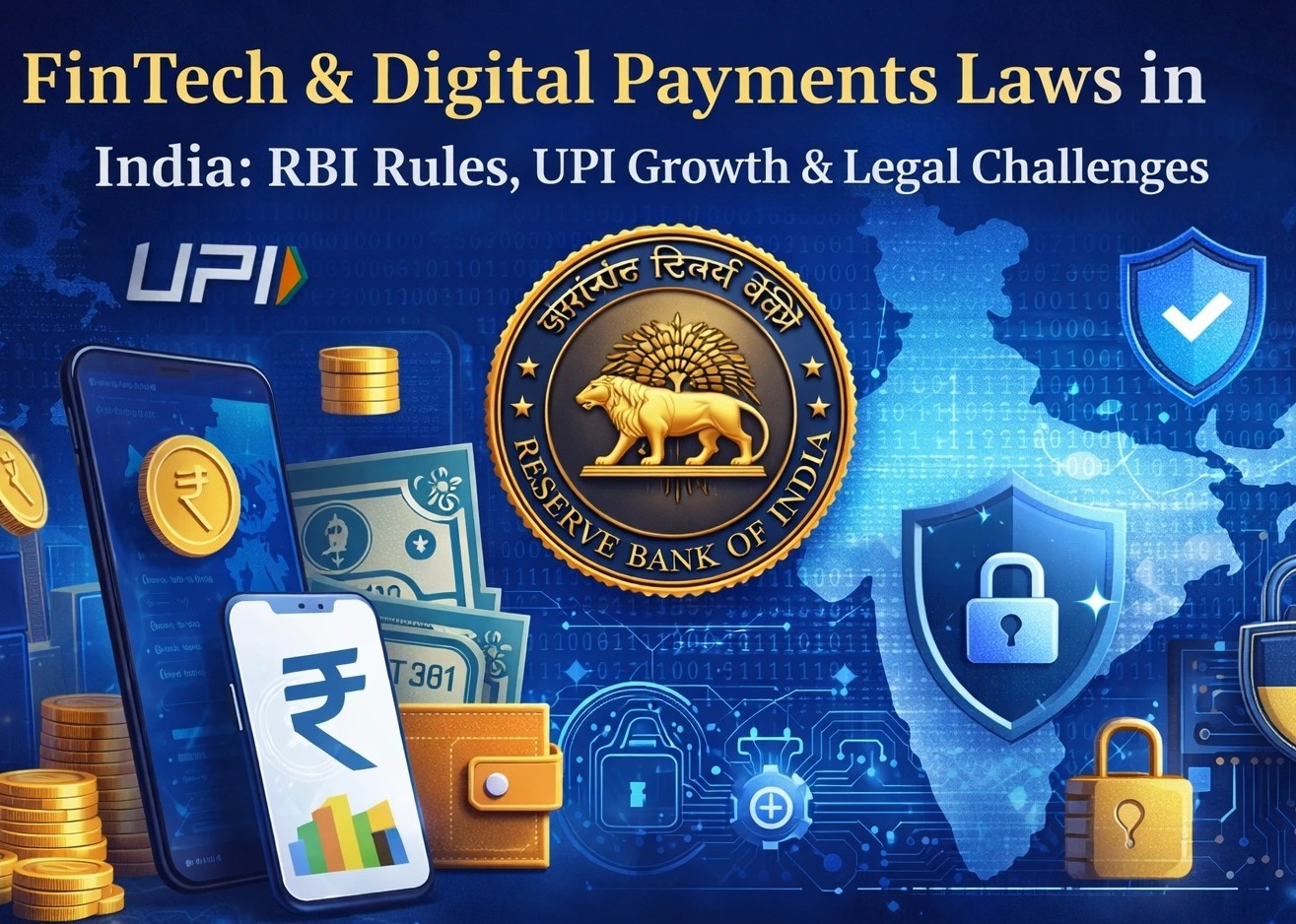
Digital Payments and Fintech: RBI’s Balancing Act in the Age of Innovation
FEMA and RBI oversight ensure trust in India’s digital economy
Global comparisons highlight India’s rapid adoption yet cautious regulation
By Vishwas Kumar
New Delhi: June 22, 2026:
Digital payments and fintech innovations have dramatically reshaped India’s financial ecosystem over the past decade. From the meteoric rise of the Unified Payments Interface (UPI) to the proliferation of mobile wallets, neo banking platforms, and payment banks, India has witnessed an unprecedented surge in digital transactions. This transformation has not only enhanced convenience and efficiency but has also deepened financial inclusion, bringing millions of previously unbanked individuals into the formal financial system. The sheer scale of adoption has positioned India as a global leader in digital payments, with transaction volumes rivalling or surpassing those of advanced economies.
Inheritance disputes and succession-related civil matters often require detailed judicial scrutiny, as seen in the Lalitaben Jayantilal Popat vs Pragnaben Jamnadas Kataria judgment, where the court examined crucial legal principles related to property rights, succession, and family claims.
At the heart of this transformation lies the Reserve Bank of India (RBI), which plays a central role in shaping the regulatory environment. While the Payment and Settlement Systems Act, 2007 provides the statutory foundation for regulating payment systems, RBI’s oversight ensures that innovation does not compromise stability, security, or consumer protection. By issuing guidelines on interoperability, data security, and licensing of payment system operators, RBI has created a framework that balances innovation with prudence.
One of the most significant innovations has been UPI, developed by the National Payments Corporation of India (NPCI) under RBI’s supervision. UPI enables instant, interoperable transfers across banks and platforms, revolutionising peer-to-peer and merchant payments. Its success lies in its simplicity, scalability, and regulatory backing, which together have made it the backbone of India’s digital economy.
In parallel, Prepaid Payment Instruments (PPIs) such as mobile wallets have expanded access to digital payments, particularly for small transactions and underserved populations. RBI has mandated strict Know Your Customer (KYC) norms for PPIs, ensuring that financial inclusion does not come at the cost of security. Similarly, payment banks and account aggregators have been licensed to provide niche services, reflecting RBI’s willingness to experiment with new models while maintaining oversight.
Data security and sovereignty have emerged as critical concerns. RBI has mandated data localisation, requiring payment system operators to store transaction data within India. This move, influenced by constitutional principles such as the right to privacy under Article 21, reflects India’s emphasis on protecting consumer data and national security in the digital age.
Reporting requirements further reinforce transparency. Payment operators must file compliance reports with RBI, enabling the regulator to monitor systemic risks, ensure adherence to guidelines, and intervene when necessary. This reporting framework is crucial in a sector where rapid innovation can sometimes outpace regulation.
Analytically, India’s digital payments framework illustrates a dual strategy: encouraging innovation and adoption while embedding safeguards against misuse. The RBI’s role is not to stifle innovation but to channel it responsibly, ensuring that fintech growth aligns with broader economic and social priorities.
Comparative perspectives highlight India’s unique trajectory. In the United States, digital payments are regulated by the Federal Reserve and the Consumer Financial Protection Bureau, with emphasis on consumer rights. The European Union’s PSD2 Directive mandates open banking and strong customer authentication, while China’s fintech sector has grown rapidly under strict state oversight, dominated by platforms like Alipay and WeChat Pay. India’s model blends rapid adoption with cautious regulation, reflecting its dual priorities of inclusion and sovereignty.
In sum, digital payments and fintech innovations in India are more than technological advancements—they are instruments of empowerment and integration. The Payment and Settlement Systems Act, RBI’s guidelines, and NPCI’s innovations together create a framework that is both dynamic and secure. The challenge ahead lies in expanding access, strengthening cybersecurity, and aligning with global best practices, all while ensuring that consumer trust remains at the core of India’s digital economy.
Key Legal Framework
India’s digital payments ecosystem is governed by a robust legal and regulatory framework that balances innovation with consumer protection and systemic stability. At its core lies the Payment and Settlement Systems Act, 2007, which provides the statutory basis for regulating payment systems. This Act empowers the Reserve Bank of India (RBI) to authorise, regulate, and supervise all payment system operators, ensuring that the rapid growth of digital transactions does not compromise financial integrity.
Building on this foundation, the RBI Guidelines on Digital Payments define licensing requirements, interoperability standards, and compliance norms. These guidelines are periodically updated to reflect technological advances and evolving risks. They cover a wide spectrum of digital payment instruments, from mobile wallets and prepaid cards to innovative fintech platforms, ensuring that all players operate within a regulated environment.
A cornerstone of India’s digital payments revolution is the Unified Payments Interface (UPI), operated by the National Payments Corporation of India (NPCI) under RBI oversight. UPI enables instant, interoperable transfers across banks and platforms, making it one of the most successful payment innovations globally. Its regulatory backing ensures trust, scalability, and security.
Prepaid Payment Instruments (PPIs), such as mobile wallets, are also regulated by RBI. Strict Know Your Customer (KYC) norms apply, ensuring that financial inclusion does not come at the cost of security. These instruments have been crucial in expanding access to digital payments, particularly among small merchants and rural populations.
The framework extends to fintech licensing, where entities such as NBFC account aggregators, payment banks, and neobanks require RBI approval. This licensing regime ensures that new entrants meet prudential standards and operate responsibly.
Data security is another critical pillar. RBI mandates data localisation, requiring payment system operators to store transaction data within India. This measure, rooted in privacy and sovereignty concerns, reinforces consumer trust and national security.
Finally, reporting requirements ensure transparency. Payment operators must file compliance reports with RBI, enabling the regulator to monitor systemic risks, enforce standards, and intervene when necessary.
Together, these provisions create a framework that is both dynamic and cautious. By encouraging innovation while embedding safeguards, India has built a digital payments ecosystem that is globally admired for its scale, inclusivity, and resilience.
Constitutional and Judicial Dimensions
Article 19(1)(g): Protects freedom of trade, subject to restrictions in public interest.
Article 21: Right to privacy, relevant to data protection in digital payments.
Justice K.S. Puttaswamy v. Union of India (2017): Established privacy as a fundamental right, shaping RBI’s data localisation norms.
Vodafone International Holdings v. Union of India (2012): Reinforced certainty in taxation, indirectly relevant to fintech transactions. Judicial precedents highlight the importance of proportionality, privacy, and predictability in India’s digital payments regime.
Comparative Perspectives
United States: Digital payments regulated by Federal Reserve and CFPB, with emphasis on consumer protection.
European Union: PSD2 Directive mandates open banking and strong customer authentication.
China: Rapid fintech growth under strict state oversight, with dominance of Alipay and WeChat Pay. India’s model blends rapid adoption with cautious regulation, ensuring innovation aligns with national priorities.
Case Studies
1. UPI Expansion The Unified Payments Interface (UPI) has become the backbone of India’s digital payments revolution. Launched in 2016, UPI has scaled rapidly to handle billions of monthly transactions, reflecting both its technological robustness and regulatory support. Operated by the National Payments Corporation of India (NPCI) under RBI oversight, UPI enables instant, interoperable transfers across banks and platforms. Its success lies in its simplicity—users can transfer money using mobile numbers or virtual payment addresses without needing bank details. The scalability of UPI demonstrates how regulatory backing, combined with innovation, can create a trusted ecosystem that fosters financial inclusion and global recognition.
2. Wallet Regulation Mobile wallets, or Prepaid Payment Instruments (PPIs), have played a crucial role in expanding access to digital payments, especially for small merchants and rural populations. However, their rapid growth raised concerns about security and misuse. To address this, RBI mandated strict Know Your Customer (KYC) norms for wallet users. This regulatory intervention balanced inclusion with security, ensuring that wallets remained accessible while reducing risks of fraud and money laundering. The case of wallet regulation highlights RBI’s proactive role in embedding safeguards without stifling innovation, thereby maintaining consumer trust in digital payment systems.
3. Data Localisation As digital transactions surged, concerns about data privacy and sovereignty became central. In response, RBI mandated data localisation, requiring payment system operators to store transaction data within India. This move was influenced by constitutional principles such as the right to privacy under Article 21 and reinforced India’s emphasis on protecting consumer data and national security. While initially contested by global payment companies, data localisation has strengthened India’s control over its digital ecosystem. This case illustrates how RBI integrates constitutional values into regulatory practice, ensuring that technological progress aligns with sovereignty and consumer protection.
Extended FAQ Index (40 Questions with 2–3 line answers)
What is UPI? Unified Payments Interface enabling instant transfers.
What is statutory basis? Payment and Settlement Systems Act, 2007.
What role does RBI play? Regulates payment systems and fintech licensing.
What are PPIs? Prepaid Payment Instruments like mobile wallets.
What are KYC norms? Know Your Customer requirements for wallets.
What is fintech licensing? Approval for NBFCs, payment banks, neobanks.
What are data localisation norms? Mandate storage of payment data in India.
What are reporting requirements? Operators must file compliance reports with RBI.
What is Article 19(1)(g)? Protects trade freedoms subject to restrictions.
What is Article 21? Right to privacy, relevant to data protection.
What judicial precedents are relevant? Puttaswamy case, Vodafone case.
How does US regulate payments? Federal Reserve and CFPB oversight.
How does EU regulate payments? PSD2 Directive mandates open banking.
How does China regulate payments? Strict oversight with Alipay dominance.
What is political economy of fintech reforms? Balancing innovation with sovereignty.
How do digital payments affect corporates? Enable faster transactions and efficiency.
How do digital payments affect start-ups? Provide platforms for innovation.
What risks arise from fintech? Cybersecurity and data privacy concerns.
How does government approval process work? RBI licensing and compliance checks.
What role do courts play? Ensure proportionality and privacy.
How do payments affect exporters? Enable faster cross-border settlements.
What is aggregate cap for wallets? Limits on prepaid balances.
How do payments affect liquidity? Enhance transaction speed and efficiency.
What are implications for infrastructure? Digital rails for financial inclusion.
How do payments affect valuations? Boost fintech valuations globally.
What are implications for banking sector? Banks integrate with fintech platforms.
What are implications for insurance sector? Digital payments streamline premium collection.
What are implications for defence sector? Data localisation ensures sovereignty.
What is role of SEBI? Indirect, through listed fintech disclosures.
What is role of DPIIT? Policy guidance for start-ups.
How do payments affect bond markets? Indirect, through settlement efficiency.
What is role of RBI? Gatekeeper of digital payment systems.
How do payments balance openness and oversight? By liberalising access but imposing safeguards.
What future reforms are likely? Digital currency integration and open banking.
How do payments affect India’s global standing? Position India as fintech leader.
What sectors benefit most? Retail, e-commerce, financial services.
How do payments affect retail investors? Enable seamless transactions.
What is role of NPCI? Operates UPI under RBI oversight.
How do payments affect rural inclusion? Enable access via mobile platforms.
What is long-term vision? Digital economy anchored in trust and innovation.
Op-Ed Style Closing Vision (~750 words)
Digital payments are not just transactions—they are the lifeblood of India’s digital economy. The Payment and Settlement Systems Act and RBI’s oversight illustrate India’s cautious embrace of fintech innovation. By permitting rapid adoption of UPI and wallets while embedding safeguards such as KYC and data localisation, India signals openness without compromising stability.
This duality mirrors global practices. The US emphasises consumer protection, the EU mandates open banking, and China enforces strict oversight. India’s approach blends rapid adoption with prudence, ensuring that innovation aligns with sovereignty and security.
At the constitutional level, digital payment regulation exemplifies the balance between Article 19(1)(g) freedoms and reasonable restrictions, and between Article 21 privacy rights and regulatory safeguards. Judicial precedents such as the Puttaswamy case reinforce the importance of privacy, shaping RBI’s data localisation norms.
The human dimension is equally important. For start-ups, digital payments provide platforms for innovation. For corporates, they enable efficiency. For policymakers, the challenge lies in balancing openness with vigilance—welcoming innovation while guarding against risks.
Looking ahead, India’s success will depend on institutionalising transparency, strengthening coordination between RBI, NPCI, SEBI, and government agencies, and ensuring that safeguards do not morph into barriers. The future of India’s fintech landscape hinges on this delicate equilibrium.
Digital payment reforms are not mere technical adjustments—they are a statement of India’s economic philosophy. They reveal a country confident enough to embrace innovation, yet cautious enough to protect sovereignty. They show regulators willing to innovate, yet determined to uphold accountability. And they highlight a judiciary that respects autonomy, yet insists on proportionality.
Ultimately, digital payments are not just numbers on a screen—they are reflections of trust, credibility, and vision. India’s cautious embrace of fintech, anchored in statutory law and overseen by the RBI, is a reminder that economic policy is as much about principles as it is about pragmatism. The challenge is to keep that balance intact, so that India’s growth story remains both ambitious and sustainable.