
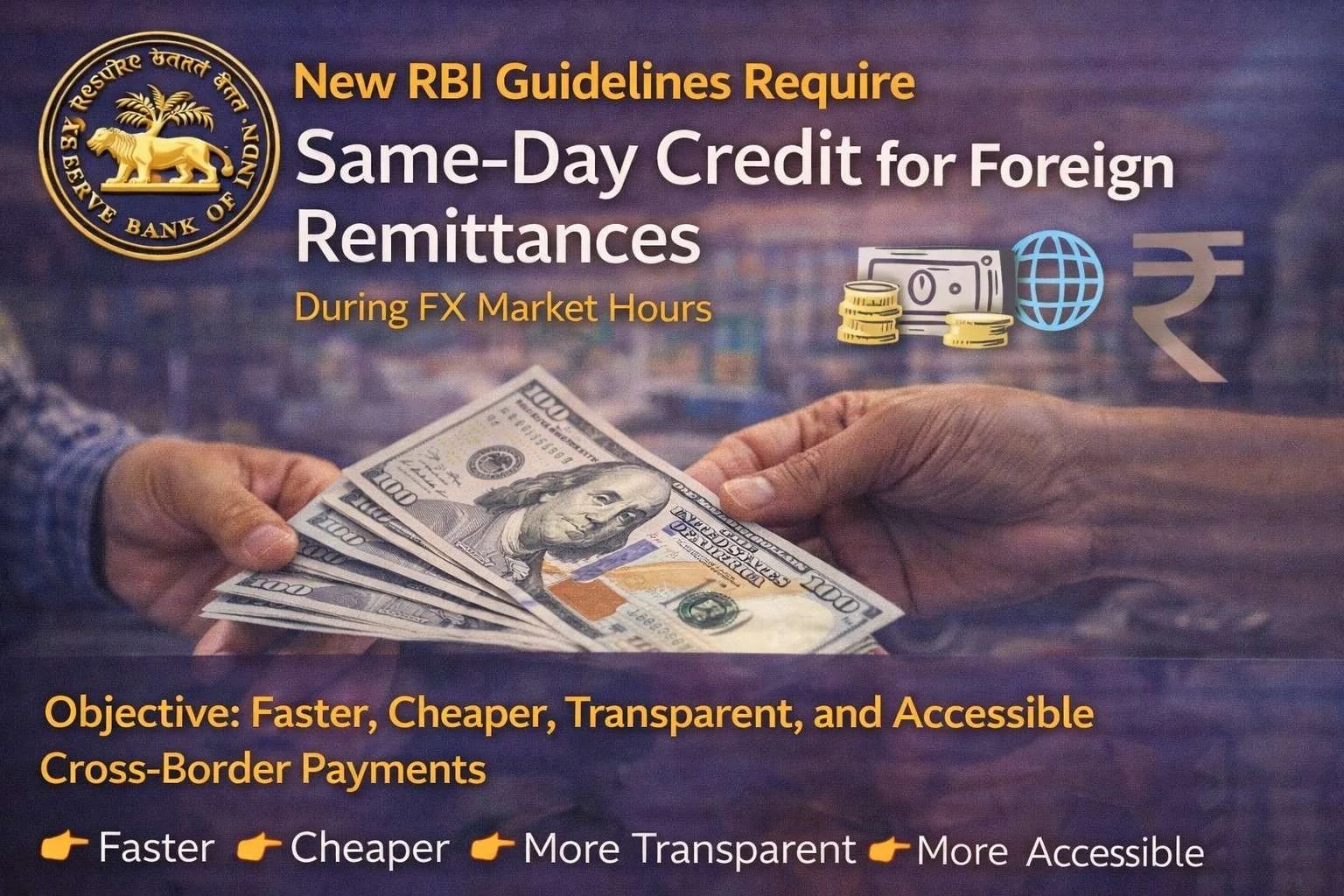
RBI’s Push for Faster Cross-Border Payments: A Consumer-Centric Overhaul
Speed & Transparency: Same-day credits and instant notifications reshape remittance experience.
Global Alignment: India’s banking reforms sync with G20 roadmap and Payments Vision 2025.
By Vishwas Kumar
New Delhi: April 23, 2026:
Cross-border inward remittances are a lifeline for millions of Indian households, fuelling consumption, savings, and investments. Yet, delays, opaque processes, and reconciliation bottlenecks have long plagued the system. The Reserve Bank of India’s latest guidelines mark a decisive shift, aiming to make inward payments faster, more transparent, and digitally accessible. With implementation slated six months from the circular’s release, these reforms promise to transform consumer experience while aligning India with global best practices.
Legal & Regulatory Context
The directions are issued under RBI’s powers conferred by the Foreign Exchange Management Act (FEMA), 1999 and the Payment and Settlement Systems Act, 2007. These statutes empower RBI to regulate foreign exchange transactions and payment systems in the public interest. By embedding the reforms within the Payments Vision 2025 and the G20 roadmap for cross-border payments, RBI ensures both domestic compliance and international harmonization.
[View all important will case laws here. Click the link here: https://www.courtkutchehry.com/pages/blog/123-supreme-court-judgments-on-wills/]
Key Provisions and Consumer Impact
- Instant Customer Notification
- Banks must inform customers immediately upon receipt of inward remittances.
- If received after operating hours, notification must be sent at the start of the next business day.
- Impact: Consumers gain real-time visibility, reducing anxiety and uncertainty about funds.
- Faster Reconciliation of Nostro Accounts
- Banks are advised to adopt near real-time reconciliation, ideally at intervals not exceeding one hour.
- Impact: Eliminates end-of-day bottlenecks, ensuring quicker fund availability and reducing operational risks.
- Same-Day Credit Expectations
- Inward payments received during FX (foreign exchange) market hours should be credited the same day.
- Payment’s after-market hours must be credited by the next business day, subject to FEMA compliance.
- Impact: Families depending on remittances for daily expenses benefit from predictable, timely access to funds.
- Straight-Through Processing (STP)
- Banks may implement STP for eligible accounts, subject to risk and regulatory checks.
- Impact: Reduces manual intervention, accelerates fund transfers, and minimizes errors.
- Enhanced Digital Access
- Banks are encouraged to strengthen digital interfaces for document submission, tracking, and FX transaction management.
- Impact: Consumers enjoy smoother, paperless processes, reducing reliance on branch visits.
Broader Implications
- For Consumers: The reforms mean faster access to funds, improved transparency, and reduced uncertainty. Migrant workers and families relying on remittances will particularly benefit.
- For Banks: Operational upgrades are required, but efficiency gains and improved customer trust outweigh costs.
- For Regulators: The move strengthens India’s compliance with international standards, enhancing its reputation in global financial corridors.
Editorial Perspective
The RBI’s guidelines are not just technical adjustments—they represent a consumer rights charter in cross-border finance. By mandating speed, transparency, and digital access, RBI acknowledges the socio-economic importance of remittances. The reforms align India with the G20’s vision of faster, cheaper, and more transparent cross-border payments, while ensuring domestic compliance under FEMA.
[RESEARCH RESOURCES]
BUY & READ THE BOOK, WILL WRITING SIMPLIFIED, By Dr Ravinder Kumar Anand. [📘 Buy Will Writing Simplified online: Amazon | Flipkart ]
FAQs for Quick Understanding
Q1. What law empowers RBI to issue these directions?
A: RBI draws authority from the Foreign Exchange Management Act, 1999 and the Payment and Settlement Systems Act, 2007.
Q2. When will these rules take effect?
A: Six months from the date of the circular.
Q3. How will customers benefit immediately?
A: Customers will receive instant notifications when inward remittances are received, ensuring transparency.
Q4. What is the significance of faster nostro reconciliation?
A: It ensures banks can credit funds more quickly, reducing delays caused by end-of-day reconciliations.
Q5. Will all remittances be credited the same day?
A: Payments received during FX market hours should be credited the same day; those after hours by the next business day.
Q6. What is Straight-Through Processing (STP)?
A: STP allows automatic crediting of eligible accounts without manual intervention, subject to compliance checks.
Q7. How does this align with global standards?
A: The reforms are part of the G20 roadmap and India’s Payments Vision 2025, ensuring international harmonization.
Q8. Will consumers need to visit branches for documentation?
A: No. Banks are encouraged to provide digital interfaces for submission and tracking, reducing physical paperwork.
Conclusion
The RBI’s new directions on faster cross-border inward payments represent a watershed moment for remittance flows in India. By mandating instant notifications, same-day credits, and digital access, the framework places consumers at the center of financial reform. For millions of households dependent on remittances, this is not just regulatory fine print—it is a promise of speed, transparency, and dignity in financial transactions.