
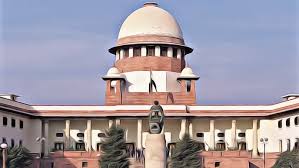
Supreme Court Sets Gold Standard for Proof of Wills
Attesting witnesses must prove execution, not just signatures
Suspicious circumstances demand higher scrutiny
By Vishwas Kumar
New Delhi: April 25, 2026:
The most cited and legally significant ones are Indu Bala Bose v. Manindra Chandra Bose (1982) and Janki Narayan Bhoir v. Narayan Namdeo Kadam (2003). These two rulings are foundational in Indian succession law, particularly on the proof of wills and the role of attesting witnesses. They continue to be cited in almost every major testamentary dispute.
Property disputes involving religious or institutional claims often require strict proof of ownership and legal entitlement—this ruling provides crucial judicial guidance: Supreme Court judgment on property rights and succession disputes in India
Case Contexts
1. Indu Bala Bose v. Manindra Chandra Bose (1982)
- Issue: How should courts evaluate wills when suspicious circumstances exist?
- Facts: The will in question excluded natural heirs, raising doubts about its genuineness.
- Ruling: The Supreme Court reaffirmed the principles laid down in H. Venkatachala Iyengar v. Thimmajamma (1959), holding that the propounder must dispel suspicious circumstances and prove the will to the satisfaction of the court.
- Significance: This case reinforced the suspicious circumstances doctrine, ensuring that courts adopt a cautious approach when wills appear unnatural or exclude close heirs. It remains a leading precedent cited alongside Iyengar.
2. Janki Narayan Bhoir v. Narayan Namdeo Kadam (2003)
- Issue: What is the role of attesting witnesses in proving a will under Section 68 of the Evidence Act?
- Facts: The dispute centered on whether mere proof of signatures sufficed to establish due execution of a will.
- Ruling: The Supreme Court held that at least one attesting witness must prove execution of the will, not just the testator’s signature. The witness must depose that the testator signed in their presence and that they attested in his presence.
- Significance: This ruling clarified evidentiary standards, making it clear that formal compliance with Section 63 of the Succession Act and Section 68 of the Evidence Act is mandatory. It is one of the most cited authorities on proof of wills.
Other Cases (Less Frequently Cited)
- Jagdish Chand Sharma v. Narain Singh Saini (2015): Addressed suspicious circumstances and reiterated the need for strict proof of wills.
- Jagmail Singh v. Karamjit Singh (2020): Reaffirmed the suspicious circumstances doctrine in modern succession disputes.
- Joyce Primrose Prestor v. Vera Marie Vas (1996): Concerned Christian succession law but is less frequently cited.
- Jyoti Sharma v. Vishnu Goyal (2025): A recent case, not yet widely cited.
Analytical Significance
- Suspicious Circumstances Doctrine (Indu Bala Bose): Strengthened judicial caution in succession disputes, ensuring wills are not upheld blindly.
- Attesting Witness Rule (Janki Narayan Bhoir): Clarified evidentiary requirements, preventing fraudulent wills from being validated by mere signatures.
- Continuity of Doctrine: Both cases build upon Iyengar v. Thimmajamma (1959), forming a trilogy of precedents that dominate Indian succession law.
Together, these rulings fortify the probate system, balancing testamentary freedom with safeguards against fraud and undue influence.
[RESEARCH RESOURCES]
EXTRACTS FROM BOOK, WILL WRITING SIMPLIFIED, By Dr Ravinder Kumar Anand. [📘 Buy Will Writing Simplified online: Amazon | Flipkart ]
|
Indu Bala Bose & Ors. (Smt.) v. Manindra Chandra Bose & Anr., (1981) 11 SC CK 0017: (1982) 1 SCC 20: 1981 SCC OnLine SC 423: AIR 1982 SC 133: Civil Appeal No. 1872(N) of 1970. |
|
J |
|
Jagdish Chand Sharma v. Narain Singh Saini (Dead) through Legal Representatives and Others., (2015) 05 SC CK 0091: ((2015) 8 SCC 615: AIR 2015 SC 2149, Civil Appeal Nos.: 4181–4182 of 2015. |
|
Jagmail Singh and Another v. Karamjit Singh and Others, (2020) 05 SC CK 0019: (2020) 5 SCC 178; AIR 2020 SC 2319; Civil Appeal No. 1889 of 2020. |
|
Janki Narayan Bhoir v. Narayan Namdeo Kadam., (2002) 12 SC CK 0087: (2003) 2 SCC 91: AIR 2003 SC 761, Civil Appeal No. 11194 of 1995. |
|
Joyce Primrose Prestor v. Vera Marie Vas & Others., (1996) 04 SC CK 0152: (1996) 9 SCC 324: Civil Appeal No. 3481 of 1979. |
|
Jyoti Sharma vs. Vishnu Goyal & Anr., (2025) 09 SC CK 0175: Civil Appeal No.11768 of 2025. |
FAQs
Q1: Why is Indu Bala Bose important?
It reinforced the suspicious circumstances doctrine, requiring courts to scrutinize wills that exclude natural heirs.
Q2: What did Janki Narayan Bhoir clarify?
That at least one attesting witness must prove execution of the will, not just the testator’s signature.
Q3: How do these cases relate to Iyengar v. Thimmajamma?
They build upon Iyengar’s foundational principles, refining the standards for proof of wills.
Q4: What happens if suspicious circumstances exist?
The propounder must dispel them convincingly; otherwise, the will may be rejected.
Q5: Are these rulings still applied today?
Yes, they remain binding precedents and are cited in almost every major succession dispute.
In essence, Indu Bala Bose and Janki Narayan Bhoir remain pillars of Indian succession law—ensuring wills are proved with rigor, suspicious circumstances are dispelled, and attesting witnesses play their mandated role in safeguarding testamentary authenticity.