
Probate or Intestate: How India Decides Who Inherits
Section 213 makes probate mandatory for certain communities and jurisdictions
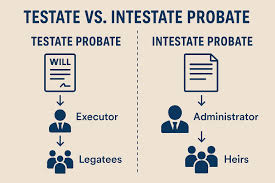
Intestate succession fills the gap when no Will exists
By Vishwas Kumar
New Delhi: May 02, 2026:
Probate and intestate succession are two pillars of inheritance law in India. Probate ensures judicial confirmation of a Will, while intestate succession governs distribution when no Will exists. Section 213 of the Indian Succession Act, 1925, is central to understanding probate requirements and limitations.
In disputes concerning inheritance rights, validity of wills, and evidentiary standards, the ruling in Mst. Karmi vs Amru provides important clarity on how courts evaluate succession claims, examine documentary and oral evidence, and determine rightful ownership in contested property matters under Indian law.
What Probate Means
Probate is the judicial confirmation of a Will’s authenticity. It is issued by a competent court under the Indian Succession Act, 1925, and authorises the executor to administer the estate. Probate ensures:
- The Will is genuine and not forged.
- The testator was competent and acted voluntarily.
- The executor is legally empowered to distribute assets.
- Heirs, creditors, and claimants are protected under court supervision.
Section 213 of the Indian Succession Act
Section 213 establishes that no right as executor or legatee can be enforced in court unless probate or letters of administration have been granted. However, it applies selectively:
- Mandatory Probate: For Hindus, Buddhists, Sikhs, and Jains, but only for Wills covered under Section 57 (i.e., Wills executed within the presidency towns of Mumbai, Chennai, and Kolkata, or relating to immovable property situated there).
- Parsis: Probate is required for Wills made within the ordinary original civil jurisdiction of the High Courts at Calcutta, Madras, and Bombay.
- Exemptions: Wills made by Muslims and Indian Christians are exempt from Section 213.
Practical Implications
- In Presidency Towns, probate is compulsory for certain communities.
- Outside these jurisdictions, probate is optional but often sought to avoid disputes.
- Probate provides judicial recognition, reducing risks of forgery or contestation.
Intestate Succession
When a person dies without leaving a valid Will, their estate is distributed under intestate succession laws:
- Hindus, Buddhists, Sikhs, Jains: Governed by the Hindu Succession Act, 1956.
- Muslims: Governed by personal law (Shariat).
- Christians and Parsis: Governed by the Indian Succession Act, 1925.
Intestate succession ensures lawful distribution among heirs, but often leads to disputes over shares, especially in joint families.
Why Probate Matters
- Prevents fraudulent claims.
- Provides clarity in ownership transfer.
- Protects creditors and legatees.
- Reduces litigation by offering judicial confirmation.
Landmark Judicial Clarifications
- Clarence Pais v. Union of India (2001): Supreme Court clarified that Section 213 does not apply to Indian Christians outside presidency towns.
- Krishna Kumar Birla v. Rajendra Singh Lodha (2008): Court held that probate proceedings are judicial in nature, ensuring authenticity of Wills.
- Delhi High Court (various rulings): Reiterated that probate is not mandatory outside presidency towns but remains advisable for certainty.
Conclusion
Probate is a safeguard against fraud and ambiguity, while intestate succession ensures lawful distribution when no Will exists. Section 213’s selective application reflects India’s plural legal system, but voluntary probate remains a wise choice to avoid disputes.
[RESEARCH RESOURCES]
EXTRACTS FROM BOOK, WILL WRITING SIMPLIFIED, By Dr Ravinder Kumar Anand. [📘 Buy Will Writing Simplified online: Amazon | Flipkart ]
Basics about Probate and Intestate
7.1 “Probate” is governed by Section 213 of Indian Succession Act which establishes Right as executor or legatee. Section 213 is as under:-
Section 213. Right as executor or legatee when established.
(1). No right as executor or legatee can be established in any Court of Justice, unless a Court of competent jurisdiction in 1[India] has granted probate of the will under which the right is claimed, or has granted letters of administration with the will or with a copy of an authenticated copy of the will annexed.
(2). This section shall not apply in the case of wills made by Muhammadans 3[or Indian Christians], and shall only apply--
(i). in the case of wills made by any Hindu, Buddhist, Sikh or Jaina where such wills are of the classes specified in clauses (a) and (b) of section 57; and
(ii). in the case of wills made by any Parsi dying, after the commencement of the Indian Succession (Amendment) Act, 1962 (16 of 1962), where such wills are made within the local limits of the 4[ordinary-original civil jurisdiction of the High Courts at Calcutta, Madras and Bombay, and where such wills are made outside those limits, in so far as they relate to immovable property situate within those limits.]
7.2 “Probate” is the certified copy of a Will issued under the seal of a court of competent jurisdiction, together with an official grant of administration authorising the executor to administer the estate of the deceased testator. Probate is, therefore, a judicial confirmation of the Will’s authenticity and the testator’s intention.
In practical terms, probate is the legal process through which:
(i). The Will is proved to be valid, genuine, and executed voluntarily by the testator.
(ii). The executor named in the Will is formally recognised and empowered by the court to collect, manage, and distribute the estate.
(iii). The estate of the deceased is administered strictly in accordance with the provisions of the Will and applicable law.
(iv). Rights of heirs, legatees, creditors, and claimants are verified and adjudicated, if necessary.
The objective of probate is to ensure that:
(i). the Will is not forged, fabricated, or executed under undue influence;
(ii). the testator was of sound mind and competent to execute the Will;
(iii). the administration of the estate occurs transparently under court-sanctioned authority; and
(iv). the distribution of assets is carried out lawfully and without ambiguity.
particularly for properties situated within the territorial limits of the Presidency Towns (Mumbai, Chennai, Kolkata), though parties in other jurisdictions may also voluntarily seek probate to avoid future disputes and to obtain judicial recognition of the Will.
FAQ on Probate and Intestate
Q1: What is probate?
Probate is judicial confirmation of a Will’s authenticity, empowering the executor to administer the estate.
Q2: Is probate mandatory in India?
Yes, for Hindus, Buddhists, Sikhs, Jains, and Parsis in presidency towns (Mumbai, Chennai, Kolkata). Optional elsewhere.
Q3: Does Section 213 apply to Muslims and Christians?
No. Wills made by Muslims and Indian Christians are exempt.
Q4: What happens if there is no Will?
The estate is distributed under intestate succession laws (Hindu Succession Act, Shariat, or Indian Succession Act depending on religion).
Q5: Why seek probate even if not mandatory?
To avoid disputes, prevent forgery, and obtain judicial recognition of the Will.
Q6: Can probate be challenged?
Yes, on grounds of fraud, coercion, or lack of testamentary capacity.
Q7: What is intestate succession?
It is the legal distribution of assets when a person dies without a valid Will, governed by personal or statutory laws.
In summary: Probate under Section 213 ensures judicial validation of Wills in specific jurisdictions, while intestate succession governs distribution when no Will exists. Together, they form the backbone of inheritance law in India, balancing authenticity with fairness.