
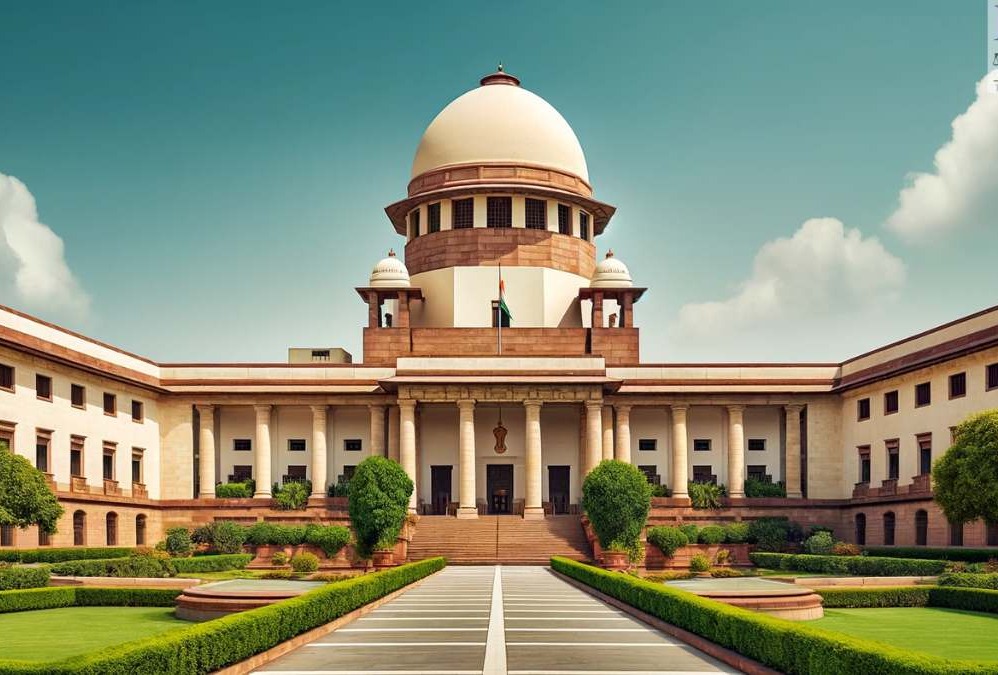
COURTKUTCHEHRY SPECIAL SERIES ON LANDMARKS JUDGEMENTS ON WILLS, CODICIL & PROBATE
Clarence Pais and Others v. Union of India — Supreme Court Upholds Probate Requirement for Indian Christians
Probate Rule Applies Due to Historical Jurisdiction, Not Religion
Petitions Challenging Section 213 of Succession Act Dismissed
By Vishwas Kumar
New Delhi: March 26, 2026:
In Clarence Pais and Others v. Union of India (Writ Petitions (C) No. 137 of 1997 with No. 674 of 1998, decided on 22 February 2001), the Supreme Court of India addressed a constitutional challenge to Section 213 of the Indian Succession Act. The Division Bench comprising Hon’ble Justice S. Rajendra Babu and Hon’ble Justice R.C. Lahoti examined whether Indian Christians were being unfairly discriminated against by being compelled to obtain probate before enforcing a Will.
full list of will-related case laws in India of Clarence Pais and Others Case
The petitioners argued that the probate requirement imposed an unequal burden on Christians, violating constitutional guarantees of equality. They contended that Hindus and Muslims were not subjected to the same obligation across India. The Court, however, clarified that the probate requirement was not based on religion but on historical and territorial jurisdictional factors. Section 213 applies to Christians, Parsis, and Hindus in certain specified territories, reflecting colonial-era legislative distinctions rather than religious discrimination.
The Bench emphasized that probate serves as a safeguard to ensure the authenticity of Wills and prevent fraudulent claims. Since the requirement was rooted in territorial application and not in religious bias, the Court rejected the plea of discrimination. Consequently, the petitions challenging the constitutionality of Section 213 failed, and the writ petitions were dismissed.
This ruling underscores the principle that legislative provisions must be interpreted in their historical and jurisdictional context. It affirms that probate requirements are designed to protect property rights and ensure orderly succession, rather than to impose religious disadvantage.
For More, Read Here the Summary of the Judgement from the Book: WILL WRITING SIMPLIFIED, read below or open page no 436, Chapter 14.1 in the book. (Online book purchase link available here on: Buy online: Amazon | Flipkart
|
|
Case Summary |
: |
Clarence Pais and Others v. Union of India. |
|
|
Court |
: |
Supreme Court of India |
|
|
Citations |
: |
(2001) 02 SC CK 0104: Writ Petitions (C) No. 137 of 1997 with No. 674 of 1998. |
|
|
Link |
: |
https://www.courtkutchehry.com/judgements/652970/clarence-pais-and-others-etc-vs-union-of-india/
|
|
|
Decided on |
: |
22 February 2001 |
|
|
Coram |
: |
Hon’ble Mr. Justice S. Rajendra Babu and Hon’ble Mr. Justice R.C. Lahoti. (Division Bench) |
|
|
Relevant Paragraphs |
: |
Para Nos. 2–11 |
1. Facts of the Case:
Two writ petitions were filed challenging the constitutional validity of Section 213 of the Indian Succession Act, 1925. Petitioners, who were Indian Christians, contended that Section 213(1) mandates probate of Wills only for Indian Christians, thereby creating discrimination since Hindus, Muslims, and other communities are exempted. The petitioners argued that the provision violated the equality clause of the Constitution as it imposed an unjust burden upon Indian Christians alone. One petitioner was an individual Christian advocate, and the other a Catholic association from Karnataka. Another petitioner from Kerala faced difficulty in asserting rights under a Will because probate was mandatory for Christians.
2. Law Points Involved:
(i). Constitutional validity of Section 213(1) of the Indian Succession Act, 1925.
(ii). Whether the mandatory requirement of probate for certain communities amounts to discrimination under Article 14 of the Constitution.
(iii). Scope and applicability of Sections 57 and 213 of the Indian Succession Act.
(iv). Historical and territorial application of probate laws across communities.
3. Acts/Provisions/Articles Referred:
(i). Indian Succession Act, 1925-Sections 57(a),57(b),57(c),118, 211, 213(1), 213(2), 370.
(ii). Hindu Wills Act, 1870 — Sections 2, 3.
(iii). Probate and Administration Act, 1881 — Section 154.
(iv). Constitution of India — Article 14 (Equality before Law).
4. Judgments Referred:
(i). B. Venkataramana v. State of Madras, (1951) 04 SC CK 0004.
https://www.courtkutchehry.com/judgements/640724/b-venkataramana-vs-the-state-of-madras-and-another]
(ii). Sheokaransingh v. Daulatram, (1955) 08 RAJ CK 0004.
https://www.courtkutchehry.com/judgements/205601/sheokaransingh-vs-daulatram]
(iii). State of Rajasthan v. Thakur Pratap Singh, (1960) 08 SC CK 0011.
(iv). Mrs. Hem Nolini Judah v. Mrs. Isolyne Sarojbashini Bose, (1962) 02 SC CK 0005.
(v). Mary Sonia Zachariah v. Union of India, (1995) 02 KL CK 0026.
(vi). Ahmedabad Women Action Group (AWAG) v. Union of India, (1997) 02 SC CK 0034.
(vii). Preman v. Union of India, (1998) 10 KL CK 0020
https://www.courtkutchehry.com/judgements/539188/preman-vs-union-of-india-uoi-and-others]
5. Obiter Dicta:
The Court observed that differences in succession law have historical and territorial justification. Uniformity of laws governing testamentary succession is desirable but cannot be enforced judicially without legislative initiative. Federalism permits diversity in such procedural laws.
6. Ratio Decidendi:
Section 213(1) of the Indian Succession Act is not discriminatory. The requirement of probate is not based on religion but on historical and territorial reasons linked to the British legal system in certain provinces (Bengal, Bombay, and Madras). The provision applies not only to Indian Christians but also to Parsis and certain classes of Hindus within the specified territories. Hence, there is no violation of Article 14.
7. Final Ruling:
The petitions were dismissed. Section 213 of the Indian Succession Act, 1925, was upheld as constitutionally valid. No costs were awarded.
8. Gist Highlighting Dispute with Final Decision:
The core dispute concerned whether Indian Christians were being discriminated against by being compelled to obtain probate under Section 213 of the Succession Act. The Supreme Court clarified that the probate requirement applies to Christians, Parsis, and Hindus of specified territories due to historical and jurisdictional factors, not on religious grounds. Consequently, the challenge to the constitutionality of Section 213 failed, and the petitions were dismissed.
Read full Judgement Here:
Clarence Pais and Others v. Union of India.
Supreme Court of India
(2001) 02 SC CK 0104: Writ Petitions (C) No. 137 of 1997 with No. 674 of 1998.
https://www.courtkutchehry.com/judgements/652970/clarence-pais-and-others-etc-vs-union-of-india/
You Can Also Purchase the Book from here on: Buy online: Amazon | Flipkart
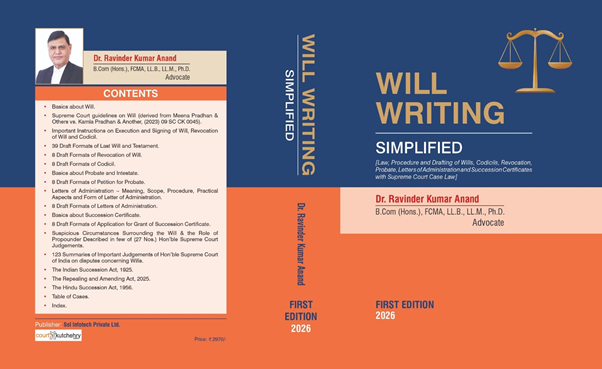
OUR RECOMMENDATION: Check out 123 Key Judgements, as highlighted in the book, WILL WRITING SIMPLIFIED, for the quick research and reference purposes. Click the link here: https://www.courtkutchehry.com/pages/blog/123-supreme-court-judgments-on-wills/
Keywords for SEO & Faster Searches
- Clarence Pais case 2001
- Union of India probate requirement
- Section 213 Succession Act Supreme Court
- Indian Christians probate law
- Supreme Court inheritance ruling India
- Justice S. Rajendra Babu R.C. Lahoti judgment
- Writ Petition No. 137 of 1997 probate dispute