
Enough to Go to Trial: What Prima Facie Really Establishes
It is not proof of guilt — it is proof that guilt deserves a proper hearing
Ashopkeeper is caught on CCTV apparently pocketing cash from the till, late at night, alone in the store. On the footage alone, it looks damning. The police file charges. But at the very first hearing, before a single witness has been cross-examined or a single defence raised, does the court already know he is guilty?
It does not — and it is not supposed to. What the footage establishes, at that early stage, is something narrower and more provisional: a prima facie case. That single Latin phrase is doing a great deal of quiet work in keeping the criminal process fair at every stage before a final verdict.
What Does Prima Facie Actually Mean?
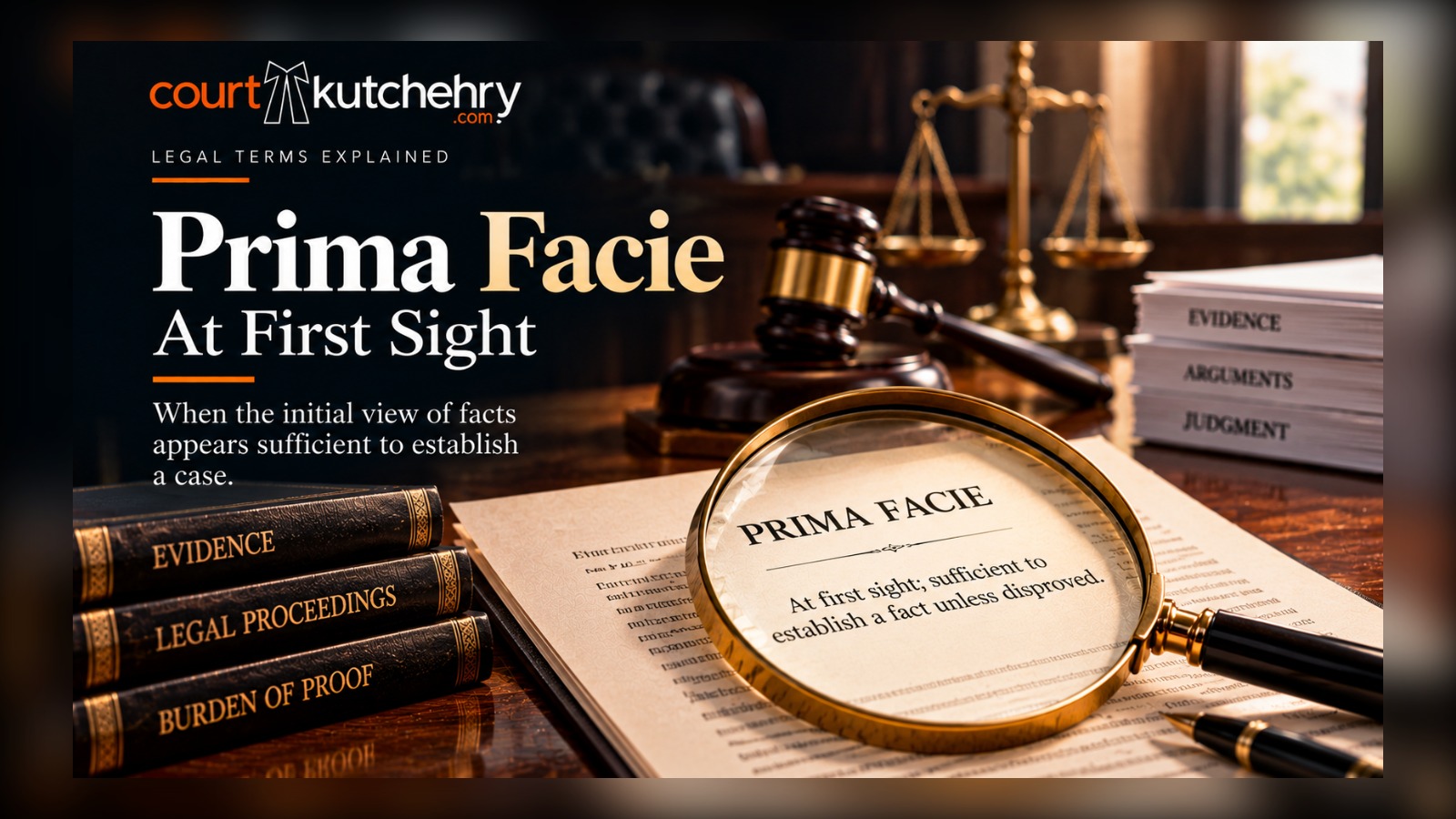
Prima facie is Latin for “at first sight” or “on the face of it.” A prima facie case is one where the evidence presented, if accepted as true and left unrebutted, appears sufficient to establish a fact or a case — enough, at this preliminary stage, to require an answer from the other side, or to justify proceeding further, such as to trial.
Critically, prima facie evidence is not conclusive evidence. It can be contradicted, explained, or outweighed by evidence presented later. It simply shifts the practical burden: once a prima facie case is made out, the other side generally needs to respond with some explanation or counter-evidence, rather than relying on silence.
A Story That Brings It to Life
Back to the shopkeeper. The CCTV footage, on its face, appears to show him taking cash without authorisation. That is enough to establish a prima facie case — sufficient for the matter to proceed to a full trial, where evidence will actually be tested.
At trial, however, the shopkeeper explains that he was retrieving cash he had personally deposited earlier that day to make change for a regular customer, a fact corroborated by a receipt and the customer's own testimony. The prima facie case, sufficient to justify a hearing, does not survive once tested against this explanation. This is exactly how the concept is meant to function: prima facie evidence gets a case into the courtroom and requires an answer — it does not, by itself, walk a case all the way to conviction.
Why This Threshold Matters
- It filters out baseless or frivolous complaints at an early stage, without requiring a full trial merely to establish that some evidence exists at all.
- It protects accused persons from being convicted purely because a matter reached trial — the prima facie threshold is deliberately lower than the final standard of proof required for conviction.
- It appears well beyond criminal law — in civil suits, regulatory proceedings, and even disciplinary inquiries, a prima facie case is often the threshold for taking the next procedural step, such as issuing notice or framing charges.
- It reminds observers of a case in its early stages that headlines describing damning-looking evidence are describing a prima facie case, not a final, tested conclusion of guilt.
Key Takeaways
- Prima facie means “at first sight” — evidence sufficient, if unrebutted, to establish a fact or justify proceeding further.
- A prima facie case is not the same as proof beyond reasonable doubt or final proof of liability.
- Once a prima facie case is made out, the burden practically shifts to the other side to respond with explanation or counter-evidence.
- The concept operates as a procedural threshold across criminal, civil, and regulatory proceedings alike.
Frequently Asked Questions
No. It only means there is enough evidence, on its face, to proceed to trial or to the next stage of proceedings. The final outcome depends on how the evidence holds up once it is tested.
Sometimes, yes — if the opposing side can immediately produce clear, undisputed evidence showing the initial case cannot stand (for instance, an alibi supported by unimpeachable records), a court may dismiss the matter even before a full trial.
Conclusion
The shopkeeper's story shows why prima facie exists: the law needed a way to say “this deserves a proper look” without needing to say “this is already proven.” It is the law's careful first glance, never its last word.