
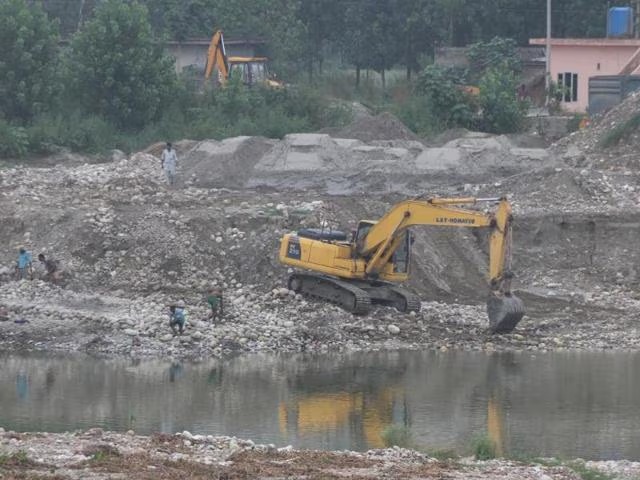
P&H High Court Halts Construction Across 16 Peripheral Mohali Villages to Safeguard Eco-Fragile Shivalik Foothills
Division Bench Cracks Down on Unlawful Land Alienation and Revenue Entry Manipulations
State Mandated to Execute Forest Demarcations and Audit Pre-1980 Records Within Six Weeks
By Legal Editor
New Delhi: July 24, 2026:
The Punjab and Haryana High Court issued an order halting development and construction activities across sixteen contiguous villages located in the periphery of Chandigarh. Presided over by Acting Chief Justice Ashwani Kumar Mishra and Justice Rohit Kapoor, the Division Bench issued these directions during proceedings in the matter of Sukhraj Singh Chahal v. State of Punjab. The decision reflects judicial oversight concerning the environmental conservation of the eco-fragile Shivalik foothills and highlights administrative delays in complying with statutory mandates.
Alongside prohibiting construction, the Bench placed an injunction on land transfers, sales, and mutation updates within the designated revenue estates for six weeks. The Court instructed the Chief Secretary of Punjab to establish a committee tasked with auditing pre-1980 revenue records to delineate protected forest zones under historical and modern statutory frameworks.
| SUMMARY OF JUDICIAL DIRECTIVES |
+------------------------------------+-----------------------------------------------------------------+
| Affected Target Region | 16 Villages in Mohali, Punjab (Shivalik Foothills Area) |
+------------------------------------+-----------------------------------------------------------------+
| Presiding High Court Bench | Acting Chief Justice Ashwani Kumar Mishra & Justice Rohit Kapoor|
+------------------------------------+-----------------------------------------------------------------+
| Immediate Prohibitions | - Total ban on all construction and civil development activities |
| | - Complete freeze on land transfers, alienation, and mutations |
+------------------------------------+-----------------------------------------------------------------+
| Core Statutory Frameworks | - Forest (Conservation) Act, 1980 |
| | - Punjab Land Preservation Act (PLPA), 1900 |
+------------------------------------+-----------------------------------------------------------------+
| Mandatory State Action Plan | Form a committee to audit revenue records and complete forest |
| | land demarcation within 6 weeks as per 2014 SC directives |
Environmental Vulnerability of the Shivalik Foothills
The geographical belt situated along the outskirts of Chandigarh serves as a critical buffer zone for the region's ecology. The Shivalik foothills feature fragile soil topography prone to severe erosion. Unregulated urbanization, commercial development, and civil construction in these contiguous pockets alter natural hydrology, disrupt wildlife corridors, and deplete local groundwater reserves.
| 16 AFFECTED PERIPHERAL VILLAGES IN MOHALI DISTRICT |
+-------------------+-------------------+-------------------+-------------------+--------------------+
| 1. Karoran | 2. Nada | 3. Parch | 4. Sunk | 5. Majrian |
| 6. Choti Bari Nagal| 7. Parol | 8. Siswan | 9. Pallanpur | 10. Saini Majra |
| 11. Dulwan | 12. Burana | 13. Gochar | 14. Mirzapur | 15. Tarapur |
| 16. Sultanpur | | | | |
During oral arguments and written submissions, counsel for the petitioners detailed how commercial establishments, including dining ventures and private resorts, continued operating despite earlier closures. The Court observed that allowing commercialization in protected zones violates environmental preservation mandates, calling out state inaction in regulating these ecologically sensitive belts.
Legal Foundations: Interplay of Statutory Acts
The adjudication rests upon the application of environmental legislation in India: the Forest (Conservation) Act, 1980 and the historic Punjab Land Preservation Act (PLPA), 1900.
+--------------------------------------------------+
| HISTORICAL REVENUE RECORDS (PRE-1980) |
+-------------------------+------------------------+
|
v
+--------------------------------------------------+
| STATUTORY APPLICABILITY EVALUATION PERIOD |
+-------------------------+------------------------+
+-----------------------------------+ +-----------------------------------+
| Forest (Conservation) Act, 1980 | | Punjab Land Preservation Act, 1900|
| Applies strict restrictions on | | Empowers state to restrict soil |
| de-reservation & non-forest use | | clearing & tree cutting activities|
+-----------------------------------+ +-----------------------------------+
|
v
+--------------------------------------------------+
| HIGH COURT DEMARCAATION & BAN ORDER (2026) |
1. Forest (Conservation) Act, 1980
The Forest (Conservation) Act, 1980 restricts the de-reservation of forests or the diversion of forest land for non-forest activities without prior approval from the Central Government. In T.N. Godavarman Thirumulpad v. Union of India (1997), the Supreme Court held that the word "forest" must be understood according to its dictionary meaning, covering all statutorily recognized forests, irrespective of ownership.
In Sukhraj Singh Chahal v. State of Punjab, the High Court highlighted that land classified as forest in primary revenue records retains statutory protection under the 1980 Act. The Court mandated that revenue conditions on the enforcement date of the 1980 Act serve as the baseline for determining forest coverage.
2. Punjab Land Preservation Act (PLPA), 1900
The PLPA was enacted to preserve land vulnerable to soil erosion and degradation across regional hills. Sections 4 and 5 empower state authorities to regulate or prohibit tree cutting, ground clearing, and sub-soil cultivation. Lands notified under these sections are legally treated as protected forest lands. The High Court noted that the failure to enforce PLPA notifications or carry out physical demarcations compromises ecological stability in the Shivalik belt.
Non-Compliance with Supreme Court Directives and Revenue Issues
A key factor in the High Court's ruling was the state administration's failure to comply with 2014 Supreme Court directives requiring physical demarcation of forest lands in Mohali's peripheral villages. Over a decade later, proper boundary demarcation remains pending, allowing unauthorized real estate acquisition and land use conversions.
+----------------------------------------------------------------------------------------------------+
| CHRONOLOGY OF LEGAL PROCEEDINGS & DIRECTIVES |
+----------------+-----------------------------------------------------------------------------------+
| Timeline Year | Judicial Action / Administrative Obligation |
+----------------+-----------------------------------------------------------------------------------+
| 1980 | Enactment of the Forest (Conservation) Act, setting base baseline for forest land.|
+----------------+-----------------------------------------------------------------------------------+
| 2014 | Supreme Court orders full physical demarcation of forest land in Mohali villages. |
+----------------+-----------------------------------------------------------------------------------+
| Pre-2026 | Continuous failure by state to submit compliance; unauthorized construction grows. |
+----------------+-----------------------------------------------------------------------------------+
| July 2026 | P&H High Court issues complete construction ban across 16 villages. |
| | Orders Chief Secretary to form record-review committee within 6 weeks. |
The petitioners alleged collusion between regulatory bodies and real estate interests, asserting that public officials and private buyers acquired prime agricultural and forest land for residential townships. Expressing concerns over potential record tampering, the Court temporarily banned revenue mutations, land sales, and ownership transfers, warning that violations would trigger contempt of court proceedings.
Legal Representation
The legal teams appearing before the Division Bench included:
For the Petitioners: Senior Advocate Anand Chibbar, Advocate Ateevraj Sandhu, alongside Advocates RBS Chahal, Shubham Thakur, and Ajaivir Singh.
For the State of Punjab: Additional Advocate General Maninder Singh Garcha, supported by Advocates Priyanka Malik and Mehak Kanwar.
For Greater Mohali Area Development Authority (GMADA): Advocates Shekhar Verma and Neetu Singh.
For Private Respondents: Senior Advocate DS Patwalia, with Advocates Gauravjit S. Patwalia and Lagan K. Sidhu.
Broader Implications for Regional Urban Planning
This judicial order sets a precedent for regional urban governance in Punjab and neighboring northern states. By explicitly freezing property transactions alongside construction activity, the High Court signalled that commercial expansion cannot bypass statutory environmental protections.
| IMPACTS ON REGIONAL DEVELOPMENT & GOVERNANCE |
+-----------------------+----------------------------------------------------------------------------+
| Real Estate Sector | Immediate halt on residential projects, sales, and transfers in 16 villages|
+-----------------------+----------------------------------------------------------------------------+
| Administrative Duty | Bureaucratic oversight mandated to review 40+ years of revenue entries |
+-----------------------+----------------------------------------------------------------------------+
| Environmental Impact | Preservation of natural watershed and runoff areas in Shivalik foothills |
+-----------------------+----------------------------------------------------------------------------+
| Legal Precedent | Rigorous enforcement of 1980 FCA baseline determinations on contested land |
The upcoming six-week review period requires the newly constituted committee to audit historic revenue records, resolve boundary overlaps, and establish permanent boundaries. The outcome will determine whether these peripheral areas are permanently reserved as protected forest zones or opened up for regulated development.
Searchable Legal Index & Frequently Asked Questions (FAQ)
Index
- What is the primary ruling delivered in Sukhraj Singh Chahal v. State of Punjab?
- Which 16 villages are impacted by the construction ban?
- What baseline year did the court establish for determining forest lands?
- How does the Forest (Conservation) Act, 1980 apply to this case?
- What role does the Punjab Land Preservation Act (PLPA), 1900 play?
- Why did the High Court bar land transfers and revenue mutations?
- What were the allegations regarding state officials?
- What happens if someone violates the High Court's order?
1. What is the primary ruling delivered in Sukhraj Singh Chahal v. State of Punjab?
The Punjab and Haryana High Court issued an order prohibiting all construction, development, land transfers, and revenue mutation entries across 16 villages in Mohali near Chandigarh. The Court directed the Punjab Chief Secretary to form a committee to examine revenue records and complete physical forest demarcations within six weeks.
2. Which 16 villages are impacted by the construction ban?
The affected villages in Mohali district are Karoran, Nada, Parch, Sunk, Majrian, Choti Bari Nagal, Parol, Siswan, Pallanpur, Saini Majra, Dulwan, Burana, Gochar, Mirzapur, Tarapur, and Sultanpur.
3. What baseline year did the court establish for determining forest lands?
The Court directed authorities to examine revenue records to determine forest land status as it existed on the enforcement date of the Forest (Conservation) Act, 1980. Any land recorded as forest at that time remains subject to statutory forest protections.
4. How does the Forest (Conservation) Act, 1980 apply to this case?
The Forest (Conservation) Act, 1980 requires prior approval from the Central Government before converting designated forest land to non-forest commercial or residential use. If historic records indicate a land parcel was forest land in 1980, subsequent unauthorized private sales or construction activities remain legally invalid without central clearance.
5. What role does the Punjab Land Preservation Act (PLPA), 1900 play?
The PLPA of 1900 provides statutory authority to restrict ground clearing, tree cutting, and soil excavation in erosion-prone areas. Notifications under Sections 4 and 5 of the PLPA classify covered areas as protected forest lands, preventing unauthorized real estate expansion.
6. Why did the High Court bar land transfers and revenue mutations?
The Court barred transfers and mutations to prevent the alteration of land titles while revenue audits are underway. This measure seeks to stop further third-party rights from being created on contested forest land during the six-week review period.
7. What were the allegations regarding state officials?
Petitioners alleged that state authorities delayed forest demarcation because senior officials had acquired farmland in these eco-fragile peripheral areas, allowing commercial development to proceed unchecked.
8. What happens if someone violates the High Court's order?
The Division Bench stated that any violation of its directives—including ongoing construction, property sales, or revenue entries—will be prosecuted as contempt of court.