
PoA Clauses: NRIs’ Legal Armor Against Property Fraud
Supreme Court rulings stress PoA is not ownership
Forgery and vague authority clauses fuel disputes
By Vishwas Kumar
New Delhi: May 13, 2026:
For NRIs, misuse of Power of Attorney (PoA) is a recurring legal dispute in India. Courts have repeatedly ruled that PoA cannot transfer ownership of property and must be carefully drafted with protective clauses to prevent fraud. Recent cases highlight how forged or vague PoAs have been used to usurp property, making strong clauses legally indispensable.
The Legal Context
The Power of Attorney Act, 1882 governs PoA in India, while the Registration Act, 1908 requires registration for immovable property transactions. Courts have consistently emphasized that PoA is only an authorization tool, not a transfer of ownership. In Suraj Lamp & Industries v. State of Haryana (2011), the Supreme Court ruled that property ownership cannot be transferred through PoA alone. This was reaffirmed in Ghanshyam v. Yogendra Rathi (2023), where the Court held that only registered sale deeds under the Transfer of Property Act can transfer ownership. ezyLegal
Common Misuse in Court Cases
- Forgery of PoA: In Pune (2025), forged PoA documents were used to claim shops in Market Yard, leading to fraud charges. Free Press Journal
- Backdated PoA and wills: In Ambernath (2023), family members allegedly forged PoA and wills using backdated stamp papers to usurp property worth crores. The Times of India
- Unauthorized sales: Courts have repeatedly struck down property transfers made solely on the basis of PoA, citing lack of legal title. nma.legal
Clauses That Prevent Misuse
- Scope Limitation Clause
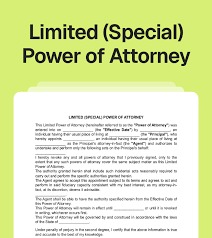
- Restricts authority to specific tasks (e.g., selling one property).
- Prevents blanket powers that agents can misuse.
- Courts uphold special PoAs as safer than general PoAs.
- Registration Clause
- Mandatory for immovable property transactions.
- Provides evidentiary strength under the Registration Act, 1908.
- Without registration, courts may invalidate property transactions.
- Notarization & Consular Attestation Clause
- Ensures authenticity when executed abroad.
- Prevents forged documents from being used in India.
- Revocation Clause
- Allows NRIs to revoke PoA anytime.
- Protects against continued misuse if trust is broken.
- Courts (e.g., K.K. Bhalla v. DDA, 1995) held that acts after revocation are null and void. Lead India
- Non-Transferability Clause
- Prevents agents from delegating authority to third parties.
- Ensures only the chosen representative acts.
- Accountability Clause
- Requires agents to maintain records of transactions.
- Provides transparency and evidence in disputes.
Why These Clauses Are Legally Important
- Fraud Prevention: Narrow scope reduces unauthorized sales.
- Court Enforceability: Registered and notarized PoAs carry evidentiary weight.
- Succession Protection: Clauses ensure PoA does not override inheritance rights.
- Transparency: Accountability clauses create a paper trail.
Conclusion
For NRIs, PoA clauses are not optional—they are legal safeguards against fraud. By limiting scope, mandating registration, and ensuring revocability, NRIs can protect their assets. Courts consistently uphold these clauses as essential to prevent misuse and enforce accountability.
NEED A HELP IN UNDERSTANDING & DRAFTING A LEGALLY VALID WILL? FIND OUT FROM THE BOOK, WILL WRITING SIMPLIFIED, By Dr Ravinder Kumar Anand. [📘 Buy Will Writing Simplified online: Amazon | Flipkart ]
Detailed FAQ
Q1. Why is a scope limitation clause important?
It restricts authority to specific tasks, preventing misuse of broad powers.
Q2. Is registration mandatory for PoA?
Yes, for immovable property transactions under the Registration Act, 1908.
Q3. Why must PoA executed abroad be notarized and attested?
To ensure authenticity and prevent forged documents.
Q4. Can PoA be revoked?
Yes. Revocation clauses allow NRIs to cancel PoA anytime, protecting against misuse.
Q5. Does PoA transfer ownership of property?
No. Supreme Court rulings (Suraj Lamp, 2011; Ghanshyam v. Yogendra Rathi, 2023) confirm PoA cannot transfer ownership.
Q6. Why is a non-transferability clause useful?
It prevents agents from delegating authority, ensuring only the chosen representative acts.
Q7. What happens if PoA lacks these clauses?
It increases risk of fraud, unauthorized sales, and unenforceability in court.
These clauses, backed by judicial precedent, transform PoA from a vulnerable instrument into a legally robust safeguard for NRIs.