
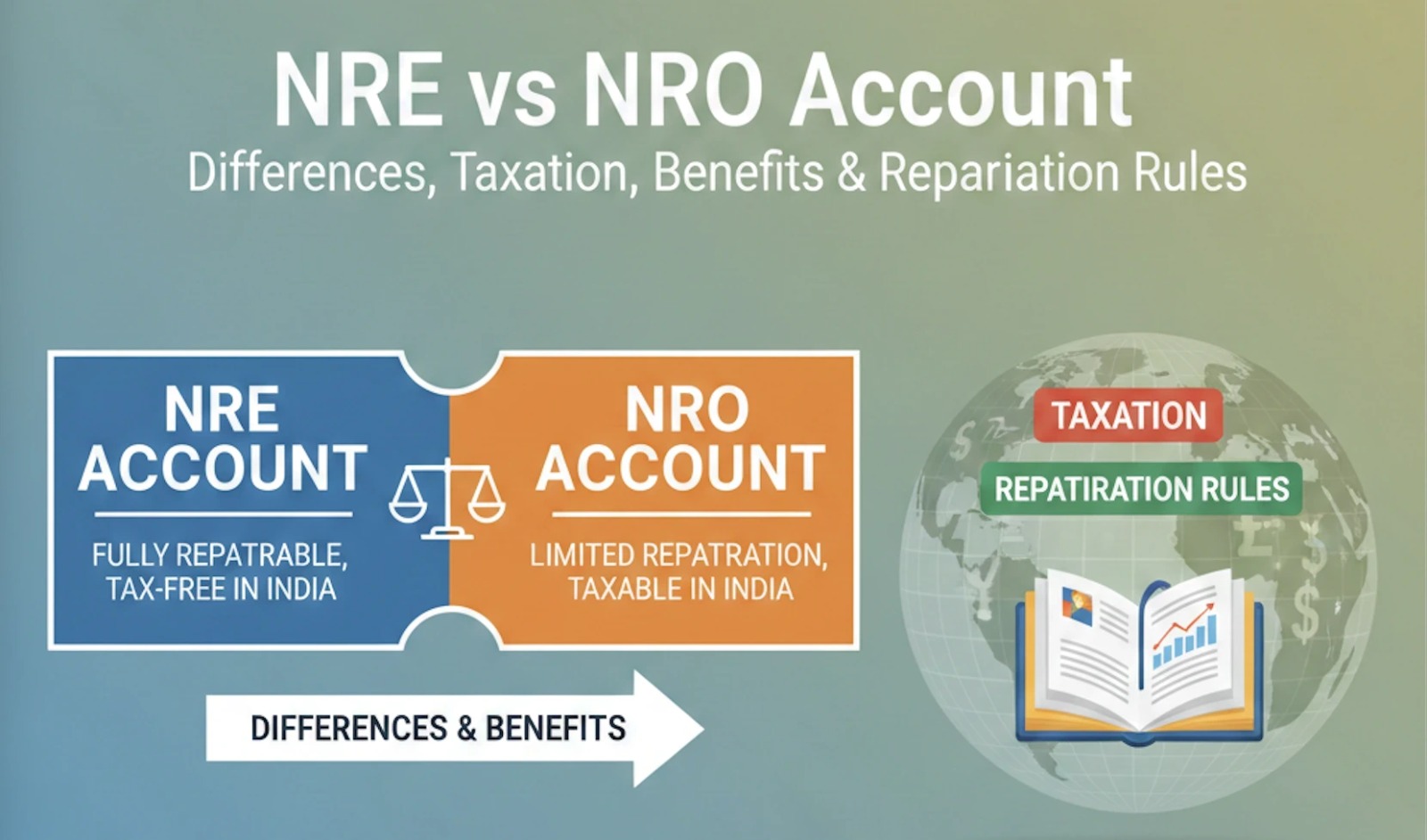
NRI Banking Choices: NRE, NRO, or FCNR—Which Account Protects Your Earnings Best?
Tax Treatment Varies Across Account Types
Repatriation Rules Decide Flexibility for Global Transfers
By Legal Reporter
New Delhi: April 11, 2026:
Here’s a clear comparative chart of NRE vs NRO vs FCNR accounts—the three main banking options available to NRIs—along with their tax treatment and repatriation rules.
Comparative Chart
| Account Type | Source of Funds | Tax Treatment in India | Repatriation Rules | Best Use Case |
| NRE (Non-Resident External) | Foreign income earned abroad | Tax-free (principal + interest exempt from Indian tax) | Fully repatriable (principal + interest) | Ideal for NRIs wanting to remit foreign salary to India without tax liability |
| NRO (Non-Resident Ordinary) | Income earned in India (rent, dividends, pensions, etc.) | Taxable in India (interest subject to TDS at ~30% + surcharge) | Repatriation allowed up to USD 1 million per financial year (after tax compliance) | Suitable for managing Indian income streams |
| FCNR (Foreign Currency Non-Resident) | Foreign income deposited in foreign currency | Tax-free in India (interest exempt); protected from forex risk | Fully repatriable (principal + interest) | Best for NRIs wanting to hold deposits in foreign currency and avoid exchange rate fluctuations |
Analytical Insights
- NRE accounts are the most tax-efficient for foreign salaries, aligning with the ITAT ruling that foreign income first received abroad is not taxable in India.
- NRO accounts are necessary for Indian-sourced income but attract taxation, making compliance critical.
- FCNR accounts provide currency stability, shielding NRIs from rupee depreciation risks while retaining tax-free status.
[LEGAL RESEARCH RESOURCES]
Read probate law rulings here. Click the link here: https://www.courtkutchehry.com/pages/blog/123-supreme-court-judgments-on-wills/
EXTRACTS FROM BOOK, WILL WRITING SIMPLIFIED, By Dr Ravinder Kumar Anand. [📘 Buy Will Writing Simplified online: Amazon | Flipkart ]
FAQ: Quick Guide
Q1. Which account is tax-free?
NRE and FCNR accounts are tax-free in India. NRO accounts are taxable.
Q2. Can I repatriate funds freely?
Yes, NRE and FCNR accounts allow full repatriation. NRO accounts have limits and require tax clearance.
Q3. Which account should I use for foreign salary?
NRE or FCNR accounts, since they are tax-free and fully repatriable.
Q4. Which account should I use for Indian rental income?
NRO account, as it is designed for income earned in India.
Q5. What is the advantage of FCNR over NRE?
FCNR deposits are held in foreign currency, protecting against rupee depreciation.
Q6. Are interest rates different?
Yes. NRE and NRO accounts earn rupee interest, while FCNR deposits earn interest in foreign currency.
Q7. Do these accounts help avoid double taxation?
Yes, especially when combined with DTAA (Double Taxation Avoidance Agreements) between India and the NRI’s country of residence.
Conclusion
For NRIs, choosing between NRE, NRO, and FCNR accounts depends on the source of income, tax implications, and repatriation needs. The ITAT ruling reinforces that foreign salaries routed through NRE accounts remain tax-free, while NRO accounts handle taxable Indian income. FCNR accounts add an extra layer of protection against currency risks. Together, these options provide NRIs with flexibility to manage global earnings while staying compliant with Indian tax laws.