
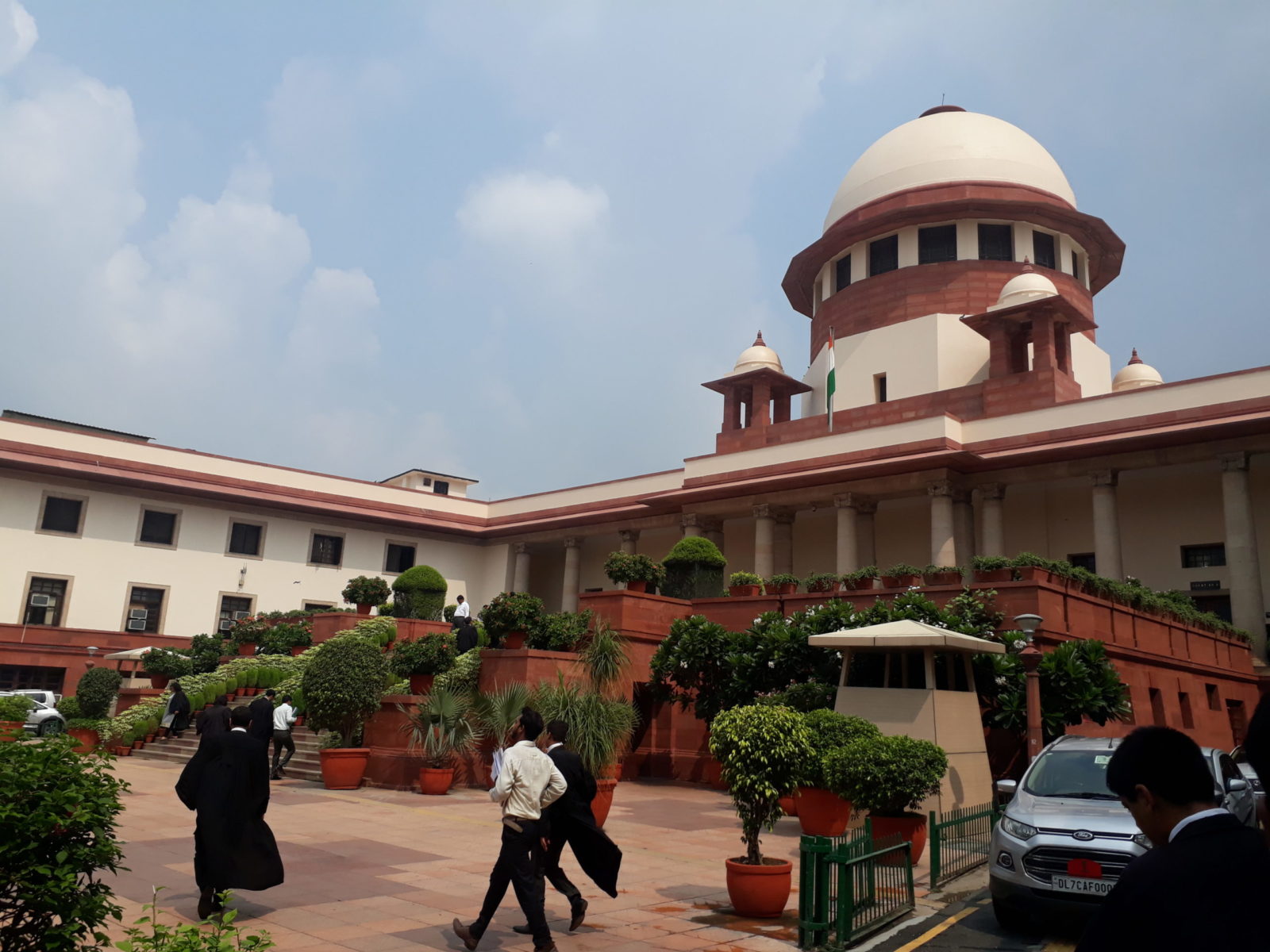
COURTKUTCHEHRY SPECIAL SERIES ON LANDMARKS JUDGEMENTS ON WILLS, CODICIL & PROBATE
Narinder Singh Rao v. Air Vice-Marshal Mahinder Singh Rao & Others: Supreme Court Clarifies Will’s Scope in Ancestral Property
1989 Will Valid but Limited to Testatrix’s Share
Appellant’s Claim to Entire House Rejected; 2/9th Entitlement Confirmed
By Vishwas Kumar
New Delhi: March 22, 2026:
On March 22, 2013, the Supreme Court of India delivered a crucial judgment in Narinder Singh Rao v. Air Vice-Marshal Mahinder Singh Rao & Others (Civil Appeal Nos. 6918–19 of 2011), addressing the scope of testamentary rights in ancestral property. The dispute centered on whether Sumitra Devi’s 1989 Will conveyed full ownership of the family house to one son, Narinder Singh Rao.
The trial court and appellate court had grappled with the interpretation of the Will, but the matter reached the Supreme Court before a division bench comprising Hon’ble Mr. Justice R.M. Lodha and Hon’ble Mr. Justice Anil R. Dave. The Court upheld the validity of the Will, confirming that it was genuine and enforceable. However, it restricted its operation to the testatrix’s limited 1/9th share in the property.
key judgments on will validity and succession
The Court emphasized that under Section 8 of the Hindu Succession Act, 1956, the property of a deceased intestate father devolves equally upon the widow and all children. Thus, Sumitra Devi could only bequeath her own share, not the entire ancestral house. Consequently, the appellant’s claim to full ownership was rejected, and his entitlement was confined to 2/9th of the property.
This ruling reinforces the principle that testamentary disposition cannot override statutory succession rights. While a Will may be valid, its scope is limited to the share lawfully held by the testator. The judgment provides clarity in succession disputes, ensuring that ancestral property is equitably distributed among heirs while respecting the testator’s intent within lawful bounds.
By balancing testamentary freedom with statutory inheritance, the Supreme Court safeguarded both individual rights and family equity, setting a precedent for similar disputes involving ancestral property and partial ownership.
For More, Read Here the Summary of the Judgement from the Book: WILL WRITING SIMPLIFIED, read below or open page no 436, Chapter 14.1 in the book. (Online book purchase link available here on: Buy online: Amazon | Flipkart
|
|
Case Summary |
: |
Narinder Singh Rao v. Air Vice-Marshal Mahinder Singh Rao & Others. |
|
|
Court |
: |
Supreme Court of India |
|
|
Citations |
: |
(2013) 03 SC CK 0034: Civil Appeal Nos. 6918–19 of 2011. |
|
|
Link |
: |
|
|
|
Decided on |
: |
22 March 2013 |
|
|
Coram |
: |
Hon’ble Mr. Justice R.M. Lodha and Hon’ble Mr. Justice Anil R. Dave. (Division Bench) |
|
|
Relevant Paragraphs |
: |
Para Nos. 2–21 |
1. Facts of the Case:
Rao Gajraj Singh and his wife Sumitra Devi were occupiers of the suit property constructed around 1935, recorded in Rao Gajraj Singh’s name. He executed a writing stating that upon death of either spouse, the survivor would inherit the property. This writing was attested by a relative but was neither registered nor attested by two witnesses as required for a valid Will. After Rao Gajraj Singh’s death (29 March 1981), Sumitra Devi resided with her son Narinder Singh Rao (Appellant) and executed a Will on 1 June 1989 bequeathing the property solely to him; she died on 6 June 1989. Her other children challenged the Will, claiming it was not genuine and sought partition, asserting each of eight children had 1/8th share. Trial court dismissed their claim; lower appellate court upheld dismissal. The High Court partly allowed the appeal, leading to the present Supreme Court matter.
2. Law Points Involved:
(i). Validity and effect of an unregistered and unattested writing purporting to transfer property on death of one spouse;
(ii). Validity of a Will executed by a widow having limited share;
(iii). Scope of testamentary power to bequeath beyond own share;
(iv). Applicability of the Hindu Succession Act, 1956;
(v). Bar on belated plea under Benami Transactions (Prohibition) Act, 1988;
(vi). Appellate interference with findings of fact.
3. Acts / Provisions / Articles Referred:
(i). Indian Registration Act, 1908
(ii). Hindu Succession Act, 1956
(iii). Benami Transactions (Prohibition) Act, 1988
4. Judgments Referred:
Obiter Dicta: The Court observed that questions relating to ownership (benami nature) or mental capacity of the testatrix are pure questions of fact and cannot be raised for the first time in appeal (Paras 15–16).
5. Ratio Decidendi:
(i). An unregistered, unattested writing purporting to transfer property on death is neither a Will nor a valid conveyance; it is legally ineffective (Para 7).
(ii). Sumitra Devi, having inherited only 1/9th share as one of nine heirs under Section 8 of the Hindu Succession Act, could not bequeath more than her share (Paras 10–11).
(iii). A Will validly executed by a limited-share holder operates only to the extent of her own interest; excess disposition is void (Para 11).
(iv). Benami ownership claim raised for the first time in appellate proceedings cannot be entertained (Para 15).
(v). Findings of fact accepted by lower appellate and High Court bind the Supreme Court absent perversity (Paras 12–13).
6. Final Ruling:
Appeal dismissed; High Court judgment affirmed. The Will dated 1 June 1989 was held genuine and valid, but operative only to the extent of Sumitra Devi’s 1/9th share. Narinder Singh Rao, the Appellant, became owner of 2/9th share—1/9th inherited from father Rao Gajraj Singh and 1/9th bequeathed under his mother’s Will. Remaining seven children each entitled to 1/9th share. No order as to costs (Paras 17–21).
8. Gist Highlighting Dispute with Final Decision:
The dispute centered on whether Sumitra Devi’s 1989 Will conveyed full ownership of the ancestral house to one son. The Supreme Court upheld the Will’s validity but restricted its operation to the testatrix’s limited 1/9th share, declaring that property of a deceased intestate father devolves equally upon widow and children under Section 8 of the Hindu Succession Act. Thus, the Appellant’s claim to entire property was rejected, confirming his 2/9th entitlement.
Read full Judgement Here:
Narinder Singh Rao v. Air Vice-Marshal Mahinder Singh Rao & Others.
Supreme Court of India
(2013) 03 SC CK 0034: Civil Appeal Nos. 6918–19 of 2011.
You Can Also Purchase the Book from here on: Buy online: Amazon | Flipkart
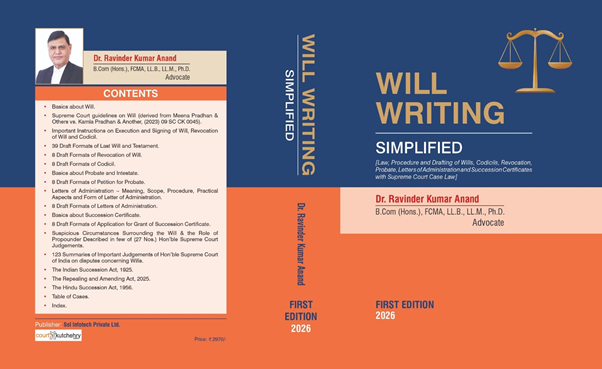
OUR RECOMMENDATION: Check out 123 Key Judgements, as highlighted in the book, WILL WRITING SIMPLIFIED, for the quick research and reference purposes. Click the link here: https://www.courtkutchehry.com/pages/blog/123-supreme-court-judgments-on-wills/
SEO-Friendly Keywords
- Narinder Singh Rao v. Mahinder Singh Rao Supreme Court
- 1989 Will validity case India
- Civil Appeal Nos. 6918–19 of 2011 judgment
- Hindu Succession Act Section 8 property rights
- Supreme Court ancestral property dispute
- Testamentary rights vs statutory succession India