
Madhya Pradesh High Court Questions Lawyer for Practising Despite Contempt Conviction
Court issues show‑cause notice over violation of practice rules
Case highlights accountability and discipline in legal profession
By Our Legal Correspondent
New Delhi: March 03, 2026:
The Madhya Pradesh High Court has raised serious concerns after discovering that an advocate continued to practise law despite being convicted in a criminal contempt case nearly two years ago. The court has now issued a show‑cause notice, demanding an explanation from the lawyer for appearing in matters in violation of established practice rules. This development has sparked debate in legal circles about professional ethics, judicial discipline, and the enforcement of contempt laws in India.
[Suggested Legal Resource]
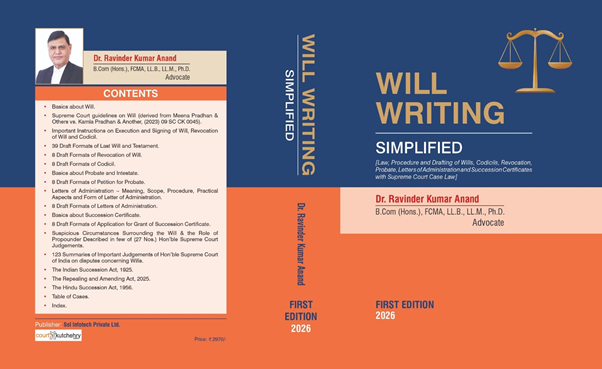
If you want practical guidance on drafting wills, codicils, and probate procedures, Will Writing Simplified is an invaluable resource. BUY NOW: Amazon 🔹 Flipkart
Background of the Case
- In April 2024, the lawyer was convicted in a suo motu criminal contempt case.
- Allegations stated that he sought ₹60,000 in the name of a High Court judge, leading to his conviction and fine.
- The case was titled Munendra Singh v. State of Madhya Pradesh.
- Despite the conviction, the lawyer continued to appear before the High Court and subordinate courts.
Court’s Observations
- The bench noted that under Rule 16 of the High Court of Madhya Pradesh (Conditions of Practice) Rules, 2012, an advocate found guilty of criminal contempt cannot appear, act, or plead before the High Court or subordinate courts in the district where the contempt occurred unless the contempt has been purged.
- The court emphasized that continued practice without purging contempt undermines judicial authority and discipline.
- Justice Milind Ramesh Phadke directed the lawyer to explain how he was still practising despite the subsisting conviction.
Why This Matters
- Judicial Discipline: The case highlights the importance of respecting court orders and maintaining discipline within the legal profession.
- Public Trust: Allowing convicted lawyers to continue practising could erode public confidence in the justice system.
- Professional Accountability: The ruling reinforces that lawyers must uphold ethical standards and cannot bypass rules through technicalities.
Reactions in Legal Circles
- Lawyers and Bar Associations: Many legal professionals have welcomed the High Court’s strict stance, noting that it sends a clear message about accountability.
- Critics: Some argue that contempt laws should be applied cautiously, as they can restrict professional rights if not balanced with fair opportunities for rehabilitation.
- Public Perception: Citizens view the case as an example of the judiciary ensuring that misconduct does not go unchecked.
Wider Legal Context
- Contempt of court in India is governed by the Contempt of Courts Act, 1971.
- Criminal contempt includes acts that scandalize the court, interfere with judicial proceedings, or obstruct justice.
- Convicted individuals must purge contempt—either by apology or compliance—before resuming professional duties.
- The Madhya Pradesh High Court’s enforcement of Rule 16 sets a precedent for stricter monitoring of advocates with contempt convictions.
Conclusion
The Madhya Pradesh High Court’s move to seek an explanation from a lawyer practising despite a contempt conviction is a significant step in reinforcing judicial discipline. By invoking Rule 16 of the practice rules, the court has underscored that professional accountability cannot be compromised. As the lawyer prepares his response, the case is expected to shape future discussions on the balance between contempt enforcement and professional rights in India’s legal system.
Keywords for SEO & Faster Searches
Madhya Pradesh High Court lawyer contempt case, practising despite conviction, Rule 16 Conditions of Practice Rules 2012, Munendra Singh contempt case, High Court show‑cause notice, criminal contempt conviction India, lawyer accountability, judicial discipline, Contempt of Courts Act 1971, Madhya Pradesh legal ethics case