
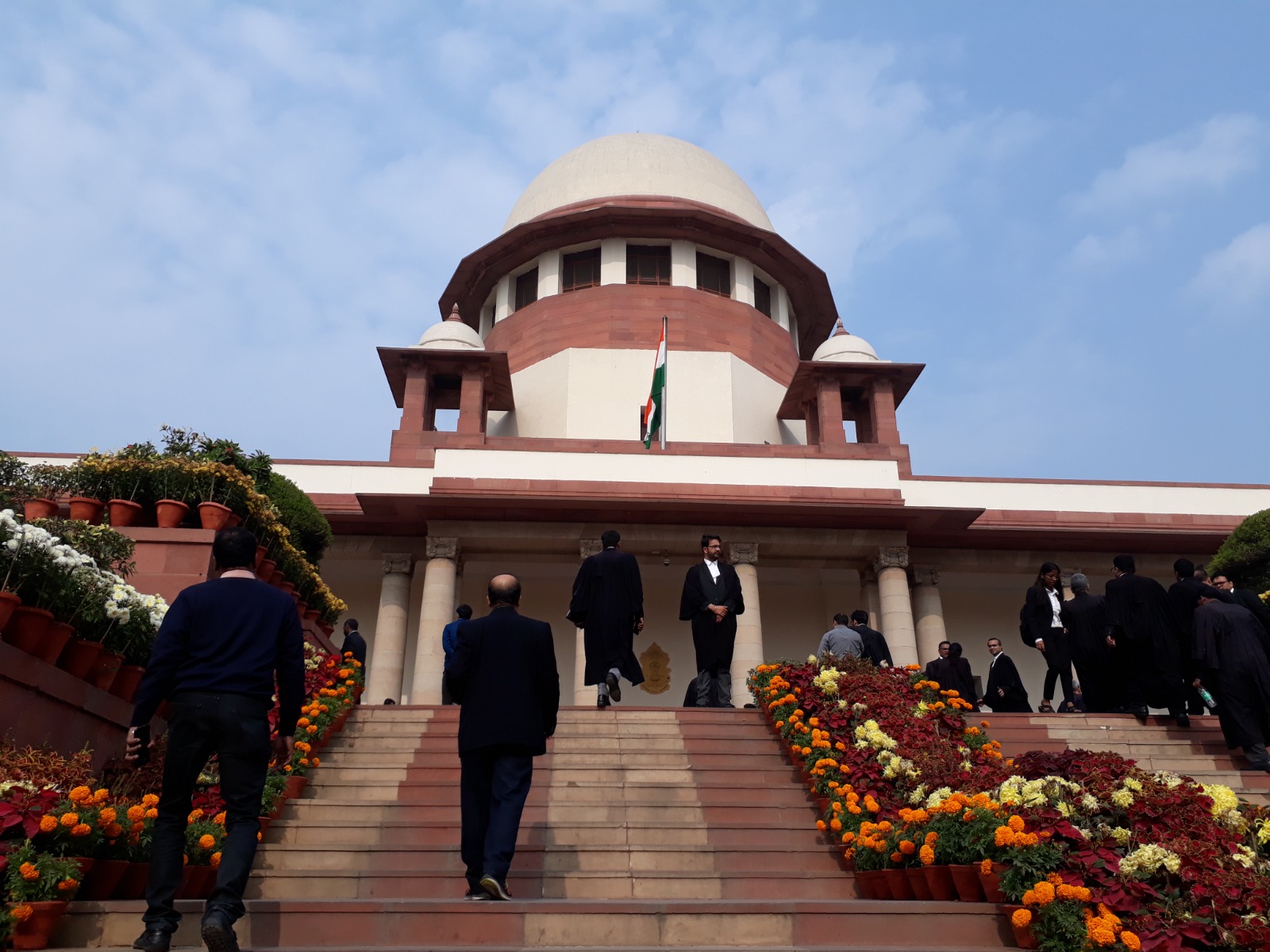
Letter of Intent and Arbitration: Supreme Court Clarifies
LOI is only a “promise to make a promise”
General reference does not import arbitration clause
By Legal Reporter
New Delhi: April 10, 2026:
Analytical Overview
The Supreme Court has recently clarified the legal nature of a Letter of Intent (LOI) and its relationship with arbitration clauses. The Court held that an LOI is not a binding contract but merely a “promise to make a promise.” Consequently, a general reference to an agreement containing an arbitration clause does not automatically incorporate that clause into the LOI.
1. Nature of a Letter of Intent
- An LOI is not a concluded contract.
- It signifies the intention of parties to enter into a contract in the future.
- The Court described it as a “promise to make a promise”, meaning it lacks enforceability until converted into a formal agreement.
2. Arbitration Clause Incorporation
- Arbitration clauses are contractual in nature and require clear incorporation.
- A general reference to another document containing an arbitration clause does not suffice.
- Only a specific incorporation of the arbitration clause makes it binding.
3. Statutory Basis
- Arbitration and Conciliation Act, 1996 governs arbitration agreements.
- Section 7 requires a written agreement to arbitrate.
- The Court emphasized that incorporation must be explicit, not implied.
4. Case Context
- The dispute arose when one party sought arbitration based on a clause in a referenced agreement.
- The LOI did not specifically incorporate the arbitration clause.
- The Supreme Court held that arbitration could not be invoked, as the LOI was not a binding contract and lacked a valid arbitration agreement.
5. Implications
- Businesses must ensure that arbitration clauses are expressly included in LOIs if they intend them to be binding.
- Reliance on general references creates uncertainty and risks unenforceability.
- The ruling reinforces the principle that arbitration is a matter of consent, not assumption.
[LEGAL RESEARCH RESOURCES]
HELPFUL FOR LAW PROFESSIONALS, STUDENTS AND FAMILIES IN DRAFTING WILL, PROBATE, CODICIL, THE BOOK WILL WRITING SIMPLIFIED, By Dr Ravinder Kumar Anand. [📘 Buy Will Writing Simplified online: Amazon | Flipkart ]
Check will-related case laws here. Click the link here: https://www.courtkutchehry.com/pages/blog/123-supreme-court-judgments-on-wills/
FAQs
Q1. What is a Letter of Intent (LOI)?
It is a preliminary document expressing intent to enter into a contract, not a binding agreement.
Q2. Is an LOI enforceable as a contract?
No. It is only a “promise to make a promise” unless converted into a formal contract.
Q3. Can an arbitration clause be implied in an LOI?
No. Arbitration clauses must be expressly incorporated; general references are insufficient.
Q4. What does Section 7 of the Arbitration Act require?
A written arbitration agreement, either standalone or expressly incorporated into another contract.
Q5. What happens if arbitration is invoked based on a general reference?
It will be invalid, as consent to arbitrate must be explicit.
Q6. Why is this ruling significant for businesses?
It highlights the need for careful drafting of LOIs to avoid disputes over enforceability.
Q7. Can parties still arbitrate if the LOI is silent?
Only if they later enter into a formal contract with a valid arbitration clause.
Q8. What principle did the Court reinforce?
Arbitration is based on consent and clarity, not assumption or implication.
Conclusion
The Supreme Court’s ruling underscores that a Letter of Intent is not a binding contract and cannot automatically import arbitration clauses through general references. For businesses, this means that LOIs must be drafted with precision if arbitration is intended. The judgment strengthens contractual certainty and ensures that arbitration remains a consensual process.