
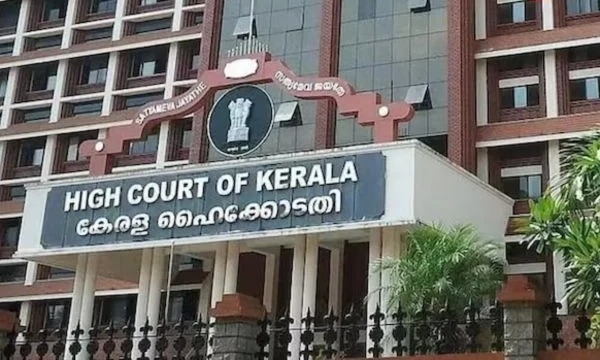
Kerala High Court Bars Institutionalised Endogamy in Knanaya Church
Court says individual choice outweighs church-imposed marriage rules
Judgment protects constitutional rights and equality in religious practices
By Our Legal Correspondent
New Delhi: March 24, 2026
In a landmark decision delivered on March 23, 2026, the Kerala High Court ruled that the Knanaya Catholic Church cannot enforce endogamy or deny sacraments to members who marry outside the community. The ruling came after decades of legal battles led by reformists and individuals like Justin John and Biju Uthup, who challenged the Church’s exclusionary practices.
The Court emphasized that religious freedom cannot override constitutional morality, equality, and individual autonomy, making it clear that institutionalized endogamy is impermissible in law.
Background of the Case
- The Knanaya Catholic Archeparchy of Kottayam historically enforced endogamy, requiring members to marry within the community.
- Those who married outside were denied sacraments such as marriage rites and were often forced to leave the Church.
- Reformist groups like the Knanaya Catholic Naveekarna Samithi (KCNS) challenged this practice, arguing it violated constitutional rights.
- The High Court, after nine days of hearings, dismissed the Church’s appeal and upheld earlier rulings in favour of KCNS.
Court’s Observations
- Endogamy is not an essential religious practice and cannot be enforced by the Church.
- Individual autonomy is absolute in matters of marriage choice.
- Denying sacraments based on endogamy violates constitutional morality and equality.
- The Church failed to prove that endogamy was a binding custom or essential to faith.
Implications of the Judgment
- For individuals: Members can now marry outside the Knanaya community without losing sacraments or membership.
- For the Church: Institutional enforcement of endogamy is legally barred.
- For society: The ruling strengthens constitutional protections against discriminatory religious practices.
Key Takeaways
- Endogamy is voluntary, not enforceable.
- Church authority is limited in regulating personal lives.
- Constitutional rights prevail over religious customs.
📘 Recommended Reading
Legal professionals and students alike will benefit from Will Writing Simplified, which covers procedure and case law in detail. Amazon.
📘 Buy Will Writing Simplified online: 🔹 Flipkart
Conclusion
The Kerala High Court’s ruling marks a historic victory for individual rights over institutional control. By striking down enforced endogamy, the Court has ensured that faith cannot be used as a tool to deny equality or personal freedom. This judgment sets a precedent for balancing religious customs with constitutional guarantees, reaffirming that the autonomy of an individual in marriage is absolute.
Keywords for Faster Searches
- Kerala High Court Knanaya Church ruling
- Endogamy in Knanaya Catholic Church
- Religious freedom vs constitutional rights India
- Justin John Knanaya marriage case
- Biju Uthup Knanaya Church litigation
- Kerala HC marriage rights ruling
- Catholic Church sacraments India
- Knanaya Catholic Naveekarna Samithi case
- Constitutional morality marriage rights
- Individual autonomy religious practices India