
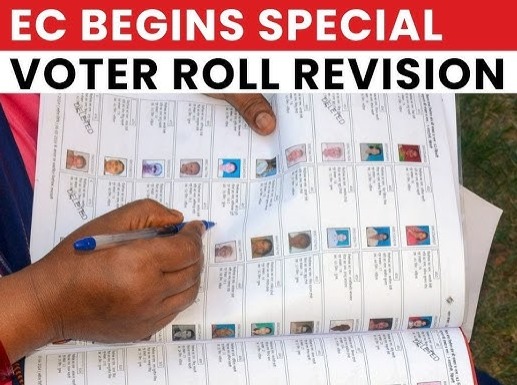
Jurisdictional Overlap and Fiscal Efficiency in Electoral Administration: Evaluating the Karnataka High Court’s Critique of Parallel Electoral Roll Revisions
Inter-Institutional Friction Between Constitutional Bodies in Local Body Elections
Judicial Scrutiny of Duplicative Special Intensive Revisions and Fiscal Responsibility
By Legal Editor
New Delhi: July 21, 2026:
The smooth functioning of a constitutional democracy depends on the seamless coordination, administrative efficiency, and institutional harmony of its governance structure. Elections serve as the primary legal mechanism through which sovereign public power is renewed and validated. However, when statutory or constitutional authorities operate within overlapping territorial and administrative boundaries without proper inter-agency coordination, structural friction inevitably arises. This precise institutional conflict reached a critical juncture before the Karnataka High Court in a matter involving the State Election Commission's decision to conduct a parallel, localized voter revision while the Election Commission of India was actively executing a comprehensive nationwide voter roll update.
The controversy centers on the decision of the Karnataka State Election Commission to initiate an independent Special Intensive Revision of electoral rolls across select civic wards within the Mahadevapura Assembly Constituency in Bengaluru. What makes this administrative action contentious is that it was launched precisely while the Election Commission of India was conducting its Phase III Special Intensive Revision across the entire state of Karnataka. Hearing a writ petition filed by resident electors of the affected civic wards, a single-judge bench presided over by Justice Suraj Govindaraj raised fundamentally important constitutional questions regarding administrative justification, statutory jurisdiction, public expenditure, and the potential creation of conflicting electoral registries for a single constituency.
The judicial intervention highlights a long-standing structural question in Indian administrative law: to what extent can state-level election bodies execute independent voter roll verification exercises when a centralized, federally mandated election authority is simultaneously executing an identical verification process covering the exact same citizenry? The legal, constitutional, and economic implications of this issue merit thorough examination.
Constitutional Architecture and Division of Electoral Powers
To understand the core legal issues raised before the High Court, one must analyze the distinct constitutional provisions that govern the Election Commission of India and the respective State Election Commissions. The legal framework of Indian electoral governance is established through a carefully balanced division of powers designed by the constitutional framers and subsequently amended through statutory enactments.
CONSTITUTION OF INDIA
/ \
Article 324 Article 243-K / 243-ZA
/ \
Election Commission of India State Election Commission
| |
Parliament & State Assemblies Local Municipalities & Panchayats
\ /
\-- Jurisdictional Row --/
Parallel SIR Revision
1. Plenary Authority Under Article 324
grants the Election Commission of India plenary powers regarding the superintendence, direction, and control of the preparation of electoral rolls for, and the conduct of, all elections to Parliament and to the Legislature of every State. This constitutional mandate is comprehensive. The Supreme Court of India has repeatedly affirmed in landmark decisions, such as Mohinder Singh Gill v. Chief Election Commissioner (1978) and A.C. Jose v. Sivan Pillai (1984), that the reservoir of power under Article 324 operates as an overarching grant of authority to ensure free, fair, and clean elections, filling any statutory gaps where explicit legislative enactments are silent.
2. Civic Governance Mandate Under Articles 243-K and 243-ZA
Following the landmark 73rd and 74th Constitutional Amendment Acts of 1992, rural and urban local self-governments were granted formal constitutional status. (for Panchayats) and (for Municipalities) established the State Election Commission for each state, vesting it with the superintendence, direction, and control of the preparation of electoral rolls for, and the conduct of, all local body elections.
While Articles 243-K and 243-ZA create an independent constitutional entity in the State Election Commission, they do not establish a completely detached electoral ecosystem. Instead, administrative convenience, statutory consistency, and public interest have historically led state legislatures to draft municipal statutes that explicitly direct the State Election Commission to adopt the electoral rolls prepared by the Election Commission of India for State Legislative Assembly elections, subject only to necessary ward-wise splitting or restructuring.
3. Statutory Authority Under the Representation of the People Act, 1950
The legislative backbone of voter roll preparation for Assembly constituencies is found in the Representation of the People Act, 1950 (RPA). Specifically, empowers the Election Commission of India to order a special revision of the electoral roll for any constituency or part of a constituency whenever it considers it necessary or expedient to do so.
During a Special Intensive Revision, designated election officials conduct physical, door-to-door verification to identify deceased citizens, permanently relocated residents, ineligible entries, and fraudulent registrations. The process requires freezing the existing electoral rolls as of a designated cut-off date to ensure a stable baseline for field verification.
The Genesis of the Bengaluru Legal Controversy
The legal dispute in Bengaluru originated from complaints submitted to the State Election Commission by political representatives who alleged major discrepancies in the voter records of the Mahadevapura Assembly Constituency. The allegations claimed that the existing rolls contained approximately 13,000 duplicate voter entries, 40,000 invalid or unverified residential addresses, 4,000 defective photographs, and widespread misuse of Form-6 applications for fresh voter registration.
Acting on these representations, the State Election Commission issued an administrative order on June 19 directing a parallel, localized Special Intensive Revision across 23 civic wards in Bengaluru North City Corporation and one ward in Bengaluru South City Corporation, all falling within the Mahadevapura Assembly Constituency.
However, the timing of this order created a direct operational conflict:
The Central Timeline: On June 16, just three days prior to the State Election Commission's order, the Election Commission of India had officially frozen the electoral rolls across Karnataka to execute its nationwide Phase III Special Intensive Revision, establishing an elaborate schedule concluding with the publication of final rolls on October 7.
The Local Timeline: The State Election Commission established its own separate freeze date, an accelerated schedule, and a target completion date of July 31 for its local revision.
This sequence of events led affected electors to approach the Karnataka High Court via a writ petition, arguing that the State Election Commission had exceeded its statutory authority, infringed upon the constitutional domain of the Election Commission of India, created administrative chaos, and caused unnecessary expenditure of public funds.
Judicial Review, Fiscal Wisdom, and Administrative Economy
When the writ petition came up for detailed hearing, the single-judge bench of expressed sharp skepticism regarding the State Election Commission's decision. The Court’s inquiry went beyond technical jurisdictional arguments to focus on the practical realities of administrative governance and public finance.
SEC Parallel SIR Exercise
|
+-------------------------+-------------------------+
| |
Jurisdictional Impermissibility Fiscal Irresponsibility
- SEC cannot revise ECI Assembly rolls. - Duplicate deployment of manpower.
- Risk of conflicting electoral registries. - Redundant expenditure of taxpayer funds.
- Voter confusion over differing cutoff dates. - Wasted administrative hours.
1. The Doctrine of Administrative Economy and Fiscal Responsibility
The High Court explicitly questioned why public funds and administrative machinery should be deployed twice for the exact same purpose within the same geographical territory. Conducting an intensive voter verification exercise requires deploying thousands of public servant enumerators, printing extensive physical verification forms, establishing grievance redressal mechanisms, and processing vast amounts of field data.
When the central body (ECI) is already conducting a comprehensive, door-to-door verification exercise using public resources, launching a simultaneous, parallel exercise by the state body (SEC) results in a duplication of public expenditure. The High Court emphasized that statutory powers must be exercised with fiscal prudence and administrative reasonableness.
2. The Risk of Conflicting Electoral Rolls
A severe legal complication arising from parallel revisions is the certainty of conflicting voter lists. If the Election Commission of India uses June 16 as its cut-off date and concludes its revision on October 7, while the State Election Commission uses a different cut-off date and completes its process on July 31, two legally valid yet contradictory voter lists would exist simultaneously for the same citizens in the Mahadevapura constituency.
Such a conflict creates significant legal uncertainty:
A citizen verified and included under the State Election Commission's list might be omitted or flagged under the Election Commission of India's list due to differing verification schedules.
Franchise rights in local municipal elections could contradict franchise rights in state legislative elections, creating voter confusion and prompting widespread litigation.
3. Harmonious Construction and Statutory Limitations
Under well-established rules of statutory interpretation, provisions of state municipal laws—such as the —must be interpreted harmoniously with constitutional mandates. The petitioners argued before the High Court that if state statutes are interpreted as authorizing the State Election Commission to independently alter or rewrite Legislative Assembly rolls, those provisions would be constitutionally invalid for violating Article 324. The State Election Commission's constitutional duty is to adapt, and format finalized Assembly rolls into municipal ward rolls, not to run an independent parallel revision of the underlying Assembly rolls while the Election Commission of India's revision is ongoing.
Analytical Synthesis of Legal Principles
The Karnataka High Court's review of this parallel voter roll revision underscores several foundational principles of Indian administrative and constitutional law:
Subordination of Local Rules to Constitutional Allocation: While State Election Commissions enjoy constitutional autonomy under Articles 243-K and 243-ZA for conducting local body elections, they cannot usurp or interfere with the primary responsibility vested in the Election Commission of India under Article 324 regarding Assembly and Parliamentary electoral rolls.
The Principle against Administrative Duplication: Statutory power cannot be exercised arbitrarily or redundantly. Where a competent constitutional authority is actively executing a statutory mandate, a parallel exercise by another authority covering the same subject matter without coordination constitutes an unreasonable exercise of power.
Public Trust and Fiscal Accountability: Public authorities act as trustees of the public treasury. Expenditure of public money on duplicative exercises that produce conflicting legal outcomes violates the implicit constitutional requirement of administrative reasonableness under Article 14.
Detailed Frequently Asked Questions (FAQ)
Searchable Index
What is a Special Intensive Revision (SIR) and how is it conducted?
What are the distinct constitutional mandates of the ECI and the SEC?
Can a State Election Commission independently revise Assembly voter rolls?
Why did the Karnataka High Court object to the SEC's parallel revision order?
What legal problems arise when two electoral commissions use different freeze dates?
Can deletion from an electoral roll during an SIR affect citizenship or civil rights?
What statutory laws govern voter list preparation in Karnataka municipal wards?
How do legal precedents define the scope of plenary powers under Article 324?
FAQ Details
1. What is a Special Intensive Revision (SIR) and how is it conducted?
A Special Intensive Revision is a formal, comprehensive voter list verification exercise ordered by an election commission to clean and update electoral registries. Unlike ordinary annual summary revisions—which rely primarily on voluntary submissions from voters using Form-6, Form-7, or Form-8—an SIR involves door-to-door physical visits by designated official enumerators. The enumerators verify every registered voter at their listed residential address to detect and remove deceased individuals, duplicate entries, non-existent addresses, and permanently relocated citizens, while enrolling eligible individuals who were previously left out. Statutory authority for an SIR originates from , combined with .
2. What are the distinct constitutional mandates of the ECI and the SEC?
The Election Commission of India (ECI) is created under and holds sole constitutional authority over elections to the Indian Parliament, all State Legislative Assemblies, State Legislative Councils, and the offices of the President and Vice President.
In contrast, the State Election Commission (SEC) is created under (introduced via the 73rd and 74th Amendments in 1992) specifically to conduct elections for local self-governing bodies, including rural Panchayats and urban Municipal Corporations. While both are independent constitutional bodies, the SEC's domain is limited to local civic body elections, whereas the ECI manages national and state-level legislative elections.
3. Can a State Election Commission independently revise Assembly voter rolls?
No. A State Election Commission does not possess legal or constitutional authority to modify, alter, or independently revise Legislative Assembly electoral rolls. Assembly rolls are prepared strictly under the authority of the Election Commission of India pursuant to the Representation of the People Act, 1950. State municipal legislation typically requires the SEC to adopt the existing Assembly electoral rolls published by the ECI as the official baseline, re-arranging those voters into specific municipal ward lists for local body elections. If an SEC attempts to run an independent revision that modifies Assembly voter lists, it exceeds its constitutional jurisdiction.
4. Why did the Karnataka High Court object to the SEC's parallel revision order?
The Karnataka High Court, through a single-judge bench of , raised serious objections to the SEC's order because the Election Commission of India was already carrying out a nationwide Phase III Special Intensive Revision in Karnataka. The Court pointed out that conducting two parallel revisions for the same electorate simultaneously wastes public funds, creates unnecessary administrative work, deploys public servants redundantly, and risks producing conflicting voter lists for the same constituency.
5. What legal problems arise when two electoral commissions use different freeze dates?
Freezing an electoral roll establishes an official cut-off date after which no additions, deletions, or modifications can occur until the revision process is completed. If the ECI freezes Assembly rolls on June 16 for its nationwide exercise while the SEC establishes a separate freeze date and schedule for its local exercise, the two commissions will evaluate voter eligibility against conflicting timelines. This leads to legal discrepancies where a voter might be validly registered on one list but deleted or omitted on the other, creating severe voter confusion and provoking legal challenges regarding franchise rights.
6. Can deletion from an electoral roll during an SIR affect citizenship or civil rights?
No. The Supreme Court of India has established that electoral rolls are prepared solely for the purpose of exercising franchise rights in democratic elections. Deletion or omission of a person's name from an electoral roll during a Special Intensive Revision does not constitute a legal determination of non-citizenship, nor does it strip a person of civic identity, property rights, or social welfare benefits. Legal procedures for determining citizenship are distinct and governed exclusively by the Citizenship Act, 1955, and relevant central laws.
7. What statutory laws govern voter list preparation in Karnataka municipal wards?
Voter list preparation for municipal wards in Bengaluru is governed by state municipal legislation, including the and regional municipal election rules, operating alongside the Karnataka Municipal Corporations Act, 1976. However, state laws must conform to constitutional provisions. Under standard legal interpretation, these municipal statutes empower the SEC to adopt and split the ECI's Assembly rolls into ward lists, but do not grant power to conduct an independent parallel revision of the core Assembly rolls while the ECI's revision is actively in progress.
8. How do legal precedents define the scope of plenary powers under Article 324?
Landmark Supreme Court rulings, such as Mohinder Singh Gill v. Chief Election Commissioner (1978), establish that is a plenary grant of power that empowers the ECI to issue necessary orders to ensure free and fair elections whenever explicit statutory provisions are silent or insufficient. However, this power must be exercised fairly, reasonably, and in accordance with natural justice. It gives the ECI primary responsibility over state and national voter rolls, preventing state-level bodies from interfering with central electoral list preparation.
Summary of Statutory and Constitutional Framework
Legal Provision / Statute — Jurisdiction / Scope — Primary Legal Role — Key Constitutional / Statutory Impact
Article 324, Constitution of India — Central (ECI) — Overall supervision and control of Parliamentary and Assembly electoral rolls. — Grants’ plenary authority to ECI to maintain unified, clean voter registries nationwide.
Article 243-K, Constitution of India — State (SEC) — Supervision, direction, and control of rural Panchayat elections. — Establishes independent state election machinery for rural local self-governance.
Article 243-ZA, Constitution of India — State (SEC) — Supervision, direction, and control of urban Municipal elections. — Empowers SEC to conduct municipal elections and manage municipal ward voter lists.
Section 21(3), RPA, 1950 — Central (ECI) — Statutory power to order special intensive revision of voter lists. — Authorizes door-to-door physical verification to purge invalid voter entries.
Greater Bengaluru Governance Act — State / Municipal — Administrative structure for Bengaluru municipal wards and civic elections. — Regulates local governance; must be harmoniously construed with Article 324.