
COURTKUTCHEHRY SPECIAL SERIES ON LANDMARKS JUDGEMENTS ON WILLS, CODICIL & PROBATE
Kalyan Singh, London Trained Cutter, Johri Bazar, Jaipur v. Smt. Chhoti & Ors.: Supreme Court Upholds Darjee Community’s Ownership of Baghichi Darjian
Sale Deed and Will Declared Unreliable
Community Title Reaffirmed by Apex Court
By Vishwas Kumar
New Delhi: March 28, 2026:
On 1 December 1989, the Supreme Court of India in Kalyan Singh, London Trained Cutter, Johri Bazar, Jaipur v. Smt. Chhoti & Ors. (Civil Appeal No. 1351(N) of 1973) delivered a crucial verdict in the long-standing dispute over “Baghichi Darjian”, a property claimed through contested documents. The Bench comprising Hon’ble Mr. Justice Sabyasachi Mukharji, Hon’ble Mr. Justice K. Jagannatha Shetty, and Hon’ble Mr. Justice A.M. Ahmadi examined whether the alleged sale deed and will executed by Ganga Ram could override prior community decrees affirming ownership of the Darjee community.
The Court found both the sale deed and the will to be unreliable and surrounded by suspicious circumstances. It emphasized that wills, particularly those executed under questionable conditions, must undergo rigorous judicial scrutiny. The attempt by Ganga Ram to displace the community’s established title was deemed fruitless, as the documents lacked credibility and failed to dispel doubts about their authenticity.
The Supreme Court categorically held that the community’s ownership, earlier affirmed through decrees, could not be displaced by such dubious instruments. By rejecting the claim, the Court reinforced the principle that collective rights recognized by law and prior judicial determinations cannot be undermined by suspicious or fabricated documents.
This ruling not only settled the dispute over Baghichi Darjian but also highlighted the judiciary’s commitment to safeguarding community ownership against individual attempts to override established rights. It stands as a precedent for the careful evaluation of wills and sale deeds when they conflict with recognized communal titles.
For More, Read Here the Summary of the Judgement from the Book: WILL WRITING SIMPLIFIED, read below or open page no 436, Chapter 14.1 in the book. (Online book purchase link available here on: Buy online: Amazon | Flipkart
|
|
Case Summary |
: |
Kalyan Singh, London Trained Cutter, Johri Bazar, Jaipur v. Smt. Chhoti & Ors. |
|
|
Court |
: |
Supreme Court of India |
|
|
Citations |
: |
(1989) 12 SC CK 0024: Civil Appeal No. 1351(N) of 1973. |
|
|
Link |
: |
https://www.courtkutchehry.com/judgements/673840/kalyan-singh-vs-smt-chhoti-and-others/
|
|
|
Decided on |
: |
01 December 1989 |
|
|
Coram |
: |
Hon’ble Mr. Justice Sabyasachi Mukharji, Hon’ble Mr. Justice K. Jagannatha Shetty and Hon’ble Mr. Justice A.M. Ahmadi. |
|
|
Relevant Paragraphs |
: |
Para Nos. 14–23 |
1. Facts of the Case:
Dispute concerned a baghichi (garden with temples of Sri Satyanarayanji and Sri Mahadeoji) at Motidungri Road, Jaipur, claimed by the Darjee (Tailor) community as community property known as “Baghichi Darjian.” Narayan, Pujari of the temples, allegedly sold the property to Khawas Bala Bux. The community sued for cancellation of sale and possession, securing decree in 1928 affirming its ownership. After Narayan’s death, his son Bhonrilal tried to mutate his name as owner, leading to another successful community suit decreed finally in 1960. Subsequently, Ganga Ram (Narayan’s younger son) filed a declaratory suit (1959) claiming ownership based on a sale deed (1875) and a will (1916) allegedly by one Gaurilal in his favour. The Trial Court and District Court decreed in Ganga Ram’s favour. On appeal, the High Court found the sale deed inadmissible and will suspicious but upheld the decree because the suit wasn’t filed in representative capacity under Order 1 Rule 8 CPC. Kalyan Singh (representing community) appealed to Supreme Court.
2. Law Points Involved:
(i). Whether the earlier decree in favour of the Darjee community operated as res judicata against the plaintiff.
(ii). Whether the sale deed (Ex.3) and will (Ex.4) were validly proved.
(iii). Applicability of Order 1 Rule 8 CPC—representative suit requirement.
(iv). Standard of proof and removal of suspicious circumstances in proof of wills under Section 63 of the Indian Evidence Act.
3. Acts/Provisions/Articles Referred:
(i). Civil Procedure Code, 1908 — Order 1 Rule 8; Order 41 Rule 27
(ii). Indian Evidence Act, 1872 — Sections 63, 66, 79
(iii). Relevant precedents of Privy Council and Supreme Court on suspicious wills (AIR 1937 PC 101; Gajendragadkar, J. in earlier SC ruling)
4. Judgments Referred:
(i). H. Venkatachala Iyengar v. B.N. Thimmajamma (1958) 11 SC CK 0008;
(ii). Rani Purnima Debi v. Kumar Khagendra Narayan Deb, (1961) 08 SC CK 0021.
(iii). Smt. Indu Bala Bose v. Manindra Chandra Bose, (1981) 11 SC CK 0017.
5. Obiter Dicta:
A member of a community can bring a suit to protect community property even without representative capacity under Order 1 Rule 8 CPC; however, a decree in such a suit remains operative until set aside.
6. Ratio Decidendi:
When the foundation documents (sale deed and will) are inadmissible or
suspiciously executed and unexplained, no title can be claimed on their basis. Absence of community’s representative permission under Order 1 Rule 8 CPC does not invalidate a valid earlier decree recognizing community ownership. A will must be proved with “trustworthy and unimpeachable evidence”; long non-production and exclusion of natural heirs create grave suspicion.
7. Final Ruling:
Supreme Court allowed the appeal; modified the High Court’s decree; set aside judgments of trial and district courts; and dismissed the plaintiff’s suit. Ex.3 (sale deed) held inadmissible and Ex.4 (will) held not genuine. No order as to costs.
8. Gist Highlighting Dispute with Final Decision:
The long-standing dispute over “Baghichi Darjian” revolved around Ganga Ram’s attempt to override prior community decrees through an alleged sale deed and will. The Supreme Court found both documents unreliable and held that community title, earlier affirmed, could not be displaced. The Court emphasized rigorous scrutiny of suspicious wills and rejected the claim as fruitless, reaffirming Darjee community’s ownership.
Read full Judgement Here:
Kalyan Singh, London Trained Cutter, Johri Bazar, Jaipur v. Smt. Chhoti & Ors.
Supreme Court of India
(1989) 12 SC CK 0024: Civil Appeal No. 1351(N) of 1973.
https://www.courtkutchehry.com/judgements/673840/kalyan-singh-vs-smt-chhoti-and-others/
You Can Also Purchase the Book from here on: Buy online: Amazon | Flipkart
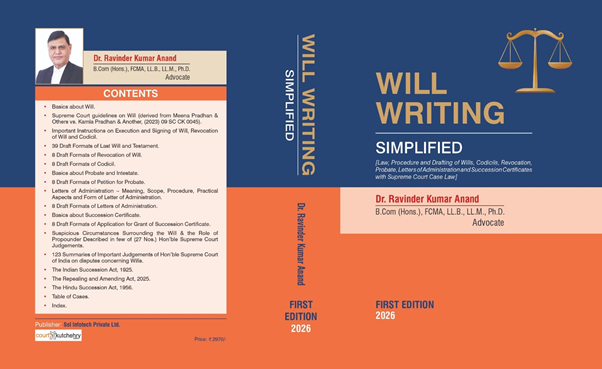
OUR RECOMMENDATION: Check out 123 Key Judgements, as highlighted in the book, WILL WRITING SIMPLIFIED, for the quick research and reference purposes. Click the link here: https://www.courtkutchehry.com/pages/blog/123-supreme-court-judgments-on-wills/
Keywords for SEO & Quick Search
- Kalyan Singh v. Smt. Chhoti Supreme Court case
- 1989 Indian Supreme Court property dispute judgment
- Baghichi Darjian ownership case
- Suspicious will rejected by Supreme Court India
- Justice Sabyasachi Mukharji property ruling
- Civil Appeal No. 1351(N) of 1973 Supreme Court
- Apex Court community ownership reaffirmed India