
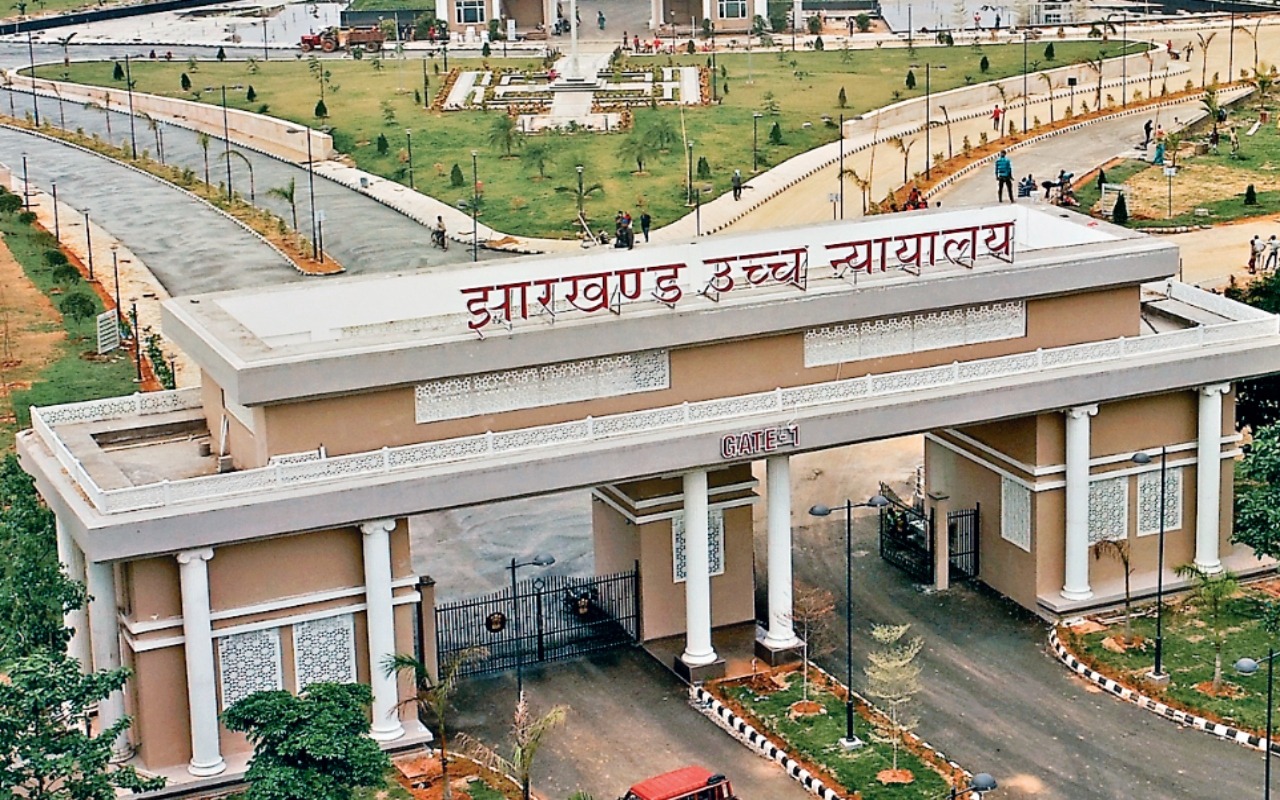
Jharkhand High Court Orders Full Wages and Benefits for Workman’s Family
Court Upholds Labour Rights Beyond Death
Employer Directed to Pay Consequential Benefits
By Our Legal Correspondent
Ranchi, March 2026:
In a landmark judgment, the Jharkhand High Court has directed that the family of a deceased workman is entitled to receive full wages and consequential benefits that would have accrued to the workman during his service. The Division Bench emphasized that labour rights do not end with the death of a worker and must extend to his legal heirs, ensuring social justice and financial security for families.
Background of the Case
The case arose when the family of a deceased workman approached the court after being denied wages and benefits that had been withheld during his lifetime. The employer argued that since the workman had passed away, claims for wages and benefits could not be enforced.
The High Court rejected this argument, holding that the right to wages and benefits is a vested right that survives to the legal heirs. The court relied on principles of labour jurisprudence and constitutional guarantees under Article 21 (Right to Life) and Article 23 (Prohibition of Exploitation).
Court’s Observations
- Rights Survive Death: The court ruled that wages and benefits accrued during service are not extinguished by death.
- Family Entitlement: Legal heirs are entitled to claim these benefits to ensure financial security.
- Employer’s Obligation: Employers cannot escape liability by citing the death of the workman.
- Social Justice Principle: The ruling reinforces that labour laws must be interpreted in favour of workers and their families.
[📘 Legal professionals and students alike will benefit from Will Writing Simplified, which covers procedure and case law in detail. BUY NOW: Amazon 🔹 Flipkart]
Also Read: Karnataka Gangrape Case Raises Alarm: Why Law Warns Against Risky Associations
Legal Framework
Industrial Disputes Act, 1947
- Provides for resolution of disputes between employers and workmen.
- Ensures payment of wages and benefits as per awards and settlements.
Payment of Wages Act, 1936
- Mandates timely payment of wages to employees.
- Rights under this Act survive to legal heirs in case of death.
Constitutional Principles
- Article 21: Right to life includes right to livelihood and financial security.
- Article 23: Prohibits exploitation of labour.
- Directive Principles: Article 43 directs the state to secure living wages and decent conditions of work.
Larger Implications
Also Read: Delhi High Court Cracks Down on FMCG Counterfeiting: Permanent Injunction for HUL & P&G
- For Workmen’s Families: Provides clarity that families can claim wages and benefits even after the death of a worker.
- For Employers: Reinforces accountability and obligation to honour labour rights.
- For Judiciary: Strengthens the pro‑labour interpretation of statutes.
- For Labour Policy: Encourages reforms to ensure faster disbursement of dues to families.
Conclusion
The Jharkhand High Court’s ruling is a milestone in labour jurisprudence. By extending the right to wages and benefits to the families of deceased workmen, the court has reinforced the principle of social justice and constitutional protection of labour rights. This judgment is expected to guide future disputes and ensure that families are not left destitute due to denial of rightful dues.
Also Read: Pahalgam Terror Attack: GoPro Trail Leads to China, NIA Seeks Judicial Help
Keywords for Faster Search
- Jharkhand High Court workman wages case
- Full wages consequential benefits ruling
- Labour rights after death India
- Industrial Disputes Act Jharkhand HC
- Payment of Wages Act legal heirs
- Article 21 labour rights India
- Jharkhand HC labour jurisprudence ruling
Also Read: Gujarat High Court Rules Borrower of Insured Vehicle Not a ‘Third Party’