
COURTKUTCHEHRY SPECIAL SERIES ON LANDMARKS JUDGEMENTS ON WILLS, CODICIL & PROBATE
Indu Bala Bose & Ors. (Smt.) v. Manindra Chandra Bose & Anr.: Supreme Court Confirms Validity of Will Despite Alleged Suspicions
Minor Omissions Not Suspicious
Probate Rights of Propounders Upheld
By Vishwas Kumar
New Delhi: March 28, 2026:
On 18 November 1981, the Supreme Court of India in Indu Bala Bose & Ors. (Smt.) v. Manindra Chandra Bose & Anr. (Civil Appeal No. 1872(N) of 1970) delivered a significant ruling on the validity of a contested will. The Division Bench comprising Hon’ble Mr. Justice A.P. Sen and Hon’ble Mr. Justice Baharul Islam examined whether the testator was mentally fit and whether the will was surrounded by suspicious circumstances.
The trial court had doubted the testator’s mental state, raising concerns about his capacity to execute the will. However, the High Court found no such infirmity and upheld the will. On appeal, the Supreme Court agreed with the High Court’s reasoning, emphasizing that minor omissions, the presence of friendly witnesses, or the failure to preserve draft copies do not amount to suspicious circumstances. The Court clarified that such factors, without more, cannot invalidate a will when the overall evidence supports its genuineness.
The judgment reaffirmed the principle that suspicion must be real and substantial, not speculative or trivial. The Court stressed that the burden lies on the challenger to establish genuine doubts about the testator’s free will. Since no credible evidence of incapacity or coercion was presented, the Supreme Court dismissed the appeal and confirmed probate in favour of the propounders.
This ruling remains a cornerstone in succession law, underscoring the judiciary’s balanced approach in distinguishing between genuine suspicion and inconsequential irregularities. It ensures that wills are not lightly invalidated on speculative grounds, thereby safeguarding testamentary freedom.
For More, Read Here the Summary of the Judgement from the Book: WILL WRITING SIMPLIFIED, read below or open page no 436, Chapter 14.1 in the book. (Online book purchase link available here on: Buy online: Amazon | Flipkart
|
|
Case Summary |
: |
Indu Bala Bose & Ors. (Smt.) v. Manindra Chandra Bose & Anr. |
|
|
Court |
: |
Supreme Court of India |
|
|
Citations |
: |
(1981) 11 SC CK 0017: Civil Appeal No. 1872(N) of 1970. |
|
|
Link |
: |
|
|
|
Decided on |
: |
18 November 1981 |
|
|
Coram |
: |
Hon’ble Mr. Justice A.P. Sen and Hon’ble Mr. Justice Baharul Islam. |
|
|
Relevant Paragraphs |
: |
Para Nos.2–19 |
1. Facts of the Case:
The appeal arose from a decree dated December 24, 1969 in a probate suit. Manindra Chandra Bose and Jogendra Nath Mitra sought probate of a Will dated November 8, 1952 executed by Ranendra Chandra Bose, who died unmarried on November 16, 1952. The Will gave half the estate to his nephew Bhabesh and half to his brother Manindra for life, with remainder to Bhabesh. The defendants (heirs of Jitendra Bose) alleged lack of testamentary capacity, undue influence, and forgery. The trial court found the Will genuine but refused probate citing doubts about the testator’s mental condition. The High Court reversed, finding no suspicious circumstances and granted probate. The appellants challenged that finding before the Supreme Court.
2. Law Points Involved:
(i). Proof of a Will under Section 63, Indian Succession Act, 1925 – requirement of due execution and attestation.
(ii). Burden on propounder to dispel suspicious circumstances.
(iii). Scope of appellate interference with trial court’s findings in probate matters.
3. Acts / Provisions / Articles Referred:
(i). Indian Succession Act, 1925 – Section 63
(ii). Constitution of India – Article 133(1)(b)
4. Judgments Referred:
(i). H. Venkatachala Iyengar v. B.N. Thimmajamma, (1958) 11 SC CK 0008.
(ii). Shashi Kumar Banerjee v. Subodh Kumar Banerjee, (1963) 09 SC CK 0012.
(iii). Rani Purnima Debi v. Kumar Khagendra Narayan Deb, (1961) 08 SC CK 0021.
(iv). Bank of India Ltd. v. Jamsetji A.H. Chinoy, (1949) 12 PRI CK 0002.
(v). Madholal Sindhu v. Official Assignee of Bombay, (1949) 05 BOM CK 0006.
5. Obiter Dicta:
Every circumstance is not “suspicious”; only those not normal or not normally expected in the circumstances can be termed so. Courts must exercise reasonable scepticism but not persistent disbelief.
6. Ratio Decidendi:
When the execution and attestation of a Will are proved, and the alleged suspicious circumstances are either normal, self-explained, or adequately clarified, the Will must be accepted as genuine. The onus on the propounder is to satisfy the conscience of the Court, and once done, probate should not be denied merely for unnatural disposition.
7. Final Ruling:
Appeal dismissed. The Supreme Court affirmed the High Court’s grant of probate, holding that there were no real suspicious circumstances and that the testator possessed full testamentary capacity at the time of execution.
8. Gist Highlighting Dispute with Final Decision:
The central dispute concerned whether the testator was mentally fit and whether the Will was surrounded by suspicious circumstances. The trial court doubted the testator’s mental state; the High Court found none. The Supreme Court agreed with the High Court, observing that minor omissions, friendly witnesses, or failure to preserve drafts did not amount to suspicious circumstances. The appeal failed, confirming probate to the propounders.
Read full Judgement Here:
Indu Bala Bose & Ors. (Smt.) v. Manindra Chandra Bose & Anr.
Supreme Court of India
(1981) 11 SC CK 0017: Civil Appeal No. 1872(N) of 1970.
You Can Also Purchase the Book from here on: Buy online: Amazon | Flipkart
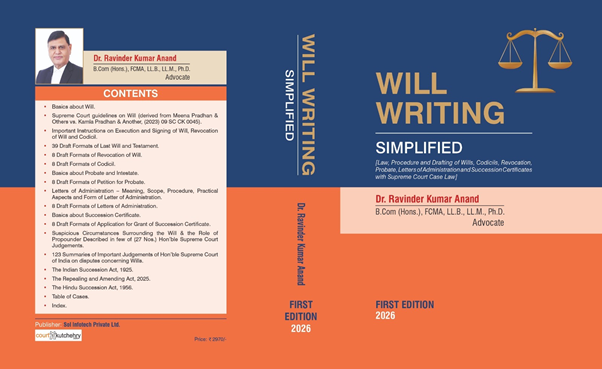
OUR RECOMMENDATION: Check out 123 Key Judgements, as highlighted in the book, WILL WRITING SIMPLIFIED, for the quick research and reference purposes. Click the link here: https://www.courtkutchehry.com/pages/blog/123-supreme-court-judgments-on-wills/
Keywords for SEO & Quick Search
- Indu Bala Bose v. Manindra Chandra Bose Supreme Court case
- 1981 Indian Supreme Court will dispute judgment
- Suspicious circumstances in will execution India
- Justice A.P. Sen will validity ruling
- Probate confirmed Supreme Court India
- Civil Appeal No. 1872(N) of 1970 Supreme Court
- Apex Court testamentary freedom ruling India