
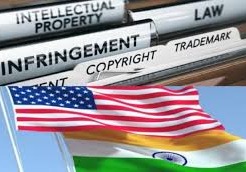
India’s Copyright Crossroads: How IP Firms Are Battling Global Infringement
From Bollywood to Blockchain: The Legal Arsenal Against Piracy
Comparative Lessons from the US, EU, and Beyond
By Vishwas Kumar
New Delhi: June 09, 2026:
India’s copyright law today stands at a decisive crossroads. The country’s creative industries—spanning Bollywood, music, publishing, software, and digital content—are flourishing in scale and ambition, yet they are simultaneously besieged by challenges that are global in nature. Digital piracy, the rise of artificial intelligence–generated works, and the complexities of cross‑border disputes have transformed copyright enforcement from a niche legal matter into a central pillar of India’s cultural and economic future. Intellectual property firms in India, once seen primarily as litigation specialists, are now evolving into multi‑disciplinary guardians of creativity, deploying technology, international collaboration, and innovative legal strategies to safeguard the rights of authors and inventors.
The roots of India’s copyright regime lie in the Copyright Act of 1957, a statute that has been amended several times to keep pace with technological change, most notably in 2012. Yet, the pace of digital disruption has far outstripped legislative reform. Streaming platforms, torrent sites, and social media have created new avenues for infringement, while globalization has ensured that disputes rarely remain confined within national borders. A Bollywood film pirated in Mumbai may be streamed illegally in London within hours; a software program developed in Bengaluru may be copied and sold in Southeast Asia without authorization. This interconnectedness has forced Indian IP firms to think beyond domestic litigation, embracing international treaties such as the Berne Convention, TRIPS Agreement, and WIPO Copyright Treaty as tools for enforcement.
At the same time, constitutional principles add layers of complexity. Article 19(1)(a) of the Indian Constitution guarantees freedom of speech and expression, while Article 300A protects the right to property. Copyright law must balance these rights: ensuring that creators are rewarded for their work without unduly restricting public access to knowledge and culture. Judicial precedents have played a crucial role in shaping this balance. In Eastern Book Company v. D.B. Modak (2008), the Supreme Court clarified the standard of originality, rejecting mere “sweat of the brow” and requiring a modicum of creativity. In Super Cassettes v. MySpace (2011), courts grappled with intermediary liability, testing whether platforms should be held accountable for user‑uploaded infringing content. More recently, Tips Industries v. Wynk Music (2019) highlighted the tension between traditional licensing models and digital streaming platforms.
Comparisons with other jurisdictions reveal both gaps and opportunities. The United States, under its Copyright Act of 1976 and the Digital Millennium Copyright Act (DMCA), offers broad “fair use” exceptions and strong safe‑harbour protections for intermediaries. This has fostered innovation but sometimes left creators under‑compensated. The European Union, by contrast, has adopted a more creator‑centric approach through its Directive on Copyright in the Digital Single Market (2019), which imposes proactive monitoring obligations on platforms and strengthens licensing requirements. India’s narrower “fair dealing” exceptions and ambiguous intermediary liability provisions place it somewhere in between, but the country is increasingly pressured to align with global standards.
The sociological impact of copyright enforcement in India cannot be overstated. Piracy undermines the livelihoods of artists and producers, yet excessive enforcement risks restricting access to education and knowledge, particularly in a country where affordability is a major concern. Economically, the stakes are enormous: Bollywood alone loses billions annually to piracy, while India’s IT sector faces significant risks from software infringement. Ethically, the debate is sharpened by new technologies. Who owns creativity when artificial intelligence composes music or generates art? Should blockchain be used to track ownership and licensing? These questions are not merely technical—they strike at the heart of how society values human creativity.
Indian IP firms are responding with a mix of litigation and innovation. They file injunctions to block piracy websites during major film releases, collaborate with international partners to pursue cross‑border enforcement, and increasingly deploy technology such as blockchain for proof of ownership and AI‑driven tools for piracy detection. They also engage in alternative dispute resolution (ADR) to resolve licensing conflicts more efficiently. In doing so, they are not only defending individual clients but also shaping the future of India’s creative economy.
The crossroads metaphor is apt because India must now decide whether to strengthen its copyright regime in ways that empower creators, attract investment, and align with global norms—or risk falling behind in a world where intellectual property is the currency of innovation. The challenge is immense, but so is the opportunity. By balancing constitutional freedoms with property rights, by learning from the US and EU models, and by embracing technology, India can craft a copyright framework that is both protective and progressive. The story of Indian copyright law is no longer just about statutes and precedents; it is about culture, commerce, and conscience in the digital age.
The Legal Landscape in India
- Primary statute: Copyright Act, 1957 (amended in 2012) — governs rights of authors, performers, and producers.
- Constitutional basis: Article 19(1)(a) (freedom of speech) and Article 300A (right to property) indirectly support copyright protection.
- Judicial precedents:
- Eastern Book Company v. D.B. Modak (2008) — clarified originality standards.
- Super Cassettes v. MySpace (2011) — tested intermediary liability.
- Tips Industries v. Wynk Music (2019) — licensing disputes in digital streaming.
- International treaties: India is party to the Berne Convention, TRIPS Agreement, and WIPO Copyright Treaty, aligning domestic law with global norms.
Comparative Perspectives
- United States: Copyright Act, 1976 + Digital Millennium Copyright Act (DMCA) — strong safe‑harbour provisions for intermediaries, broad “fair use.”
- European Union: Directive on Copyright in the Digital Single Market (2019) — imposes proactive monitoring obligations on platforms.
- India: narrower “fair dealing” exceptions, less clarity on intermediary liability, but increasingly converging with global standards.
Sociological, Economic & Ethical Impacts
- Sociological: Piracy undermines creative industries, but excessive enforcement risks limiting access to knowledge.
- Economic: Bollywood, music, and software sectors lose billions annually to piracy; stronger enforcement boosts investor confidence.
- Ethical: Balancing creators’ rights with public interest — especially in education and research — remains contentious.
Case Studies
- Bollywood vs. Torrent Sites: Indian courts have repeatedly ordered ISPs to block piracy portals during film releases.
- Software Piracy in Bengaluru: Tech firms collaborate with IP lawyers to enforce licenses, protecting India’s IT exports.
- Musicians vs. Streaming Platforms: Licensing disputes highlight the tension between fair compensation and consumer access.
Op‑Ed Closing Vision (Approx. 750 Words)
India’s copyright journey reflects the tension between tradition and technology. The Copyright Act of 1957 was drafted in an era of books and films; today, the battleground is torrents, streaming platforms, and AI‑generated art. Indian IP firms are not merely litigators but architects of a new enforcement ecosystem. They deploy blockchain for proof of ownership, AI for piracy detection, and ADR for cross‑border disputes. Yet, challenges persist: intermediary liability remains murky, enforcement is uneven, and public awareness is limited.
Comparatively, the US model emphasizes innovation through broad “fair use,” while the EU prioritizes creators’ remuneration by imposing obligations on platforms. India must chart a middle path — protecting creators without stifling access. The sociological dimension is crucial: in a country where education and knowledge dissemination are vital, copyright law must not become a barrier to learning. Economically, stronger enforcement will attract investment in creative industries, from Bollywood to gaming. Ethically, the debate over AI‑generated works raises profound questions: who owns creativity when machines compose music or paint canvases?
Looking forward, India should embrace three pillars: clarity, collaboration, and creativity. Clarity in law — defining intermediary liability, AI authorship, and fair dealing. Collaboration with global partners — harmonizing standards with WIPO and TRIPS. Creativity in enforcement — leveraging technology to protect rights while enabling access. The vision is of a copyright regime that empowers creators, respects consumers, and positions India as a global leader in intellectual property. In the digital age, copyright is not just law; it is the architecture of culture, commerce, and conscience. India’s IP firms are building that architecture brick by brick, case by case, innovation by innovation. The challenge is immense, but so is the opportunity: to make India not just a hub of creativity, but a beacon of balanced copyright governance for the world.
Extended FAQ on Copyright Law
- What is copyright?
Copyright is a legal right that protects original works of authorship, giving creators control over reproduction, distribution, and adaptation of their work. - How long does copyright last in India?
Generally, copyright lasts for the author’s lifetime plus 60 years after death, though durations vary for different types of works. - What works are protected?
Literary, artistic, musical, dramatic works, films, sound recordings, and software are all protected under Indian law. - What is “fair dealing”?
Fair dealing allows limited use of copyrighted material without permission for purposes like research, criticism, or reporting. - How is “fair use” different in the US?
Fair use in the US is broader, covering transformative uses such as parody, education, and commentary, with flexible judicial interpretation. - Can software be copyrighted?
Yes, software is treated as a literary work under Indian law, protecting its code and structure. - What is the role of WIPO?
The World Intellectual Property Organization sets global standards and treaties to harmonize copyright protection across countries. - How does TRIPS affect India?
The TRIPS Agreement obliges India to maintain minimum standards of IP protection, influencing amendments to its Copyright Act. - What is intermediary liability?
It refers to the responsibility of platforms like YouTube or ISPs for copyright infringement committed by users. - What is the DMCA?
The US Digital Millennium Copyright Act provides safe‑harbour protections for online platforms and a framework for takedown notices. - How does EU law differ?
EU law imposes stricter obligations on platforms, requiring proactive monitoring and licensing agreements with rights holders. - What is digital piracy?
Digital piracy is the unauthorized copying, distribution, or streaming of copyrighted works online. - Can memes be copyrighted?
Yes, memes can be protected if they involve original creative expression, though they often rely on fair use exceptions. - What is moral rights protection?
Moral rights safeguard an author’s right to attribution and to prevent distortion or mutilation of their work. - How do performers’ rights work?
Performers have rights over recordings of their performances, including reproduction and broadcasting. - What is compulsory licensing?
It allows use of copyrighted works without permission under certain conditions, ensuring public access to essential content. - Can AI‑generated works be copyrighted?
This is debated globally; Indian law currently requires human authorship, leaving AI works in a grey area. - What is blockchain’s role in IP?
Blockchain can record ownership and licensing transactions, providing transparent proof of rights. - What is DRM?
Digital Rights Management is technology that restricts unauthorized copying or sharing of digital works. - What is a takedown notice?
It is a formal request to remove infringing content from a platform, often under DMCA or similar laws. - How do Indian courts enforce copyright?
Courts issue injunctions, damages, and orders to block infringing websites or platforms. - What is parallel importation?
It refers to importing genuine copyrighted goods without authorization, raising questions of market control. - Can translations be copyrighted?
Yes, translations are considered derivative works and enjoy copyright protection if original. - What is originality in law?
Originality requires a minimal degree of creativity and independent effort, not mere copying. - How do copyright societies function?
They manage licensing and royalties on behalf of authors and performers, ensuring fair compensation. - What is the role of police in enforcement?
Police can investigate and prosecute copyright infringement under criminal provisions. - Can unpublished works be protected?
Yes, copyright applies from the moment of creation, regardless of publication status. - What is the Berne Convention?
An international treaty ensuring automatic copyright protection across member countries without formal registration. - What is the Rome Convention?
It protects performers, producers of phonograms, and broadcasting organizations internationally. - How does copyright differ from trademark?
Copyright protects creative works, while trademarks protect brand identifiers like logos and names. - How does copyright differ from patent?
Copyright covers expression of ideas, while patents protect inventions and technical solutions. - What is “work for hire”?
It means the employer, not the employee, owns the copyright in works created during employment. - Can government works be copyrighted?
In India, government publications may be copyrighted, but often they are made freely available for public use. - What is the penalty for infringement?
Penalties include fines, imprisonment, and damages, depending on the severity of the violation. - What is “orphan works” problem?
These are works whose rights holders cannot be identified or located, complicating licensing and use. - How does copyright affect education?
It balances access to learning materials with authors’ rights, allowing limited fair dealing for teaching. - What is Creative Commons licensing?
It is a flexible licensing system that allows creators to permit certain uses of their work freely. - Can photographs be copyrighted?
Yes, photographs are protected as artistic works, granting rights to the photographer. - What is the role of arbitration in disputes?
Arbitration offers a faster, private resolution mechanism for copyright conflicts. - How does copyright affect startups?
Startups must respect copyright in software, branding, and content, but strong IP protection also boosts innovation and investment.