
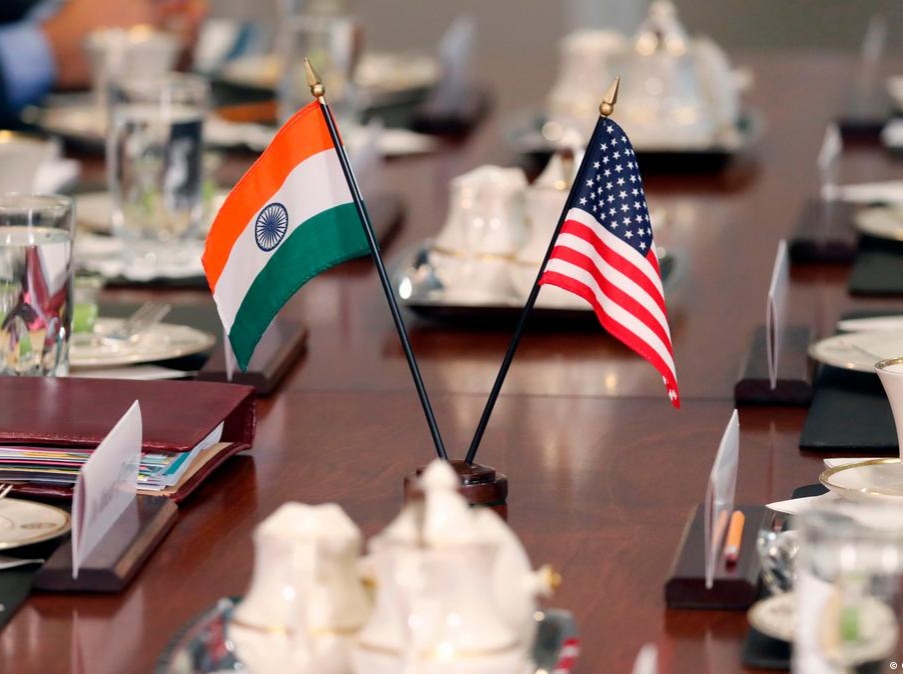
Cross-Border Business Disputes: India–U.S. Expansion Challenges
Payment, Quality, and Logistics at the Core of Trade Conflicts
Arbitration Clauses Emerging as the Global Equalizer for All Business Sizes
By Vishwas Kumar
New Delhi: May 04, 2026:
Expanding your India-based business into the U.S. requires careful planning around payment defaults, quality standards, logistics, and trade restrictions. Each area has distinct legal frameworks and dispute resolution mechanisms, with arbitration often being the preferred route for cross-border conflicts.
In disputes concerning succession and family property rights, courts have consistently held that ownership claims must be supported by clear evidence and lawful entitlement under applicable statutes. An important judicial reference is Ajit Kaur & Surjit Kaur vs Darshan Singh (Dead) Through LRs & Ors succession and property rights judgment , where the court examined competing claims among legal heirs and emphasized that inheritance disputes must be resolved based on documentary proof and established legal principles. The ruling reinforces that courts prioritize lawful succession and factual clarity to ensure equitable distribution of property among co-heirs.
1. Payment Defaults
- Common Issue: U.S. buyers may delay or refuse payment after delivery.
- Legal Framework:
- In India: Remedies under the Indian Contract Act, 1872 and Negotiable Instruments Act, 1881.
- In U.S.: Governed by the Uniform Commercial Code (UCC) for sales contracts.
- Resolution:
- Arbitration clauses in contracts are critical. Even email exchanges can form valid arbitration agreements under Indian law.
- Enforcement of arbitral awards is supported by the New York Convention, binding in both India and the U.S.
2. Quality Standards
- Common Issue: Goods/services not meeting specifications or differing regulatory standards.
- Legal Framework:
- U.S. buyers often rely on U.S. federal and state consumer protection laws.
- Indian exporters must comply with BIS (Bureau of Indian Standards) and U.S. FDA/USDA regulations depending on product type.
- Resolution:
- Contracts should specify governing law, inspection rights, and dispute resolution.
- Arbitration is preferred, with Indian and U.S. courts recognizing awards under the New York Convention.
3. Delivery & Logistics
- Common Issue: Delays, damaged goods, or customs clearance disputes.
- Legal Framework:
- Governed by Incoterms (ICC rules), which define risk transfer points.
- Customs disputes may involve U.S. Customs and Border Protection (CBP) and Indian Customs.
- Resolution:
- Contracts should clearly define Incoterms [e.g., FOB (Free on Board), CIF (Cost, Insurance & Freight)].
- Disputes often resolved under the United Nations Convention on Contracts for the International Sale of Goods (CISG), which harmonizes international sales law.
4. Trade Restrictions
- Common Issue: Sanctions, tariffs, or export control violations.
- Legal Framework:
- U.S. imposes Export Administration Regulations (EAR) for dual-use items.
- India-U.S. trade relations have seen tariff disputes, with recent negotiations reducing reciprocal tariffs.
- Resolution:
- Businesses must comply with BIS export controls and U.S. Department of Commerce rules.
- Tariff disputes are often addressed through WTO mechanisms or bilateral agreements.
Comparison Table
| Dispute Type | Common Cause | Governing Law/Body | Resolution Mechanism |
|---|---|---|---|
| Payment Defaults | Non-payment, delays | Indian Contract Act, UCC | Arbitration, court enforcement |
| Quality Standards | Goods not meeting specs | BIS, FDA/USDA | Arbitration, inspection clauses |
| Delivery & Logistics | Delays, damage, customs | Incoterms, CISG | Arbitration, customs appeals |
| Trade Restrictions | Tariffs, sanctions, export controls | EAR, WTO, Bilateral Trade Agreements | Compliance, WTO dispute settlement |
Key Recommendations
- Always include arbitration clauses in contracts, specifying seat and governing law.
- Use Incoterms to define delivery responsibilities and risk transfer.
- Stay updated on U.S. export controls and tariffs, as these change frequently.
- Draft clear quality specifications and inspection rights to avoid disputes.
- FAQs: Commercial & Trade Disputes
- Q1. What are the most common disputes in India–U.S. trade? Payment defaults, quality mismatches, delivery delays, and trade restrictions such as tariffs or sanctions.
- Q2. How are payment defaults handled across borders? Through arbitration clauses and enforcement under the New York Convention, recognized in both India and the U.S.
- Q3. What role do quality standards play? Goods must comply with BIS in India and FDA/USDA in the U.S. Contracts should specify inspection rights and rejection procedures.
- Q4. How can delivery and logistics disputes be minimized? By using Incoterms 2020 to define risk transfer points and responsibilities, plus clear customs clearance obligations.
- Q5. What about trade restrictions? Businesses must comply with U.S. Export Administration Regulations (EAR) and India’s Foreign Trade Act. Violations can lead to severe penalties.