
Strategic Insights for Indian SMEs under India-New Zealand FTA
Legal Structures, Taxation, and Compliance Simplified
Funding, Immigration, and Market Expansion Opportunities
By Vishwas Kumar
New Delhi: April 28, 2026:
Business Incorporation & Legal Structures
The FTA makes it easier for Indian businesses to establish a presence in New Zealand. Startups can incorporate as subsidiaries, joint ventures, or representative offices. India’s Private Limited and LLP structures align well with New Zealand’s Companies Act, which offers flexibility and quick registration. The agreement ensures smoother recognition of business entities, reducing red tape for SMEs entering new markets.
To understand how courts assess the validity of wills, address suspicious circumstances, and uphold testamentary freedom in succession disputes, read the judgment in Leela vs Muruganantham, which highlights key principles on burden of proof, attestation requirements, and adjudication of inheritance conflicts under Indian law.
Taxation & Double Taxation Avoidance
India and New Zealand already have a Double Taxation Avoidance Agreement (DTAA). This means profits earned in New Zealand by Indian businesses won’t be taxed twice. SMEs benefit from predictable tax rules, which lower costs and encourage cross-border investment. The FTA complements this by clarifying tariff-free trade, making taxation more transparent and investor-friendly.
Startup Incentives & Grants
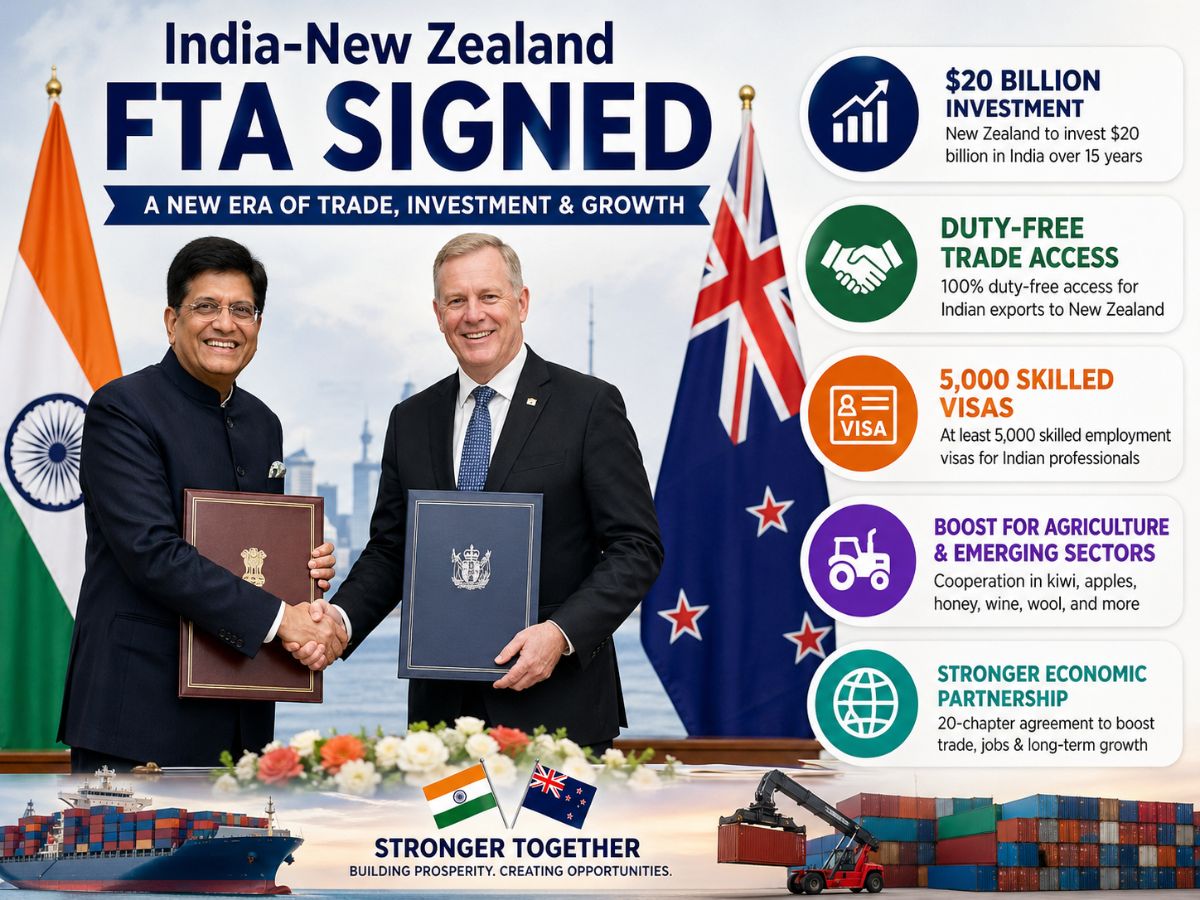
New Zealand’s commitment of $20 billion in investments over 15 years includes support for innovation, tourism, IT, and construction. Indian startups can tap into New Zealand’s grants, incubation programs, and R&D funds. On the Indian side, schemes like Startup India and MSME support programs align with the FTA, enabling entrepreneurs to leverage both domestic and international incentives.
Immigration & Work Permits
The FTA introduces a special visa pathway for 5,000 skilled Indian professionals to work in New Zealand for three years. This benefits startups by allowing them to send employees abroad for market expansion, client servicing, and innovation projects. Entrepreneurs also gain easier access to New Zealand’s startup ecosystem, fostering collaboration and knowledge exchange.
Intellectual Property & Compliance
The agreement strengthens Intellectual Property Rights (IPR) protection. Indian startups in technology, design, and creative industries can safeguard patents, trademarks, and copyrights in New Zealand under harmonized rules. Compliance requirements, such as product standards and certifications, are streamlined, reducing delays and ensuring fair competition.
Banking & Fundraising
Indian SMEs gain access to New Zealand’s banking system and financial institutions, making cross-border transactions smoother. The FTA encourages capital flows, enabling startups to raise funds through venture capital, angel investors, and loans. Bilateral investment protection clauses ensure funds are secure and disputes are resolved fairly, boosting investor confidence.
Market Entry & Expansion Strategies
SMEs should adopt a phased entry strategy:
- Step 1: Begin with exports of duty-free goods (textiles, leather, engineering).
- Step 2: Partner with New Zealand distributors and retailers.
- Step 3: Explore joint ventures or local subsidiaries for deeper penetration.
- Step 4: Use professional mobility pathways to build teams in New Zealand.
Digital platforms, e-commerce, and service delivery (IT, education, tourism) are key expansion routes. Branding, compliance, and quality upgrades are essential to meet international standards.
FAQs
Q1: How does the FTA simplify incorporation?
A1: It ensures recognition of business entities and reduces bureaucratic hurdles for cross-border ventures.
Q2: Will Indian startups face double taxation?
A2: No. The DTAA ensures income is taxed only once, improving profitability.
Q3: Are there grants available for startups?
A3: Yes. Both New Zealand and India offer grants and incubation support aligned with the FTA.
Q4: How does the visa pathway help entrepreneurs?
A4: It allows skilled professionals to work in New Zealand for three years, aiding expansion.
Q5: What protections exist for intellectual property?
A5: Harmonized IPR rules safeguard patents, trademarks, and copyrights across both countries.
Q6: How can SMEs raise funds under the FTA?
A6: Through access to New Zealand’s banking system, venture capital, and bilateral investment protections.
Q7: What is the best market entry strategy?
A7: Start with duty-free exports, build partnerships, then expand via joint ventures and local subsidiaries.