
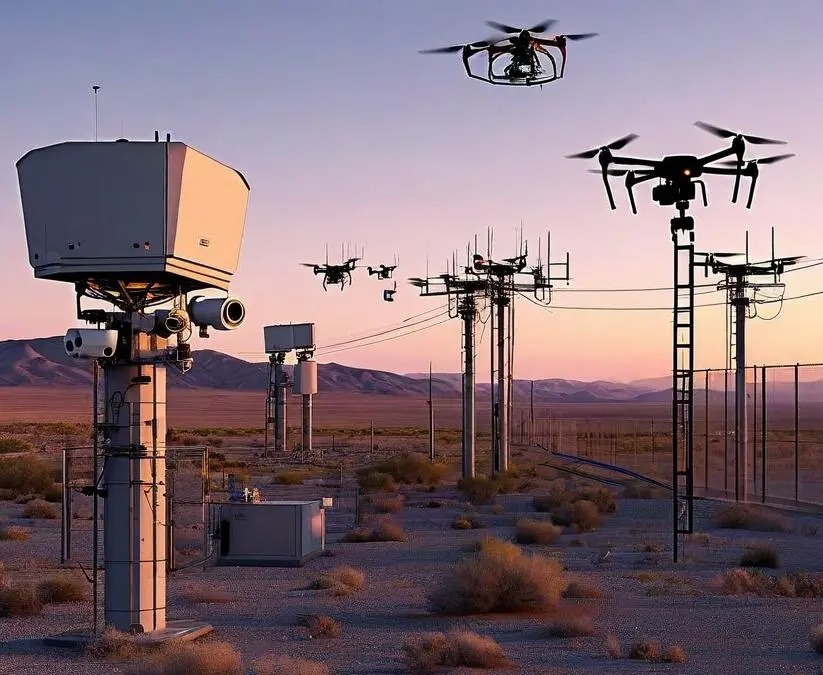
ZenTech’s Indigenous AI Smart Border Suite Puts India in League with US and Israel
Advanced surveillance, anti-drone, and autonomous systems to secure porous borders with Pakistan and Bangladesh
India’s innovation mirrors US biometric border tech and Israel’s smart fence integration for infiltration control
By Vishwas Kumar
New Delhi: May 30, 2026:
India’s border security challenges have long been defined by porous terrain, infiltration attempts, narco-terrorism, and illegal migration across its western and eastern frontiers. The launch of Zen Technologies’ Integrated Smart Border Suite (ISBS) marks a significant leap in indigenous defence innovation, positioning India alongside global leaders like the United States and Israel in deploying AI-powered border management systems.
For readers interested in artificial intelligence, border security technologies, and emerging legal issues in national defence infrastructure, the judgments and legal discussions related to ZenTech’s Indigenous AI Smart Border Suite provide valuable insights into the intersection of technology, governance, and regulatory compliance. These materials explore issues involving AI-driven surveillance, data protection, public safety, government procurement, and the legal framework surrounding advanced security solutions. Researchers, legal professionals, and technology enthusiasts can use these resources to better understand how innovation and law converge in the rapidly evolving field of smart border management.
Transforming Border Surveillance
The ISBS integrates AI-enabled electro-optical sensors, anti-drone systems, unmanned ground vehicles, interceptor drones, and remote weapon stations into a unified platform. This allows real-time detection and neutralization of infiltration attempts, reducing reliance on manpower-heavy patrols. For India’s 6,000 km of vulnerable borders, such technology acts as a force multiplier, enabling 24x7 monitoring across rugged terrain where traditional fencing and human surveillance often fall short.
Global Parallels
- United States: The US-Mexico border employs biometric entry-exit systems, drones, and electronic fencing to track illegal immigration and drug smuggling.
- Israel: Its smart fence and Iron Dome integration combine AI surveillance with active defence, neutralizing infiltration and rocket threats in real time.
India’s ISBS mirrors these approaches, blending surveillance with autonomous response, but with the added emphasis on indigenous development—a critical step in reducing dependence on foreign defence technology.
Legal Framework Against Infiltration
India’s laws provide the backbone for prosecuting and deporting infiltrators:
- Foreigners Act, 1946 empowers detection, detention, and deportation of illegal entrants.
- Passport (Entry into India) Act, 1920 mandates valid travel documents for entry.
- Citizenship Act, 1955 excludes illegal migrants from citizenship rights.
- Bharatiya Nyaya Sanhita (BNS), 2023 modernizes criminal provisions, including unlawful entry and terrorism-related infiltration.
These laws ensure that once technology intercepts infiltrators, the legal system can prosecute and deport them effectively.
Recent Government Initiatives
The Government of India has rolled out the Comprehensive Smart Border Project, combining surveillance towers, drones, and biometric tracking. The National Register of Citizens (NRC) in Assam was a major step in identifying illegal migrants, while biometric verification linked to Aadhaar helps detect overstaying foreigners. Deportation drives coordinated with Bangladesh and Myanmar further reinforce India’s commitment to lawful border management.
Strategic Significance
ZenTech’s ISBS is not just a technological milestone—it is a strategic statement. By deploying indigenous AI-powered systems, India strengthens its sovereignty, reduces infiltration risks, and aligns itself with global best practices in border security. The synergy of technology and law ensures a comprehensive shield: AI systems prevent infiltration at the border, while legal frameworks prosecute and deport offenders who slip through.
In essence, India’s indigenous Smart Border Suite represents a paradigm shift—transforming porous borders into intelligent, monitored frontiers, and placing India firmly in the league of nations like the US and Israel that have pioneered smart border technologies.
Here’s a clear comparative snapshot of how India’s AI-powered Smart Border Suite stacks up against similar global initiatives:
Comparative Table: Smart Border Technologies
Country | Initiative | Key Features | Primary Focus | Impact |
India | Zen Technologies – Integrated Smart Border Suite (ISBS) | AI-enabled surveillance, anti-drone systems, unmanned ground vehicles, interceptor drones, thermal sensors, remote weapon stations | Pakistan & Bangladesh borders; infiltration, narco-terrorism, illegal migration | Real-time detection, reduced manpower reliance, proactive interception |
United States | Smart Border Initiative (US-Mexico) | Ground sensors, AI analytics, drones, biometric entry-exit systems, electronic fencing | Prevent illegal immigration, drug smuggling | Enhanced monitoring, biometric tracking of entrants, reduced manual patrol burden |
Israel | Smart Fence & Iron Dome Integration | AI surveillance, radar, electro-optical sensors, automated weapon stations, drone interception | Gaza & West Bank borders; infiltration, rocket defence | Seamless integration of surveillance with active defence, rapid neutralization of threats |
European Union (selected states) | EUROSUR (European Border Surveillance System) | Satellite imagery, drones, AI-based risk analysis, maritime surveillance | Mediterranean migration routes | Early detection of illegal crossings, coordination among member states |
Key Takeaways
- India’s ISBS is unique in combining anti-drone warfare with AI surveillance, making it especially relevant against narco-terrorism and infiltration.
- US systems emphasize biometric entry-exit tracking, focusing on immigration control.
- Israel’s model integrates border surveillance with active defence systems like Iron Dome, showing how AI can merge with kinetic responses.
- EU’s EUROSUR highlights multinational coordination, something India could emulate with SAARC or BIMSTEC partners for regional security.
Conclusion
India’s AI-powered Smart Border Suite positions the country alongside global leaders like the US and Israel in deploying advanced surveillance and defense technologies. Coupled with strong legal frameworks and recent government initiatives, this system could significantly reduce infiltration, strengthen national security, and modernize India’s border management.