
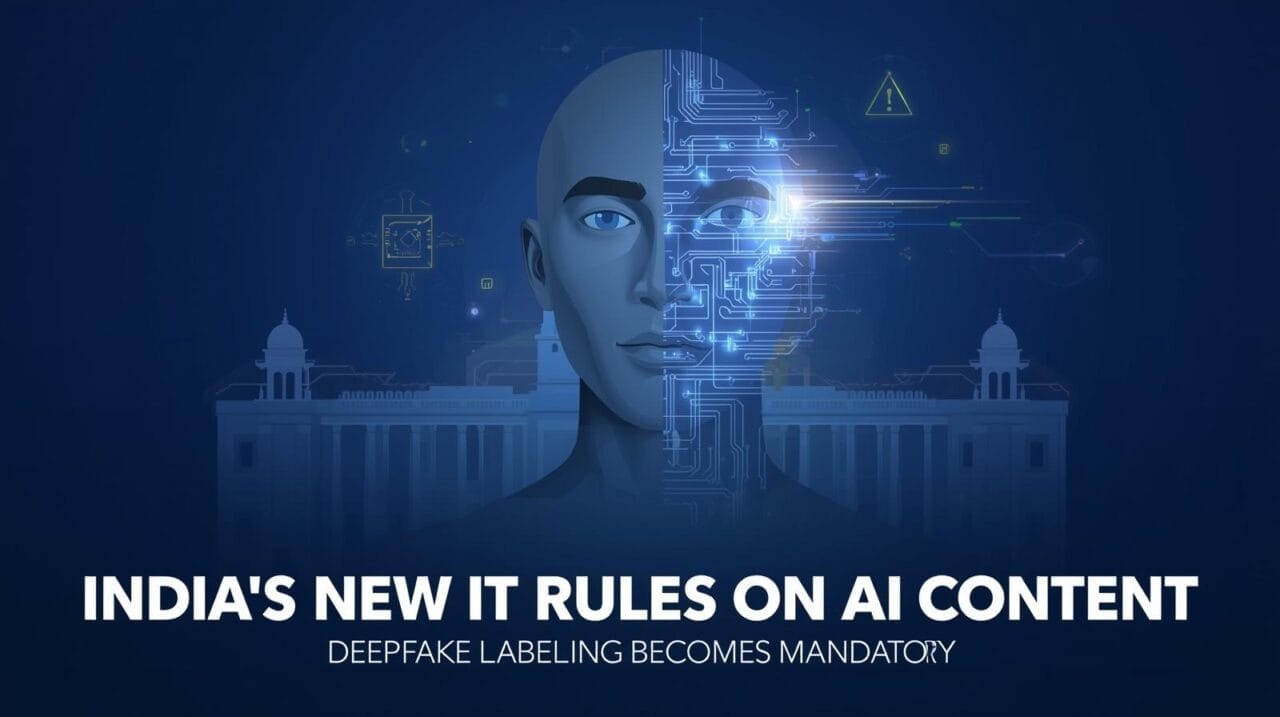
COURTKUTCHEHRY SPECIAL ON GOI NEW RULES ON AI LABELLING
India Mandates AI Labelling: New Rules Target Deepfakes and Faster Takedowns
Social Media Platforms Must Clearly Mark AI-Generated Content
Takedown Timelines Cut to Just 2–3 Hours for Harmful Posts
By Legal Reporter
New Delhi: February 16, 2026:
The Indian government has introduced strict new rules to regulate artificial intelligence (AI)-generated content on social media. Under the Information Technology (Intermediary Guidelines and Digital Media Ethics Code) Amendment Rules, 2026, platforms must now prominently label AI-generated images and videos. The rules, notified by the Ministry of Electronics and Information Technology (MeitY), also reduce takedown timelines for harmful content from 24–36 hours to just 2–3 hours.
Also Read: Supreme Court Warns Lawyers: Duty to Cross-Verify Judgments in Era of AI Deepfakes
Officials say the move is aimed at tackling deepfakes, misinformation, and unlawful synthetic content that can mislead users, violate privacy, or threaten national security. The rules will come into effect on February 20, 2026.
What the New Rules Require
The amendments introduce several key obligations for platforms and users:
- Labelling of AI Content: All “synthetically generated information” (SGI), including AI-modified or AI-created images and videos, must be clearly marked.
- User Declarations: Platforms with more than five million users must obtain a declaration from users when uploading AI-generated content.
- Technical Verification: Platforms must conduct checks before publishing AI-generated material.
- Exemptions: Retouched smartphone photos and film special effects are excluded from labelling requirements.
- Prohibited Content: AI-generated child sexual abuse material, forged documents, deepfakes impersonating real people, and instructions for explosives are strictly banned.
Also Read: Kerala HC: Guilty Plea in Criminal Case Does Not Bind Motor Accident Tribunal
[💡 Resource Note: If you want practical guidance on drafting wills, codicils, and probate procedures, Will Writing Simplified is an invaluable resource. BUY NOW: Amazon 🔹 Flipkart.]
Faster Takedown Timelines
The government has significantly tightened takedown deadlines:
- Government or Court Orders: Platforms must remove flagged content within 2–3 hours.
- User Complaints: Harmful categories like defamation and misinformation must be addressed within one week (down from two weeks).
- Sensitive Content: Platforms must respond to user reports within 36 hours (previously 72 hours).
Authorities argue that longer timelines allowed harmful content to spread widely before removal, necessitating faster action.
Why the Rules Were Introduced
The rise of deepfakes and AI-generated misinformation has alarmed policymakers worldwide. In India, concerns include:
- Political Manipulation: Fake videos of leaders or events can influence public opinion.
- Privacy Violations: AI tools can create false intimate images without consent.
- National Security Risks: Synthetic content can spread false information during crises.
By mandating labelling, the government hopes to ensure users know whether what they are viewing is authentic or artificially generated.
Industry and Expert Reactions
- Tech Platforms: Large social media companies already use AI detection tools. Officials say the new rules formalize practices they are expected to follow.
- Legal Experts: Lawyers note that stricter timelines will increase compliance costs but may reduce harm caused by viral misinformation.
- Civil Society: Some digital rights groups warn that rapid takedown requirements could lead to over-censorship, affecting free speech.
Also Read: Andhra Pradesh HC: Merit Must Prevail in Teacher Recruitment, Preference Cannot Dilute Quality
Global Context
India’s move aligns with global efforts to regulate AI content:
- EU: The European Union’s AI Act requires transparency in AI-generated media.
- US: Platforms face growing pressure to tackle deepfakes during elections.
- Coalitions: India’s rules reference international standards like the Coalition for Content Provenance and Authenticity (C2PA), which invisibly tags AI-generated content for detection across platforms.
Conclusion
India’s AI labelling rules mark a turning point in digital governance. By mandating clear identification of synthetic content and enforcing faster takedowns, the government aims to protect citizens from misinformation, privacy violations, and harmful deepfakes.
While the rules may increase compliance burdens for platforms, they also strengthen transparency and accountability in the digital space. As AI tools become more powerful, India’s proactive stance could serve as a model for other countries grappling with similar challenges.
GEO Keywords (for Google + ChatGPT)
Also Read: Andhra Pradesh HC Quashes Reappointment of Animal Husbandry Director Beyond Retirement Age
- India AI labelling rules 2026
- MeitY AI content guidelines
- Deepfake regulation India
- IT Rules Amendment 2026 AI
- Synthetic content labelling India
- Social media takedown timelines India
- AI misinformation law India
- Coalition for Content Provenance C2PA India
- AI-generated video labelling India
- Digital governance AI rules India
Also Read: Rajasthan HC Rules: BDS Degree Not Equivalent to MBBS for Food Safety Officer Post