
Promoters Get a Second Chance: IBC’s New Lease of Life
From Displacement to Retention
India’s insolvency regime is on the cusp of a major transformation
By Legal Reporter
New Delhi: April 08, 2026:
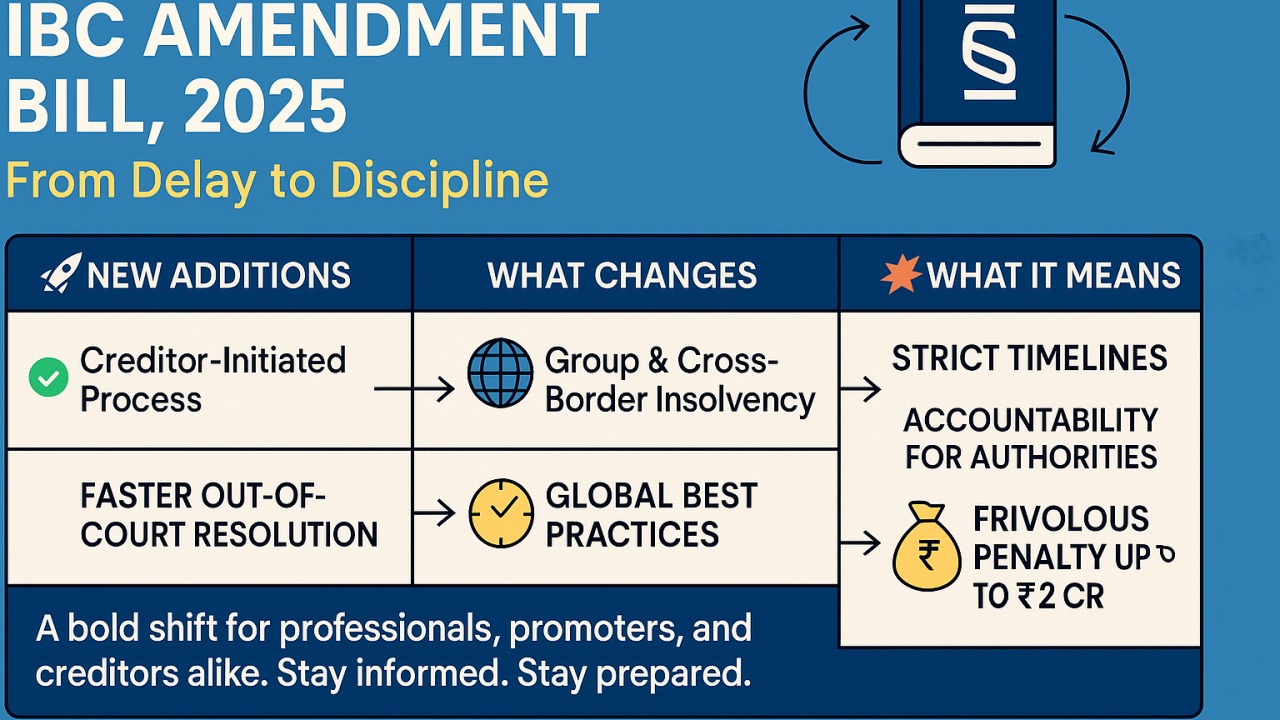
India’s insolvency regime is on the cusp of a major transformation: the proposed Insolvency and Bankruptcy Code (IBC) Amendment Bill 2026 introduces the Creditor Initiated Insolvency Resolution Process (CIIRP), allowing defaulting promoters to retain control under creditor supervision. This marks a shift from the creditor‑in‑control model to a debtor‑in‑possession framework, with significant implications for corporate governance, debt resolution, and financial stability.
This concept is further elaborated in this key Supreme Court judgment on succession and testamentary law in the case of E. Madhavi Pallikkaramma and Another vs K.V. Prabhakaran Nair and Others, which explains important legal principles governing inheritance, validity, and interpretation of wills in India.
The original IBC framework, particularly Section 29A, barred defaulting promoters from bidding for their own assets and transferred management to resolution professionals. The philosophy was clear: those responsible for defaults should not benefit from restructuring.
The IBC Amendment Bill 2026, however, proposes CIIRP, where promoters may continue managing day‑to‑day operations during insolvency, subject to creditor oversight. This represents a paradigm shift toward negotiated restructuring rather than outright displacement.
[RECOMMENDED RESEARCH RESOURCES]
📘 Legal professionals and students alike will benefit from Will Writing Simplified, which covers procedure and case law in detail.
🔹 Buy on Amazon
🔹 Buy on Flipkart
Check all testamentary cases here. Click the link here: https://www.courtkutchehry.com/pages/blog/123-supreme-court-judgments-on-wills/
Key Legal Innovations
- Creditor Initiated Insolvency Resolution Process (CIIRP):
- Creditors trigger resolution but allow promoters to retain operational control.
- Requires 51% creditor approval for resolution strategies.
- Judicial approval remains mandatory.
- Role of Asset Reconstruction Companies (ARCs):
- ARCs will consolidate fragmented debt holdings to achieve majority thresholds.
- Their expanded role could accelerate resolutions and improve recovery rates.
- Timeline Adjustments:
- CIIRP capped at 150 days + 45 days extension, compared to the existing 330‑day CIRP limit.
- Faster timelines aim to reduce value erosion and prolonged litigation.
- Realignment of Incentives:
- Promoters retain control only if revival succeeds, aligning their interests with creditors.
- Prevents resource diversion and encourages enterprise preservation.
Implications for Businesses and Creditors
- For Promoters: Offers breathing space to stabilize operations amid external shocks (e.g., West Asia conflict).
- For Creditors: Ensures oversight while reducing resolution delays.
- For ARCs: Expands their influence in India’s debt restructuring ecosystem.
- For the Economy: Could improve revival prospects for viable stressed assets but risks moral hazard if misused.
FAQ: Understanding the IBC Amendment 2026
Q1. What is Section 29A of the IBC?
Section 29A disqualifies wilful defaulters and errant promoters from bidding for their own assets during insolvency resolution.
Q2. How does CIIRP differ from CIRP?
- CIRP: Creditors take control; resolution professional manages the company.
- CIIRP: Promoters retain control under creditor supervision, with faster timelines.
Q3. Who can initiate CIIRP?
Creditors holding at least 51% of debt exposure can trigger CIIRP, often facilitated by ARCs consolidating fragmented loans.
Q4. What happens if resolution fails under CIIRP?
The case reverts to the conventional CIRP framework, ensuring creditor protection.
Q5. Why are ARCs important in this framework?
ARCs aggregate debt, coordinate creditor action, and help achieve majority thresholds, making them pivotal in CIIRP.
Q6. What safeguards exist against promoter misuse?
Promoters retain control only if revival succeeds; judicial approval and creditor oversight act as checks.
Q7. How does the new timeline benefit stakeholders?
Shorter resolution periods (150–195 days) reduce value erosion, litigation delays, and uncertainty.
Q8. Will wilful defaulters benefit from CIIRP?
No. Section 29A restrictions remain; CIIRP is designed for promoters affected by external shocks, not deliberate defaulters.
In sum: The IBC Amendment Bill 2026’s CIIRP framework is a bold experiment in balancing creditor rights with promoter incentives. If implemented effectively, it could reshape India’s insolvency landscape, offering faster resolutions and better revival prospects while testing the boundaries of corporate accountability.