
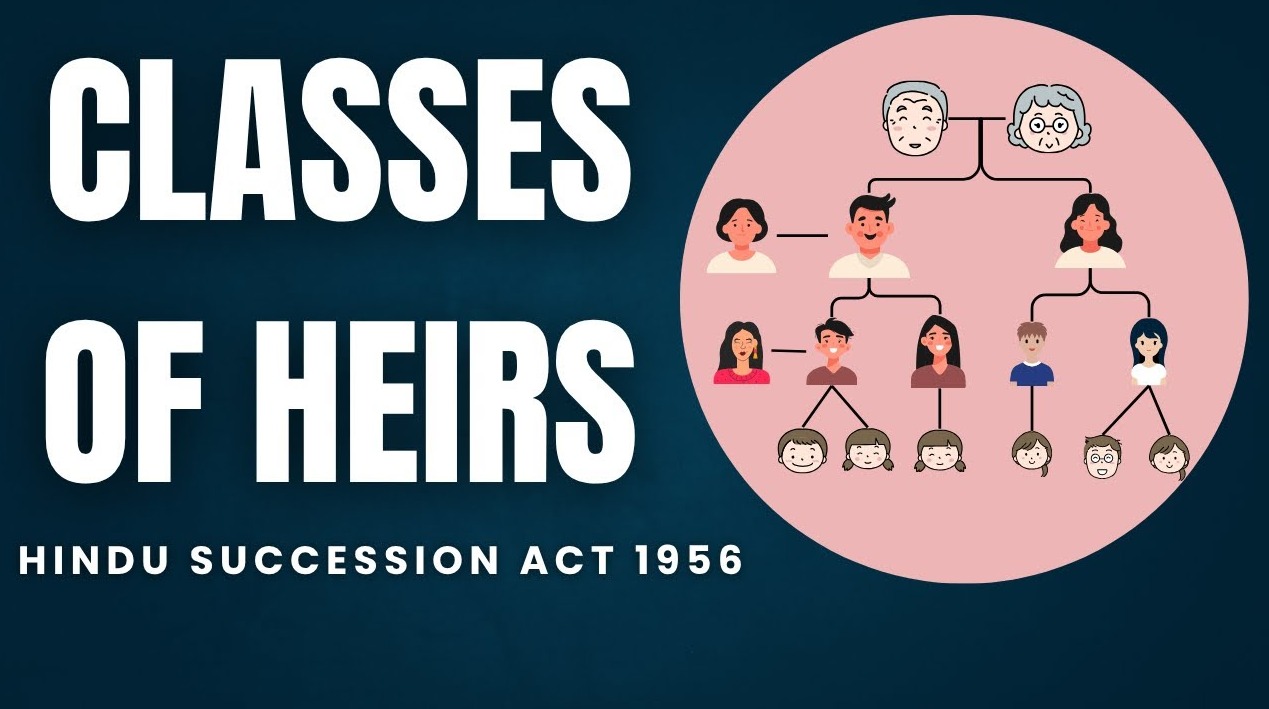
Hindu Succession Act: Class I and Class II Heirs Explained
Who Inherits First in Hindu Law
Understanding the Hierarchy of Heirs
By Vishwas Kumar
New Delhi: April 24, 2026:
The Hindu Succession Act, 1956, provides a detailed framework for inheritance when a Hindu dies intestate (without leaving a will). Central to this framework is the classification of heirs into Class I and Class II, which determines the order of succession and distribution of property. This classification is crucial because it establishes who inherits first and under what circumstances others may claim rights.
If you want a complete understanding of how courts decide will disputes and testamentary validity, explore this comprehensive collection: 123 Supreme Court judgments on wills and inheritance law in India
Class I Heirs: The Immediate Circle
Class I heirs represent the closest family members of the deceased. They include:
- Children: Son, daughter, and the children of any pre-deceased son or daughter.
- Spouse and Parents: Widow and mother.
- Extended Lineage: Widow of a pre-deceased son, grandchildren through pre-deceased children, and even great-grandchildren through pre-deceased grandchildren.
The principle here is clear: Class I heirs inherit simultaneously and equally, without preference among them. This ensures that the immediate family—spouse, children, and parents—are prioritized in succession.
Class II Heirs: The Secondary Circle
Class II heirs come into play only if there are no surviving Class I heirs. They are arranged in a hierarchical order, with each entry taking precedence over the next.
- Entry I: Father.
- Entry II: Son’s daughter’s son, son’s daughter’s daughter, brother, sister.
- Entry III: Grandchildren through daughters.
- Entry IV: Brothers and sister’s children.
- Entry V–IX: Grandparents, widows of brothers or father, uncles, aunts, and maternal relatives.
The rule is that heirs in one entry inherit simultaneously, but they exclude heirs in subsequent entries. For example, if the father (Entry I) is alive, none of the heirs in Entry II or beyond inherit.
Analytical Perspective
The classification into Class I and Class II reflects a tiered approach to succession. Class I heirs embody the principle of nuclear family priority, while Class II heirs extend inheritance rights to the wider kinship network.
This system ensures clarity and prevents disputes by establishing a strict order. However, critics argue that the law reflects patriarchal leanings—for instance, the father is placed in Class II, while the mother is in Class I, showing asymmetry in parental rights.
The inclusion of widows of pre-deceased sons and grandchildren through both sons and daughters reflects a progressive attempt to safeguard dependents who might otherwise be excluded.
Explanation on Uterine Blood
The Act clarifies that references to brothers or sisters do not include those by uterine blood (i.e., half-siblings sharing only the mother). This distinction emphasizes lineage through the father, consistent with traditional Hindu law.
Contemporary Relevance
In modern India, where family structures are increasingly diverse, these provisions remain significant. They provide a predictable framework for succession, reducing ambiguity. Yet, with growing emphasis on gender equality, debates continue about whether the hierarchy of heirs should be reformed to reflect contemporary values.
The importance of drafting a will cannot be overstated. Testamentary succession allows individuals to override statutory rules and distribute property according to personal wishes, thereby avoiding potential disputes among heirs.
[RESEARCH RESOURCES]
EXTRACTS FROM BOOK, WILL WRITING SIMPLIFIED, By Dr Ravinder Kumar Anand. [📘 Buy Will Writing Simplified online: Amazon | Flipkart ]
HEIRS IN CLASS I AND CLASS II
Class I
Son; daughter; widow; mother; son of a pre-deceased son; daughter of a pre-deceased son; son of a pre-deceased daughter; daughter of a pre-deceased daughter; widow of a pre-deceased son; son of a pre-deceased son of a pre-deceased son; daughter of a pre-deceased son of a pre-deceased son; widow of a pre-deceased son of a pre-deceased son; [1][son of a predeceased daughter of a pre-deceased daughter; daughter of a pre-deceased daughter of a pre-deceased daughter; daughter of a pre-deceased son of a pre-deceased daughter; daughter of a pre-deceased daughter of a pre-deceased son].
Class II
I. Father.
II. (1) Son’s daughter’s son, (2) son’s daughter’s daughter, (3) brother, (4) sister.
III. (1) Daughter’s son’s son, (2) daughter’s son’s daughter, (3) daughter’s daughter’s son, (4) daughter’s daughter’s daughter.
IV. (1) Brother’s son, (2) sister’s son, (3) brother’s daughter, (4) sister’s daughter.
V. Father’s father; father’s mother.
VI. Father’s widow; brother’s widow.
VII. Father’s brother; father’s sister.
VIII. Mother’s father; mother’s mother.
IX. Mother’s brother; mother’s sister.
Explanation.―In this Schedule, references to a brother or sister do not include references to a brother or sister by uterine blood.
FAQs on Class I and Class II Heirs
Q1. Who are Class I heirs?
They include the son, daughter, widow, mother, and descendants of pre-deceased children, along with widows of pre-deceased sons.
Q2. Who are Class II heirs?
They include the father, siblings, grandchildren through daughters, and extended relatives like uncles, aunts, and grandparents.
Q3. Who inherits first?
Class I heirs inherit first. Only if no Class I heirs exist does succession move to Class II heirs.
Q4. How is property shared among Class I heirs?
They inherit simultaneously and equally, without preference among them.
Q5. What happens if a son or daughter pre-deceased the intestate?
Their children inherit the share that the son or daughter would have received.
Q6. How does succession work among Class II heirs?
Heirs in one entry inherit simultaneously, excluding heirs in subsequent entries.
Q7. Why is the father in Class II while the mother is in Class I?
This reflects traditional Hindu law, though it has been criticized for being patriarchal.
Q8. Do half-siblings inherit?
No. Brothers and sisters by uterine blood (sharing only the mother) are excluded.
Q9. Can these rules be overridden?
Yes, by making a valid will, an individual can distribute property differently.
Q10. Why is this classification important?
It provides a clear hierarchy, reducing disputes and ensuring predictable succession.
Key Takeaway
The Hindu Succession Act’s classification of heirs into Class I and Class II establishes a clear hierarchy for inheritance. While it prioritizes immediate family members, it also extends rights to wider kinship networks. Though progressive in parts, the law still reflects traditional biases, making testamentary succession an essential tool for individuals to exercise autonomy over property distribution.
[1] Added by Act 39 of 2005, s. 7 (w.e.f. 9-9-2005).