
COURTKUTCHEHRY SPECIAL SERIES ON LANDMARKS JUDGEMENTS ON WILLS, CODICIL & PROBATE
Guro (Smt) v. Atma Singh & Others: Supreme Court Rejects Disputed Will
High Court’s Reversal Overturned by Apex Court
Serious Suspicious Circumstances Render Will Invalid
By Vishwas Kumar
New Delhi: March 28, 2026:
In a landmark judgment delivered on 5 March 1992, the Supreme Court of India in Guro (Smt) v. Atma Singh & Others (Civil Appeal No. 3163 of 1983) addressed the contentious issue of whether a will dated 2 October 1968, allegedly executed by Ganga Singh in favour of Atma Singh, was genuine. The Division Bench comprising Hon’ble Ms. Justice M. Fathima Beevi and Hon’ble Mr. Justice S.C. Agrawal scrutinized the evidence and restored the findings of the first appellate court, which had dismissed the legatee’s claim.
The dispute revolved around multiple suspicious circumstances surrounding the will. The testator, Ganga Singh, was gravely ill at the time of execution, raising doubts about his capacity. The document contained false statements regarding family members, lacked proper signatures, and was marred by contradictory evidence. Moreover, the active involvement of the beneficiary, Atma Singh, in the preparation of the will further deepened suspicion. These factors, the Court held, were never satisfactorily explained.
The Supreme Court criticized the High Court for reversing the factual findings of the first appellate court without adequate justification. Stressing the principle that a will must be free from suspicion and proved with convincing evidence, the Court concluded that the disputed will was not genuine. Consequently, the appeal was allowed, and the dismissal of Atma Singh’s claim was restored.
This decision underscores the judiciary’s cautious approach in cases involving wills, especially when the circumstances suggest manipulation or lack of authenticity. It reaffirms that the burden lies heavily on the propounder of a will to dispel doubts and establish its validity beyond suspicion.
For More, Read Here the Summary of the Judgement from the Book: WILL WRITING SIMPLIFIED, read below or open page no 436, Chapter 14.1 in the book. (Online book purchase link available here on: Buy online: Amazon | Flipkart
|
|
Case Summary |
: |
Guro (Smt) v. Atma Singh & Others. |
|
|
Court |
: |
Supreme Court of India |
|
|
Citations |
: |
(1992) 03 SC CK 0011: Civil Appeal No. 3163 of 1983. |
|
|
Link |
: |
https://www.courtkutchehry.com/judgements/674862/guro-smt-vs-atma-singh-and-others/
|
|
|
Decided on |
: |
5 March 1992 |
|
|
Coram |
: |
Hon’ble Ms. Justice M. Fathima Beevi and Hon’ble Mr. Justice S.C. Agrawal. (Division Bench) |
|
|
Relevant Paragraphs |
: |
Para Nos. 4–9 |
1. Facts of the Case:
The dispute concerned the genuineness of a will allegedly executed on 2.10.1968 by Ganga Singh, who died on 10.10.1968, bequeathing his entire property to his distant cousin Atma Singh (respondent no.1). The appellant Smt. Guro, daughter of Ganga Singh’s sister, claimed inheritance as the nearest heir. The Assistant Collector rejected the will as suspicious. Respondent filed a declaratory suit claiming ownership under the will. The trial court decreed in his favour; the first appellate court reversed the decree holding the will suspicious; the High Court restored the trial court decree.
2. Law Points Involved:
The burden of proof in wills under Section 63 of the Indian Succession Act, 1925; the evidentiary principles for proof of execution and testamentary capacity; and the doctrine of suspicious circumstances governing propounder’s onus.
3. Acts/Provisions/Articles Referred:
(i). Section 63, Indian Succession Act, 1925;
(ii). Principles of proof under the Indian Evidence Act, 1872.
4. Judgments Referred:
(i). H. Venkatachala Iyengar v. B.N. Thimmajamma, (1958) 11 SC CK 0008.
(ii). Rani Purnima Debi v. Kumar Khagendra Narayan Deb, (1961) 08 SC CK 0021.
(iii). Smt. Jaswant Kaur v. Smt. Amrit Kaur, (1976) 10 SC CK 0028.
https://www.courtkutchehry.com/judgements/649331/smt-jaswant-kaur-vs-smt-amrit-kaur-and-others/]
5. Obiter Dicta:
Suspicious circumstances such as an unregistered will, execution during illness, contradictory statements by witnesses, or active participation of the beneficiary heighten the onus on the propounder to establish genuineness beyond doubt.
6. Ratio Decidendi:
Where suspicious circumstances surround execution of a will — including illness of testator, incorrect recitals, unnatural exclusion of natural heirs, use of thumb impression despite literacy, and beneficiary’s active role — the will cannot be accepted unless the propounder satisfactorily removes all legitimate suspicions. Failure to examine all attesting witnesses and contradictions in evidence further weaken the propounder’s case.
7. Final Ruling:
The Supreme Court allowed the appeal, set aside the Punjab & Haryana High Court judgment dated 28.10.1982, and restored the judgment of the Additional District Judge, Amritsar dated 22.09.1973, thereby dismissing Atma Singh’s suit. No order as to costs.
8. Gist (Dispute & Decision):
The central issue was whether the will dated 2.10.1968 executed by Ganga Singh in favour of Atma Singh was genuine. The Court held it was surrounded by serious suspicious circumstances — the testator’s grave illness, false statements about family, absence of signatures, contradictory evidence, and the legatee’s active role. These remained unexplained. The High Court erred in reversing the factual findings of the first appellate court. The will was held not genuine; the appeal was allowed restoring dismissal of the legatee’s claim.
Read full Judgement Here:
Guro (Smt) v. Atma Singh & Others.
Supreme Court of India
(1992) 03 SC CK 0011: Civil Appeal No. 3163 of 1983.
https://www.courtkutchehry.com/judgements/674862/guro-smt-vs-atma-singh-and-others/
You Can Also Purchase the Book from here on: Buy online: Amazon | Flipkart
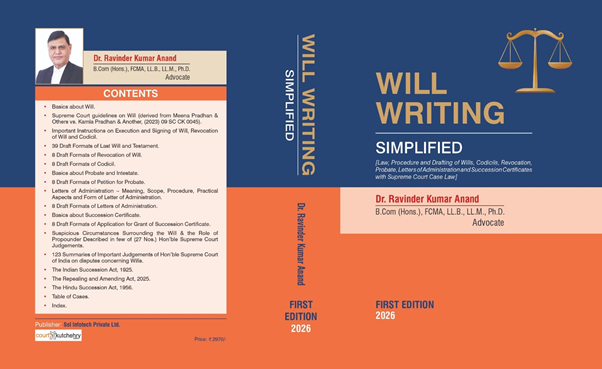
OUR RECOMMENDATION: Check out 123 Key Judgements, as highlighted in the book, WILL WRITING SIMPLIFIED, for the quick research and reference purposes. Click the link here: https://www.courtkutchehry.com/pages/blog/123-supreme-court-judgments-on-wills/
Keywords for SEO & Quick Search
- Guro Smt v. Atma Singh Supreme Court case
- 1992 Indian Supreme Court will dispute judgment
- Ganga Singh disputed will case
- Justice Fathima Beevi will validity ruling
- Suspicious circumstances in will execution India
- Civil Appeal No. 3163 of 1983 Supreme Court
- Apex Court will authenticity decision India