
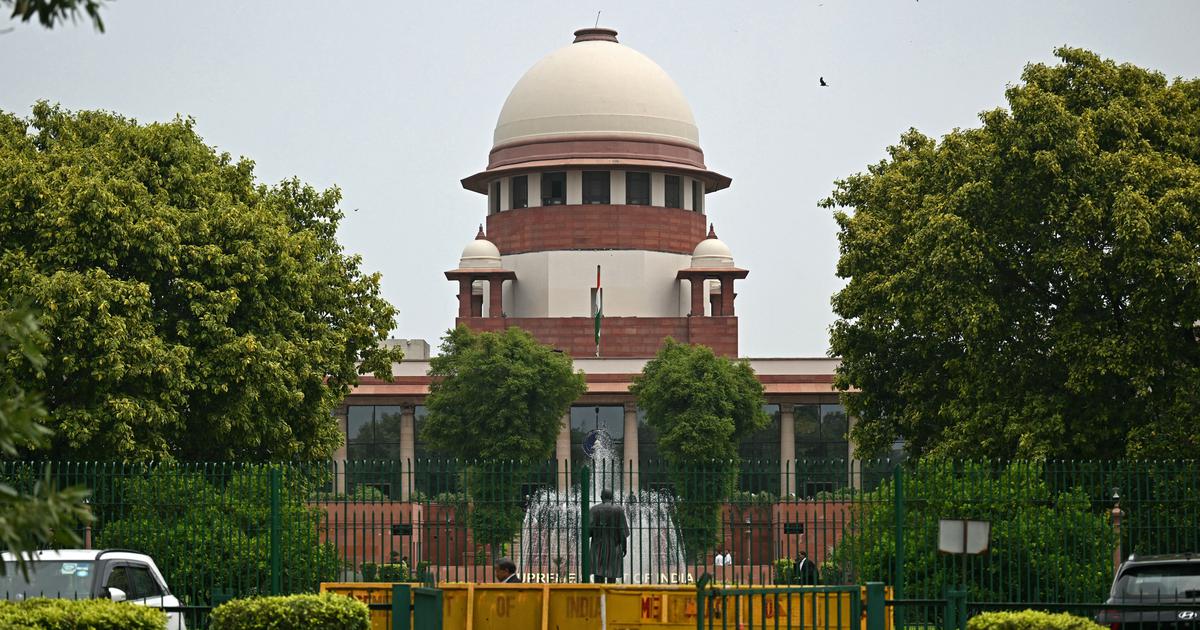
COURTKUTCHEHRY SPECIAL SERIES ON LANDMARKS JUDGEMENTS ON WILLS, CODICIL & PROBATE
Gurdial Kaur & Ors. v. Kartar Kaur & Ors — Supreme Court Rejects Registered Will as Suspicious
Registration Alone Cannot Cure Defects in Testamentary Proof
Appeal Dismissed, Will Held Not Genuine
By Vishwas Kumar
New Delhi: March 26, 2026:
In Gurdial Kaur & Ors. v. Kartar Kaur & Ors (Civil Appeal No. 2944 of 1985, decided on 26 March 1998), the Supreme Court of India delivered a landmark ruling on the evidentiary standards required to prove Wills. The Division Bench comprising Hon’ble Justice G.N. Ray and Hon’ble Justice G.B. Pattanaik examined the validity of a registered Will allegedly executed by Harnam Singh, which had been challenged on multiple grounds.
The dispute arose when the appellants sought to rely on the registered Will to claim succession. However, the courts below found several suspicious features: the disinheritance of natural heirs without explanation, the absence of any mention of the Will in pleadings, doubtful identification of the testator, and lack of credible attestation. These factors collectively cast serious doubt on the genuineness of the document. The appellants argued that registration itself should suffice to validate the Will, but the Court rejected this contention.
The Supreme Court emphasized that registration of a Will does not automatically remove suspicion or prove its authenticity. Attestation and proof of execution must be established in accordance with Section 63 of the Indian Succession Act and Section 68 of the Indian Evidence Act. Since the suspicious circumstances remained unresolved and the Will was not proved to be genuine, the appeal was dismissed.
This judgment underscores the principle that registration is only one aspect of proof and cannot substitute for compliance with statutory requirements. It protects natural heirs from being unfairly disinherited through questionable documents and reinforces the judiciary’s insistence on strict evidentiary standards in succession disputes.
For More, Read Here the Summary of the Judgement from the Book: WILL WRITING SIMPLIFIED, read below or open page no 436, Chapter 14.1 in the book. (Online book purchase link available here on: Buy online: Amazon | Flipkart
|
|
Case Summary |
: |
Gurdial Kaur & Ors. v. Kartar Kaur & Ors. |
|
|
Court |
: |
Supreme Court of India |
|
|
Citations |
: |
(1998) 03 SC CK 0042: Civil Appeal No. 2944 of 1985. |
|
|
Link |
: |
https://www.courtkutchehry.com/judgements/681010/gurdial-kaur-and-others-vs-kartar-kaur-and-others/
|
|
|
Decided on |
: |
26 March 1998 |
|
|
Coram |
: |
Hon’ble Mr. Justice G.N. Ray and Hon’ble Mr. Justice G.B. Pattanaik. |
|
|
Relevant Paragraphs |
: |
Para Nos. 1 to 4 |
1. Facts of the Case:
The appeal arose from the Punjab and Haryana High Court judgment dated 26 November 1984, dismissing the appellants’ plea to uphold a Will executed by Harnam Singh. The Will, though registered, was held invalid by the District Judge. It was alleged that the Will disinherited natural heirs without reason. The existence of the Will was not mentioned in the original written statement filed by the legatees and surfaced only in an additional written statement after another heir was added as defendant. The Sub-Registrar could not identify the Lambardar who introduced the executant, and the scribe admitted he did not know the testator personally.
2. Law Points Involved:
Validity of Will under the Indian Succession Act, 1925; requirements of execution and attestation under Section 63; proof under Section 68 of the Indian Evidence Act, 1872; propounder’s duty to dispel suspicious circumstances surrounding execution of the Will.
3. Acts/Provisions/Articles Referred:
(i). Indian Succession Act, 1925 – Sections 63 & 68;
(ii). Indian Evidence Act, 1872 – Section 68.
4. Judgements Referred:
(i). Rani Purnima Debi v. Kumar Khagendra Narayan Deb, (1961) 08 SC CK 0021.
(ii). H. Venkatachala Iyengar v. B.N. Thimmajamma (1958) 11 SC CK 0008;
5. Obiter Dicta:
Registration of a Will, even with acknowledgment before the Sub-Registrar, does not by itself remove all suspicions about its genuineness; broad statements of attesting witnesses are insufficient unless suspicions are satisfactorily dispelled.
6. Ratio Decidendi:
Where suspicious circumstances exist regarding execution or attestation of a Will, the burden lies on the propounder to dispel such doubts and satisfy the court that the Will represents the free and conscious act of the testator. Mere registration is not conclusive proof of due execution.
7. Final Ruling:
The Supreme Court held that the findings of the District Judge and the High Court rejecting the Will were based on cogent reasoning. As the appellants failed to remove the suspicious circumstances, the appeal was dismissed without costs.
8. Gist (Dispute & Final Decision):
Dispute centered on the validity of a registered Will allegedly executed by Harnam Singh. Courts found multiple suspicious features—disinheritance of natural heirs, absence of mention in pleadings, doubtful identification, and lack of credible attestation. The Supreme Court affirmed that registration alone does not cure suspicion and dismissed the appeal, upholding the finding that the Will was not proved to be genuine.
Read full Judgement Here:
Gurdial Kaur & Ors. v. Kartar Kaur & Ors.
Supreme Court of India
(1998) 03 SC CK 0042: Civil Appeal No. 2944 of 1985.
https://www.courtkutchehry.com/judgements/681010/gurdial-kaur-and-others-vs-kartar-kaur-and-others/
You Can Also Purchase the Book from here on: Buy online: Amazon | Flipkart
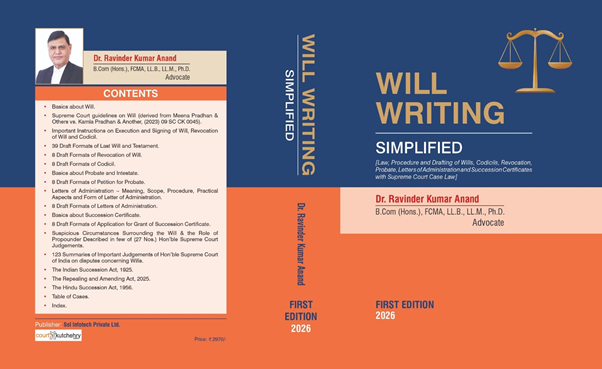
OUR RECOMMENDATION: Check out 123 Key Judgements, as highlighted in the book, WILL WRITING SIMPLIFIED, for the quick research and reference purposes. Click the link here: https://www.courtkutchehry.com/pages/blog/123-supreme-court-judgments-on-wills/
Keywords for SEO & Faster Searches
- Gurdial Kaur case 1998
- Kartar Kaur Supreme Court judgment
- Harnam Singh Will validity India
- Registered Will suspicious circumstances
- Section 63 Succession Act proof of Will
- Section 68 Evidence Act attestation requirement
- Civil Appeal No. 2944 of 1985 inheritance law