
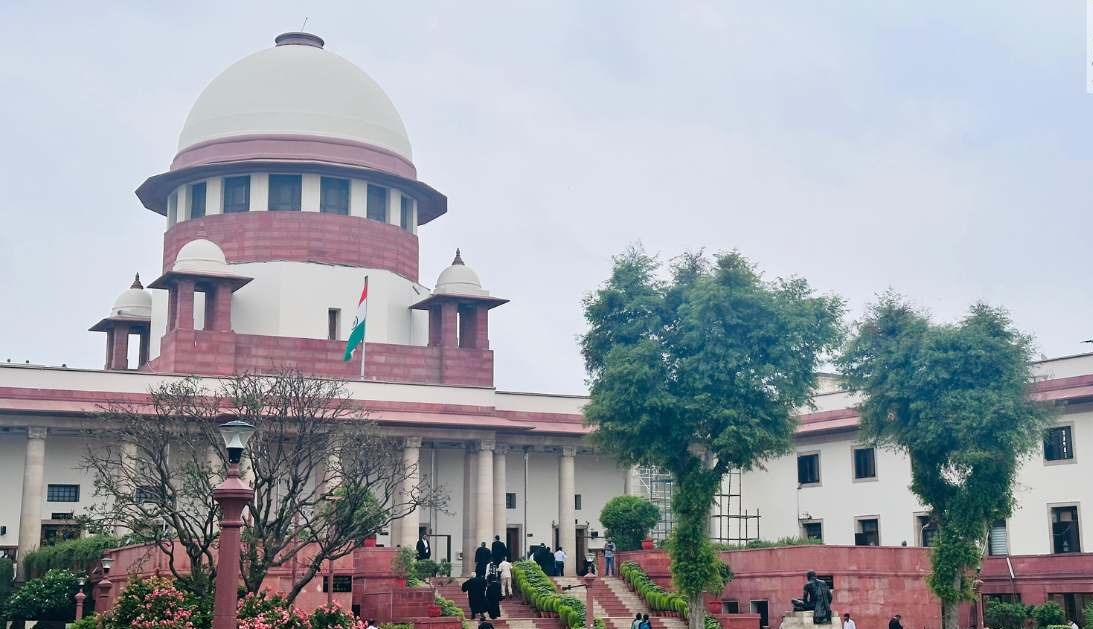
COURTKUTCHEHRY SPECIAL SERIES ON LANDMARKS JUDGEMENTS ON WILLS, CODICIL & PROBATE
Gumpha (Smt) & Ors. v. Jaibai: Supreme Court Clarifies Widow’s Limited Estate Under Section 14 HSA
Life Interest Created by Will Remains Restricted
Stranger Beneficiary’s Claim Declared Invalid
By Vishwas Kumar
New Delhi: March 27, 2026:
On 11 February 1994, the Supreme Court of India in Gumpha (Smt) & Ors. v. Jaibai (Civil Appeal No. 1361 of 1986; (1994) 02 SC CK 0021) delivered a landmark ruling on the interpretation of Sections 14(1) and 14(2) of the Hindu Succession Act, 1956 (HSA). The Division Bench comprising Hon’ble Mr. Justice Kuldip Singh and Hon’ble Mr. Justice R.M. Sahai clarified the scope of a widow’s property rights when a will creates only a life interest.
The dispute revolved around whether a widow’s limited interest in property, conferred by a will executed after the commencement of the HSA, could ripen into absolute ownership under Section 14(1). The widow had attempted to execute a will in favour of a stranger, claiming full ownership. The trial and appellate courts grappled with the issue, leading to the Supreme Court’s authoritative interpretation.
The Court held that Section 14(1) was intended to remove disabilities imposed on women in acquiring property, not to enlarge rights beyond what was granted. Where a will expressly create a restricted life estate, Section 14(2) applies, preventing such interest from maturing into absolute ownership. The Bench emphasized that the legislative intent was not to grant females higher rights than males but to ensure equality in property acquisition.
Consequently, the widow’s attempt to bequeath the property to a stranger was declared invalid, as her limited estate did not confer absolute ownership. The ruling harmonizes the two subsections of Section 14, ensuring that testamentary restrictions remain effective while safeguarding women’s rights against discriminatory limitations.
This judgment remains a cornerstone in succession law, reinforcing that life interests created post-1956 remain restricted, and cannot be converted into absolute ownership unless expressly provided.
For More, Read Here the Summary of the Judgement from the Book: WILL WRITING SIMPLIFIED, read below or open page no 436, Chapter 14.1 in the book. (Online book purchase link available here on: Buy online: Amazon | Flipkart
|
|
Case Summary |
: |
Gumpha (Smt) & Ors. v. Jaibai. |
|
|
Court |
: |
Supreme Court of India |
|
|
Citations |
: |
(1994) 02 SC CK 0021: Civil Appeal No. 1361 of 1986. |
|
|
Link |
: |
https://www.courtkutchehry.com/judgements/677109/gumpha-smt-and-others-vs-jaibai/
|
|
|
Decided on |
: |
11 February 1994 |
|
|
Coram |
: |
Hon’ble Mr. Justice Kuldip Singh and Hon’ble Mr. Justice R.M. Sahai. (Division Bench) |
|
|
Relevant Paragraphs |
: |
Para Nos.1–13 |
1. Facts of the Case:
The last male holder executed a Will in 1941, granting life estate in equal shares to his two wives with remainder to his daughter (respondent). The testator died in 1958. The stepmother of the plaintiff died in 1966, leaving a Will in favour of the defendant (a domestic servant). The plaintiff contended that her mother had only a life interest, not an absolute right, and thus could not bequeath the property. The trial court and first appellate court held that she had only life interest but dismissed the suit, holding that such interest was enlarged to absolute ownership under Section 14(1) of the Hindu Succession Act, 1956. The High Court reversed, holding that the widow could not get more than what the testator intended — a life interest.
2. Law Points Involved:
Whether a widow taking a life estate under a Will executed prior to 1956 but taking effect after the Hindu Succession Act, 1956 came into force, acquires absolute ownership under Section 14(1) or remains limited under Section 14(2).
3. Acts / Provisions / Articles Referred:
Hindu Succession Act, 1956 — Sections 14(1), 14(2), and 30.
4. Judgments Referred:
(i). S.S. Munna Lal v. S.S. Raj Kumar, (1962) 02 SC CK 0040.
(ii). Bai Vajja v. Thakorbhai Chelabhai, (1979) 02 SC CK 0007.
(iii). V. Tulasamma v. Sesha Reddy, (1977) 03 SC CK 0031.
(iv). G. Appaswami Chettiar v. R. Sarangapani Chettiar, (1978) 03 SC CK 0027.
(v). Kothi Satyanarayana v. Galla Sithayya, (1986) 11 SC CK 0045.
(vi). Thota Sesharathamma v. Thota Manikyamma, (1991) 08 SC CK 0054.
(vii). Jatindra Mohan Tagore v. Ganendra Mohan Tagore, (1872) 07 PRI CK 0003.
5. Obiter Dicta:
Section 14(1) must be liberally construed to promote social reform and remove disabilities suffered by Hindu women, but Sub-section (2) acts as a proviso to preserve the power of the testator to create limited estates through a valid Will under Section 30.
6. Ratio Decidendi:
Where a female Hindu acquires property under a Will after 1956, her rights are governed by Section 14(2), not 14(1). Testamentary disposition after 1956 creating restricted or life interest continues as such; it does not become absolute under Section 14(1), since acquisition by Will is expressly covered by Section 14(2). Section 14(1) applies only to pre-existing possession or acquisition in recognition of an existing right, not to rights newly created under a Will.
7. Final Ruling:
Appeal dismissed. The widow’s life estate under the 1941 Will did not enlarge into absolute ownership under Section 14(1); it remained a limited estate under Section 14(2). No costs awarded.
8. Gist (Dispute & Decision):
The case reconciles the interaction between Sections 14(1) and 14(2) of the Hindu Succession Act. The Court held that a life interest created by a Will taking effect post-1956 remains restricted. The legislative intent was not to grant females higher rights than males but to remove disabilities in property acquisition. Hence, the widow’s limited interest could not mature into absolute ownership, and the Will executed by her in favour of a stranger was invalid.
Read full Judgement Here:
Gumpha (Smt) & Ors. v. Jaibai.
Supreme Court of India
(1994) 02 SC CK 0021: Civil Appeal No. 1361 of 1986.
https://www.courtkutchehry.com/judgements/677109/gumpha-smt-and-others-vs-jaibai/
You Can Also Purchase the Book from here on: Buy online: Amazon | Flipkart
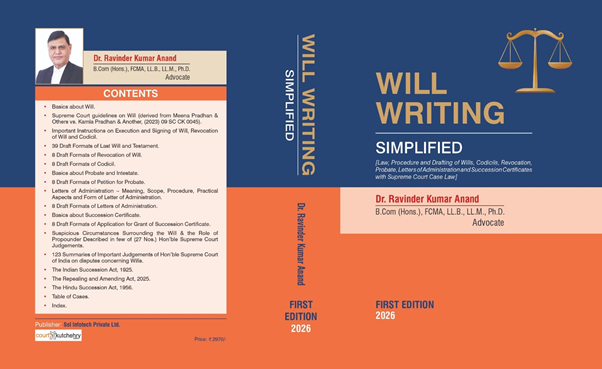
OUR RECOMMENDATION: Check out 123 Key Judgements, as highlighted in the book, WILL WRITING SIMPLIFIED, for the quick research and reference purposes. Click the link here: https://www.courtkutchehry.com/pages/blog/123-supreme-court-judgments-on-wills/
Keywords for SEO & Quick Search
- Gumpha v. Jaibai Supreme Court case
- Civil Appeal No. 1361 of 1986 judgment
- Section 14(1) vs Section 14(2) Hindu Succession Act
- Widow’s limited estate property rights India
- Kuldip Singh R.M. Sahai judgment
- Supreme Court inheritance law 1994
- Life interest will validity ruling