

COURTKUTCHEHRY SPECIAL SERIES ON LANDMARKS JUDGEMENTS ON WILLS, CODICIL & PROBATE
Gowri v. Shanthi & Anr.: Supreme Court Upholds Settlement Deed Ownership
Top Court Restores Trial Court’s Eviction Decree
Succession and Will Validity Left for Separate Adjudication
By Vishwas Kumar
New Delhi: March 22, 2026:
In a significant ruling on March 31, 2014, the Supreme Court of India in Gowri v. Shanthi & Anr. (Civil Appeal No. 4245 of 2014) settled a long-standing family property dispute. The case revolved around a settlement deed executed in favour of Jagadambal, which was later challenged by her nieces, Gowri and Shanthi.
full list of will-related case laws in India
The trial court had upheld Jagadambal’s ownership rights and decreed eviction against the respondents, recognizing their occupation as permissive possession. The first appellate court confirmed this finding. However, the High Court introduced inconsistency by directing the parties to initiate a fresh title suit, thereby unsettling the clarity of ownership already established.
The Supreme Court bench comprising Hon’ble Mr. Justice Surinder Singh Nijjar and Hon’ble Dr. Justice A.K. Sikri restored the trial court’s decree, reaffirming Jagadambal’s title to the property. The Court emphasized that once ownership was validly transferred through the settlement deed, the respondents could not claim independent rights beyond permissive occupation.
Importantly, while affirming Jagadambal’s ownership, the Court left open the issues of succession rights and the validity of a will for separate adjudication in appropriate proceedings. This nuanced approach ensured that the immediate dispute over possession was conclusively resolved, while broader inheritance questions could be addressed independently.
This judgment underscores the Supreme Court’s role in correcting inconsistencies in lower court rulings and safeguarding the sanctity of valid property transfers. It also highlights the principle that permissive possession cannot evolve into ownership claims without lawful entitlement.
For More, Read Here the Summary of the Judgement from the Book: WILL WRITING SIMPLIFIED, read below or open page no 436, Chapter 14.1 in the book. (Online book purchase link available here on: Buy online: Amazon | Flipkart
|
|
Case Summary |
: |
Gowri v. Shanthi & Anr. |
|
|
Court |
: |
Supreme Court of India |
|
|
Citations Link
|
: |
(2014) 03 SC CK 0065: Civil Appeal No. 4245 of 2014. https://www.courtkutchehry.com/judgements/686250/gowri-vs-shanthi-and-another/
|
|
|
|
: |
|
|
|
|
|
|
|
|
Decided on |
: |
March 31, 2014 |
|
|
Coram |
: |
Hon’ble Mr. Justice Surinder Singh Nijjar and Hon’ble Dr. Justice A.K. Sikri. |
|
|
Relevant Paragraphs |
: |
Para Nos. 2–20 |
1. Facts of the Case:
Chidambaram, grandfather of the parties, held leasehold rights over property at Saidapet, Chennai, and built a superstructure. Upon his death (before 1956), rights devolved on his son C.P. Sundaramurthy. In 1949 Sundaramurthy executed a settlement deed transferring the superstructure and lease rights to his sister Jagadambal, who later purchased the property outright from temple authorities in 1950. Jagadambal, a childless widow, allowed her nieces the Respondents to reside in the front portion. Their behaviour became quarrelsome, leading to her notice to vacate (9 Nov 1995) and thereafter a suit for mandatory injunction for possession. Respondents contended the property was ancestral and that the 1949 settlement deed was sham. They filed a parallel partition suit claiming two-thirds share.
2. Law Points Involved:
Validity and effect of settlement deed (1949) and sale deed (1950); nature of possession (permissive or as of right); scope of mandatory injunction; High Court’s power to direct fresh suit when title already decided; rights of legal heirs of deceased owner; competence of legal representative to execute decree; examination of multiple wills for inheritance claim.
3. Acts/Provisions/Articles Referred:
Hindu Succession principles pre-1956; general civil law under CPC; Transfer of Property principles (leasehold to ownership).
4. Judgments Referred:
(i). Shanthi v. Gowri, First Appeal No. 1173 of 2004, decided on 24-08-2011 (Madras High Court).
(ii). Shanthi v. Jagadambal, First Appeal No. 1175 of 2004, decided on 25-08-2011 (Madras High Court).
5. Obiter Dicta:
Even where the decree of possession is upheld, execution by the substituted legal representative depends upon establishing her status as successor-in-interest. Questions of inheritance or competing wills cannot be reopened within the same appeal but require separate determination.
6. Ratio Decidendi:
Once the settlement deed (1949) and subsequent sale deed (1950) were held genuine and final, Jagadambal became absolute owner. Respondents’ occupation was merely permissive. The High Court erred in directing fresh proceedings on title after upholding ownership. However, execution of the decree by Gowri (as L.R.) depends upon proving her inheritance, particularly in view of three competing wills.
7. Final Ruling:
Supreme Court partly allowed the appeal. The High Court’s direction to file a fresh suit on title was set aside. The decree of mandatory injunction granted by the trial court in favour of Jagadambal stands affirmed. The issue of inheritance remains open – to be determined in appropriate proceedings concerning the validity of the three wills.
8. Gist (Dispute & Final Decision):
Dispute revolved around ownership of a family property transferred by settlement deed to Jagadambal and later challenged by her nieces. Both lower courts upheld Jagadambal’s title and decreed eviction; the High Court inconsistently directed a fresh title suit. The Supreme Court restored the trial court’s decree, affirming Jagadambal’s ownership and permissive possession of Respondents, while leaving open the question of succession and will validity for separate adjudication.
Read full Judgement Here:
Gowri v. Shanthi & Anr.
Supreme Court of India
(2014) 03 SC CK 0065: Civil Appeal No. 4245 of 2014.
https://www.courtkutchehry.com/judgements/686250/gowri-vs-shanthi-and-another/
You Can Also Purchase the Book from here on: Buy online: Amazon | Flipkart
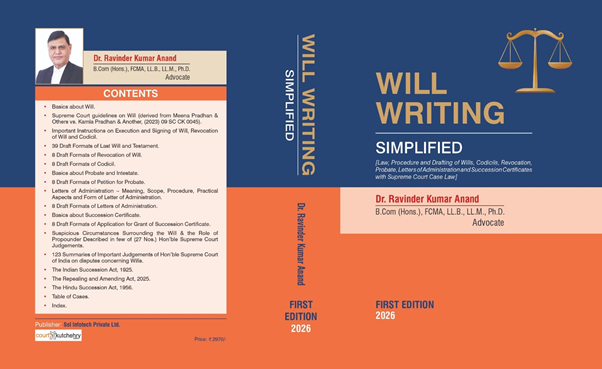
OUR RECOMMENDATION: Check out 123 Key Judgements, as highlighted in the book, WILL WRITING SIMPLIFIED, for the quick research and reference purposes. Click the link here: https://www.courtkutchehry.com/pages/blog/123-supreme-court-judgments-on-wills/
SEO-Friendly Keywords
- Gowri v. Shanthi Supreme Court judgment
- Jagadambal property dispute case
- Civil Appeal No. 4245 of 2014
- Supreme Court eviction decree India
- Settlement deed ownership dispute
- Succession and will validity India case