
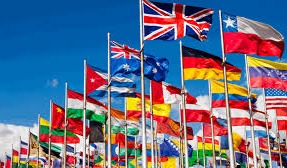
Global Arbitration Anchored in International Law
Domestic Courts Embrace Global Standards
CISG, UNCITRAL, and New York Convention at Work
By Vishwas Kumar
New Delhi: May 01, 2026:
Landmark Supreme Court Judgments Mapped Against International Instruments
India
- Bharat Aluminium Co. v. Kaiser Aluminium (BALCO, 2012)
- Instrument Link: UNCITRAL Model Law.
- Mapping: The Court held that Part I of India’s Arbitration Act does not apply to foreign-seated arbitrations, aligning with UNCITRAL’s (United Nations Commission on International Trade Law) principle of respecting the arbitral seat.
- Venture Global Engineering v. Satyam Computer Services (2008)
- Instrument Link: New York Convention.
- Mapping: Addressed enforcement of foreign arbitral awards in India. The Court emphasized Convention obligations, though initially allowed broader judicial review, later narrowed by BALCO.
- Centrotrade Minerals v. Hindustan Copper Ltd. (2017)
- Instrument Link: New York Convention.
- Mapping: Upheld two-tier arbitration clauses (domestic arbitration followed by ICC arbitration abroad), reinforcing enforceability under the Convention.
- ONGC v. Saw Pipes Ltd. (2003)
- Instrument Link: UNCITRAL (United Nations Commission on International Trade Law) Model Law (Article 34).
- Mapping: Expanded “public policy” grounds for setting aside awards. Though criticized internationally, later narrowed in Renusagar v. General Electric to align with Convention standards.
If you are examining how courts handle disputes involving religious institutions and property rights, this important judgment in Sadhu Singh vs Gurdwara Sahib Narike provides valuable insights into management of religious properties, community rights, and legal principles governing trust and ownership disputes in India.
United States
- Mitsubishi Motors Corp. v. Soler Chrysler-Plymouth (1985)
- Instrument Link: New York Convention.
- Mapping: U.S. Supreme Court compelled arbitration of antitrust claims under an international contract, reinforcing Convention’s pro-arbitration stance.
- BG Group v. Argentina (2014)
- Instrument Link: UNCITRAL (United Nations Commission on International Trade Law) Model Law principles.
- Mapping: Held that arbitrators, not courts, decide procedural preconditions in investment treaty arbitration, consistent with UNCITRAL’s competence-competence doctrine.
- Parsons & Whittemore Overseas Co. v. Société Générale (1974)
- Instrument Link: New York Convention Article V.
- Mapping: Narrowly interpreted “public policy” exception, ensuring foreign awards are enforced unless they violate fundamental U.S. principles.
- First Options of Chicago v. Kaplan (1995)
- Instrument Link: UNCITRAL Model Law.
- Mapping: Clarified that courts decide arbitrability unless parties clearly delegate to arbitrators, echoing UNCITRAL’s emphasis on party autonomy.
FAQ: International Instruments in Practice
Q1: How does the CISG (United Nations Convention on Contracts for the International Sale of Goods) connect to arbitration disputes?
Though primarily governing sales contracts, CISG’s flexible formation rules (e.g., Article 11) influence recognition of arbitration agreements formed through conduct, supporting rulings like Centrotrade.
Q2: Why is the New York Convention central to enforcement?
It obliges courts in 170+ countries to enforce arbitration agreements and awards. Cases like Mitsubishi Motors and Venture Global show courts applying Convention principles to uphold awards.
Q3: What role does UNCITRAL Model Law play in India?
It provides a global template. BALCO explicitly aligned Indian law with UNCITRAL by respecting the arbitral seat and limiting judicial interference.
Q4: How do U.S. courts interpret “public policy” under the Convention?
They adopt a narrow view, as in Parsons & Whittemore, ensuring awards are enforced unless they contravene fundamental U.S. values.
Q5: What is competence-competence and how is it applied?
It means arbitrators decide their own jurisdiction first. BG Group v. Argentina applied this principle, consistent with UNCITRAL.
Conclusion
Indian and U.S. Supreme Court rulings demonstrate a deliberate effort to harmonize domestic arbitration law with UNCITRAL Model Law, CISG (United Nations Convention on Contracts for the International Sale of Goods), and the New York Convention. This ensures predictability, enforceability, and global legitimacy in resolving cross-border contractual disputes.