
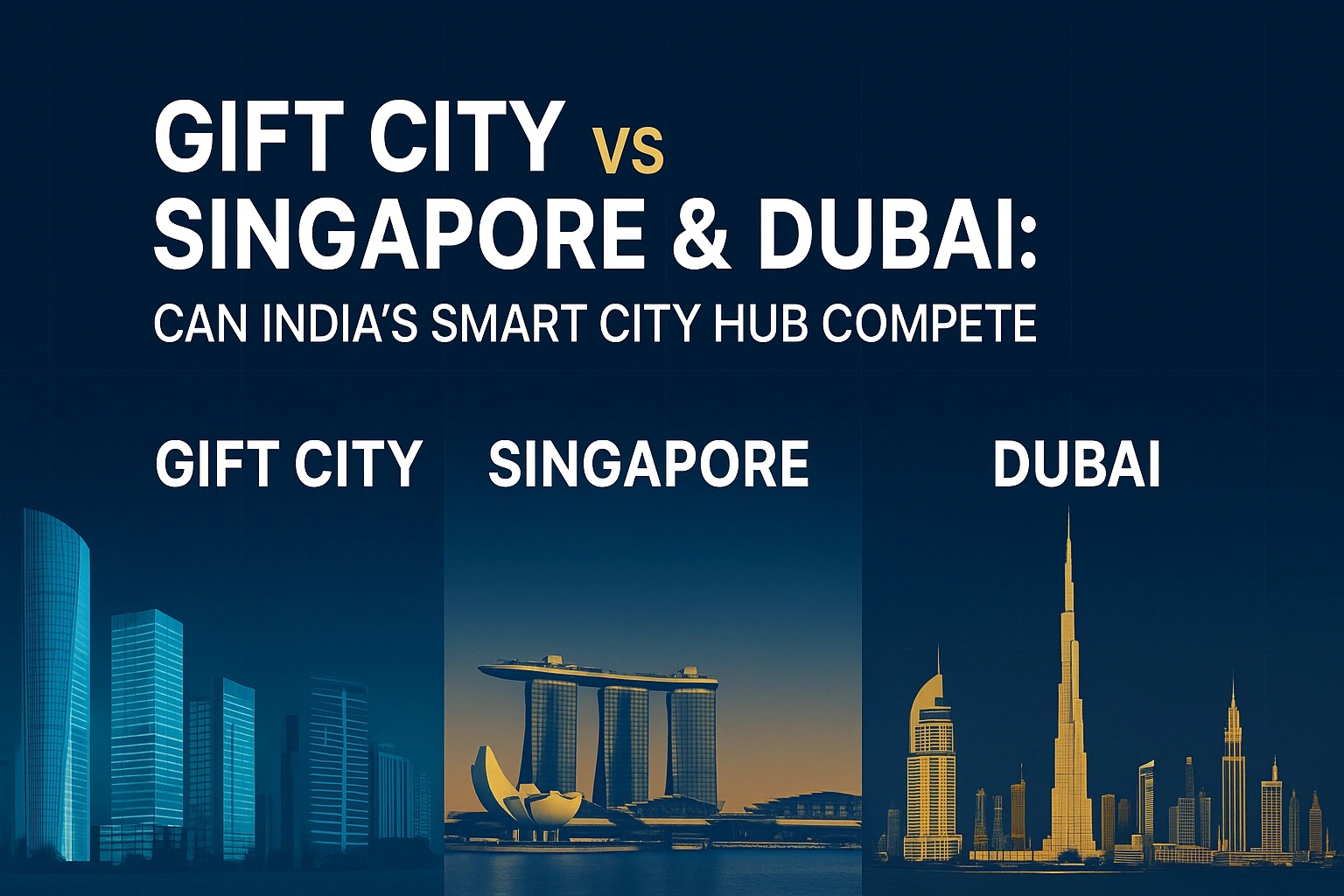
GIFT City Challenges Singapore & Dubai in Treasury Race
India’s offshore hub offers tax holidays and unified regulation
Automation gaps and RBI rules remain hurdles to global adoption
By Vishwas Kumar
New Delhi: May 10, 2026:
India’s GIFT City is positioning itself as a global treasury hub, but its success depends on how it stacks up against established centres like Singapore and Dubai. While GIFT offers aggressive tax holidays and a unified regulator, Singapore provides unmatched legal certainty and treaty depth, and Dubai thrives on wealth access and lifestyle appeal. Understanding corporate treasury in simple terms helps explain why these hubs matter: they are the “financial nerve centres” of multinational companies.
For readers studying probate disputes, validity of wills, and suspicious circumstances surrounding testamentary documents, the Supreme Court judgment in Kavita Kanwar Vs Pamela Mehta & Ors is an important authority on proof of wills and judicial scrutiny of unnatural exclusions in inheritance matters. The Court examined the role of attesting witnesses, genuineness of execution, and surrounding circumstances, making this ruling highly relevant for understanding probate law and succession disputes in India.
Comparative Analysis
Why Treasury Matters (Layman’s View)
Corporate treasury is like the financial control room of a company:
- Liquidity Management: Ensures enough cash to pay bills and salaries.
- Funding: Secures loans or raises capital for expansion.
- Risk Management: Protects against currency swings or interest rate hikes.
- Compliance: Keeps the company aligned with financial laws.
Think of it as the fuel tank and GPS of a business—without it, companies can’t run smoothly or plan ahead. treasurymastermind.com
Comparison of Treasury Hubs
| Feature | GIFT City (India) | Singapore | Dubai (DIFC) |
| Tax Regime | 100% tax exemption for 10 out of 15 years; zero withholding tax on intra-group loans | 17% corporate tax, but extensive exemptions; strong Double Taxation Avoidance Agreements (DTAs) | Historically 0% corporate tax, now shifting to UAE’s new corporate tax regime |
| Regulator | IFSCA – unified, single-window approvals | MAS – highly mature, predictable, with deep case law | DIFC – English common law jurisdiction within UAE civil law |
| Legal Certainty | Emerging, principle-based, less precedent | Global benchmark for legal foresight and arbitration | Neutral legal bridge, evolving compliance |
| Infrastructure | Lower costs, but manual cash transfers (lack of SWIFT automation) | Advanced digital systems, global banking integration | Strong lifestyle appeal, proximity to sovereign wealth |
| Global Ranking (GFCI 2026) | 46th | 3rd | 7th |
| Assets Under Management (2025) | $8.07 billion | SG$6.07 trillion (~US$4.78 trillion) | $700 billion |
| Investor Profile | NRIs, India-centric corporates | Family offices, institutional investors | First-gen entrepreneurs, wealth managers |
csatwork.in giftcityrealty.com The Economic Times
Strategic Significance
- GIFT City: Best for firms seeking India-linked growth, cost efficiency, and tax arbitrage.
- Singapore: Ideal for multinational banks and asset managers needing treaty depth and legal predictability.
- Dubai: Attractive for entrepreneurs and family offices seeking proximity, lifestyle, and wealth ecosystems.
Many firms adopt a multi-hub strategy: Singapore for treaty-driven flows, Dubai for wealth access, and GIFT for India-centric structuring. csatwork.in
FAQ on Legal & Treasury Points
Q1. Why is GIFT City offering tax holidays?
To attract global capital and compete with hubs like Singapore and Dubai, India grants 10-year profit exemptions and waives certain taxes.
Q2. How does Singapore’s legal system benefit treasury centres?
Its mature case law and arbitration institutions provide predictability, reducing risk for firms moving capital across jurisdictions.
Q3. What makes Dubai unique legally?
DIFC operates under English common law within a civil-law nation, offering neutrality and familiarity for global investors.
Q4. Why is automation a challenge for GIFT City?
Unlike Singapore and Dubai, GIFT relies on manual transfers instead of SWIFT-based automated cash sweeping, raising efficiency and governance concerns.
Q5. What role does RBI play in treasury operations?
RBI caps currency positions and restricts related-party trades to curb speculation, which sometimes conflicts with IFSCA’s liberalization goals.
Q6. For a layman, why does treasury matter?
It ensures companies can pay bills, expand safely, and protect against financial shocks—like a household budget but on a global scale.
In summary: GIFT City is India’s bold attempt to join the league of global treasury hubs. Its tax incentives and unified regulator are strong advantages, but automation gaps and RBI’s cautious stance remain barriers. Singapore and Dubai still lead in legal certainty and investor ecosystems, but GIFT offers unique India-linked opportunities.