
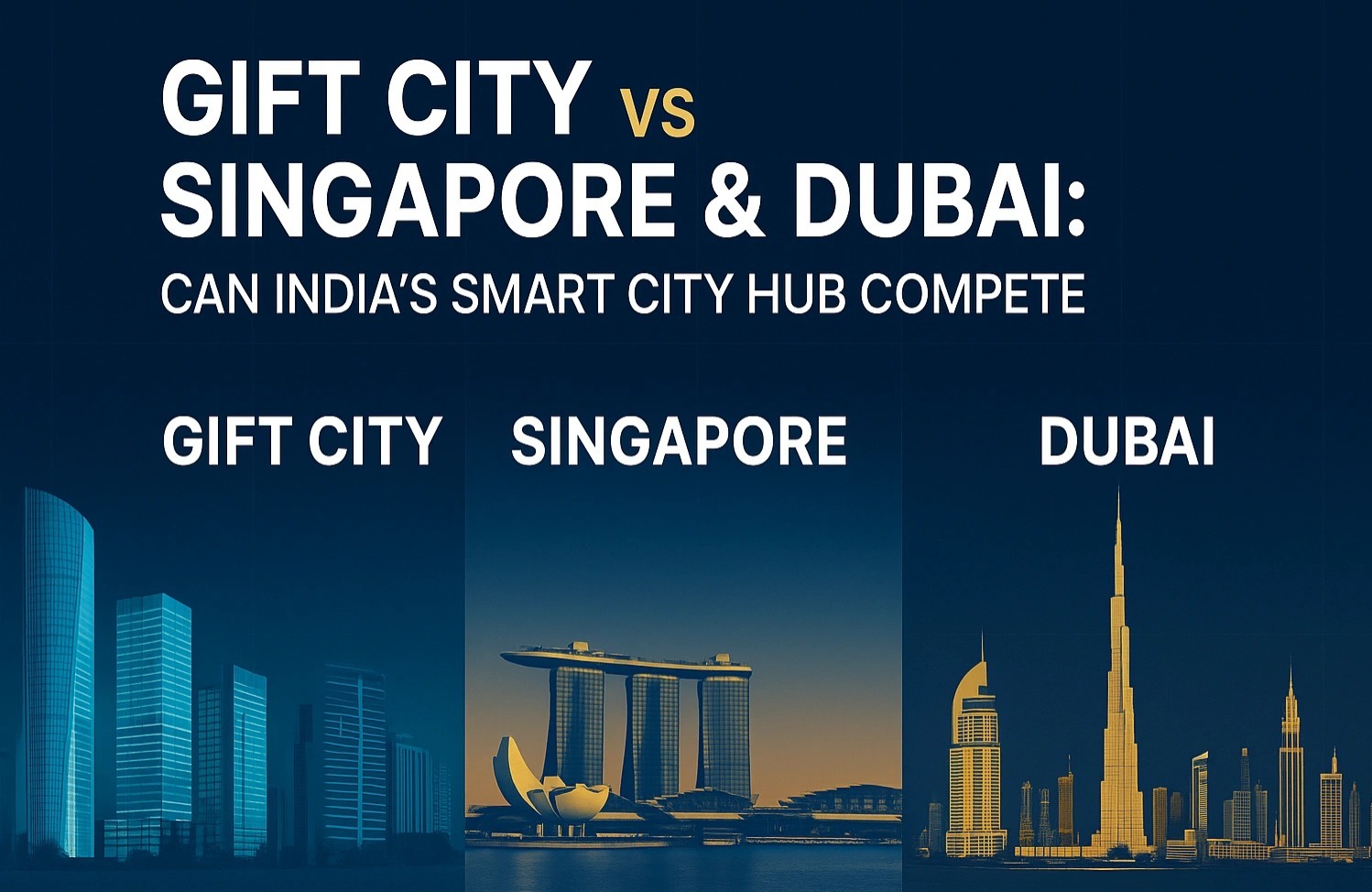
Startup Investment Hub SWOT Analysis: GIFT City vs Dubai vs Singapore
Tax and Legal Rules Shape Startup Choices
Costs and Global Reach Define the Winner
By Vishwas Kumar
New Delhi: April 21, 2026:
For startups, Dubai emerges as the most practical hub due to its zero personal tax, ease of relocation, and strong estate planning laws, while Singapore offers institutional trust and global credibility but at higher costs. GIFT City is promising for India-based startups seeking cost efficiency and INR-to-USD exposure, but its limited product depth and fund-level taxation make it less globally competitive.
In cases concerning validity of wills and evaluation of suspicious circumstances, courts frequently rely on landmark rulings such as the Niranjan Umeshchandra Joshi vs Mrudula Jyoti Rao Supreme Court judgment on will disputes, which highlights the importance of proving due execution, assessing surrounding circumstances, and ensuring that the will reflects the true intention of the testator. This judgment is widely cited in probate litigation to determine the authenticity and enforceability of testamentary documents in India.
SWOT Analysis
GIFT City (India)
Strengths
- Low-cost setup compared to global hubs.
- Exemptions from STT, CTT, and stamp duty.
- INR-to-USD exposure without foreign asset disclosure in ITR.
- Unified regulator (IFSCA) simplifies compliance.
Weaknesses
- Limited product depth compared to Dubai/Singapore.
- Fund-level taxation triggered on portfolio churn.
- Still evolving ecosystem; lacks global brand recognition.
Opportunities
- Policy-driven incentives for startups.
- Potential to attract fintech and digital-first ventures.
- Growing acceptance among Indian corporates (50% net worth deployment allowed).
Threats
- Regulatory uncertainty as framework matures.
- Competition from established hubs with deeper capital pools.
Dubai (DIFC)
Strengths
- Zero personal income tax; corporate tax capped at 9%.
- English common law framework ensures investor confidence.
- DIFC Wills and Foundations provide estate planning flexibility.
- Golden Visa supports relocation and business formation.
Weaknesses
- Compliance scrutiny for Indian residents.
- Corporate tax introduction reduces earlier absolute tax advantage.
Opportunities
- Strategic location bridging Asia, Europe, and Africa.
- Strong appeal for first-generation entrepreneurs seeking global expansion.
- Rapidly growing fintech and startup ecosystem.
Threats
- Rising competition from Singapore and emerging hubs.
- Dependence on oil-linked macroeconomic cycles.
Singapore
Strengths
- Strong trust law and over 80 tax treaties.
- Global credibility as a financial hub.
- Institutional depth with hedge funds, PE/VC, and derivatives.
- English common law system ensures legal clarity.
Weaknesses
- High entry costs ($50,000–$150,000 setup; $30,000–$80,000 annual).
- Accredited investor threshold ($1 million net worth) limits accessibility.
Opportunities
- Gateway to Southeast Asia’s fast-growing markets.
- Ideal for startups seeking institutional capital and global partnerships.
- Strong government support for innovation and R&D.
Threats
- High costs may deter early-stage startups.
- Increasing competition from Dubai and GIFT City.
[RESEARCH RESOURCES
BUY & READ THE BOOK, WILL WRITING SIMPLIFIED, By Dr Ravinder Kumar Anand. [📘 Buy Will Writing Simplified online: Amazon | Flipkart ]
Comparative Snapshot for Startups
|
Hub |
Best For |
Key Advantage |
Key Limitation |
|
GIFT City |
India-based startups |
Low cost, INR-to-USD exposure |
Limited global depth |
|
Dubai (DIFC) |
First-gen entrepreneurs |
Zero personal tax, relocation ease |
Compliance scrutiny |
|
Singapore |
Scale-ups & global startups |
Institutional trust, treaty benefits |
High costs |
Conclusion
- Dubai is best suited for startups looking to expand globally with minimal tax burden and relocation flexibility.
- Singapore is ideal for scale-ups seeking institutional capital, credibility, and treaty benefits, despite higher costs.
- GIFT City works well for India-based startups wanting cost efficiency and domestic regulatory comfort, but it lacks the global depth needed for international scaling.
For a startup founder in India, Dubai offers the most balanced mix of tax efficiency, legal clarity, and global reach, making it the most practical choice today.