
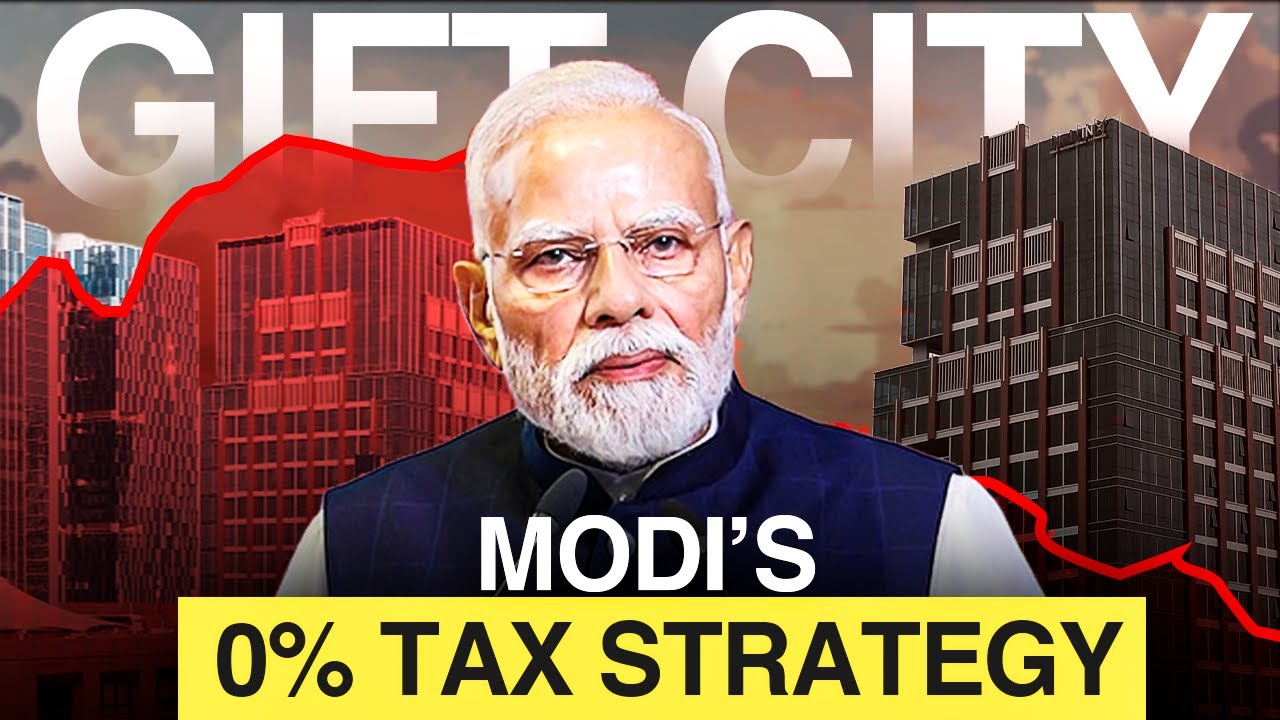
GIFT City’s Legal Renaissance: How IFSC is Redefining India’s Global Financial Future
Law Firms Lead the Charge as India’s IFSC Enters Next Growth Phase
Taxation, Fintech, and Global Comparisons Shape the Road Ahead
By Vishwas Kumar
New Delhi: June 17, 2026:
India’s Gujarat International Finance Tec-City (GIFT City) represents one of the most ambitious initiatives in the country’s financial and legal landscape. Conceived as a modern business district, it is designed to host India’s first International Financial Services Centre (IFSC), a jurisdiction that allows cross-border financial transactions in foreign currency under a globally competitive regulatory framework. Over the past few years, GIFT City has steadily evolved from a policy experiment into a thriving hub, attracting banks, insurers, fintech startups, and increasingly, law firms. The presence of legal institutions signals a deeper phase of growth, as complex financial transactions require robust advisory and compliance support.
The legal framework underpinning IFSC operations is anchored in the Special Economic Zone Act, 2005, the Finance Act, 2015, and the IFSCA Act, 2019, which created a unified regulator—the International Financial Services Centres Authority (IFSCA). This regulatory clarity has encouraged global players to explore opportunities in India, while domestic firms see it as a gateway to international markets. Comparisons with Dubai’s DIFC, Singapore’s financial hub, and Hong Kong highlight both the promise and challenges of India’s model. Unlike its competitors, IFSC must balance global competitiveness with constitutional and judicial oversight, ensuring transparency and accountability.
Economically, GIFT City offers tax incentives, liberalized capital flows, and infrastructure designed to attract billions in foreign investment. Sociologically, it is reshaping professional migration, drawing lawyers, bankers, and entrepreneurs into a new ecosystem. Ethically, questions remain about regulatory arbitrage and equitable access, but the momentum is undeniable. With law firms deepening their presence, GIFT City’s IFSC is entering a transformative phase that blends legal innovation, financial liberalization, and global competitiveness—positioning India as a credible contender in the international financial arena.
Key Laws and Provisions
Special Economic Zone Act, 2005: Provides the legal foundation for IFSC operations.
Finance Act, 2015: Enabled the creation of IFSC units with tax incentives.
IFSCA Act, 2019: Established the International Financial Services Centres Authority (IFSCA) as the unified regulator.
Judicial Precedents: Indian courts have upheld the autonomy of SEZs and IFSCs, reinforcing their special status.
Comparative Perspectives
Dubai’s International Financial Centre (DIFC), Singapore’s financial hub, and Hong Kong’s capital markets each represent distinct models of global financial integration, and India’s IFSC at GIFT City is often compared against them. The DIFC is notable for its independent judicial system, which operates under English common law. This framework provides international investors and corporations with a high degree of predictability and confidence, particularly in dispute resolution. It has helped Dubai position itself as a trusted hub for cross-border finance in the Middle East.
Singapore, by contrast, has built its reputation on being a fintech powerhouse and a global asset management center. Its regulatory environment is highly supportive of innovation, with clear guidelines for digital assets, payment systems, and venture capital. The city-state’s emphasis on technology-driven finance has made it a preferred destination for startups and multinational corporations seeking a stable yet progressive jurisdiction.
Hong Kong, historically, has been one of Asia’s strongest capital market hubs, serving as a gateway to China. Its deep liquidity, robust stock exchange, and established legal infrastructure made it a magnet for global investors. However, recent geopolitical challenges have raised questions about its long-term stability, prompting some firms to diversify into other hubs.
India’s IFSC at GIFT City is unique in that it blends domestic law with global best practices. Unlike DIFC’s independent courts or Singapore’s innovation-first approach, IFSC must operate within India’s constitutional and judicial framework while still offering international-standard services. This duality provides legitimacy but also creates challenges in regulatory clarity. As law firms deepen their presence, IFSC is gradually bridging this gap, positioning itself as a hybrid model—one that seeks to combine India’s democratic oversight with the efficiency and competitiveness of global financial centers.
Sociological, Economic, and Ethical Impacts
Sociological: GIFT City is reshaping professional migration, attracting lawyers, bankers, and fintech entrepreneurs.
Economic: Tax incentives and liberalized capital flows are expected to channel billions into India’s financial system.
Ethical: Concerns remain about regulatory arbitrage, transparency, and equitable access for smaller firms.
Case Studies
Case Studies
1. Global Law Firm Entry Several leading UK and US law firms have established advisory desks in GIFT City, focusing on cross-border mergers and acquisitions, fund structuring, and compliance with international standards. Their presence signals confidence in India’s IFSC framework and provides multinational corporations with access to world-class legal expertise without leaving Indian soil. These firms are also advising on arbitration and dispute resolution, helping GIFT City evolve into a hub for complex legal transactions.
2. Fintech Sandbox Indian startups are actively experimenting with blockchain-based settlement systems under the IFSCA’s regulatory sandbox. This controlled environment allows innovators to test new technologies—such as tokenized securities, AI-driven compliance tools, and digital payment solutions—without the full burden of regulation. Successful pilots here could redefine India’s role in global fintech and attract venture capital into the ecosystem.
3. Insurance Hub Global reinsurance giants are using GIFT City to underwrite risks across Asia-Pacific, reducing reliance on Singapore and London. By setting up operations in IFSC, insurers benefit from tax incentives and proximity to India’s growing insurance market. This has also encouraged domestic insurers to expand their international portfolios.
4. Asset Management Expansion Several international fund managers have launched offshore funds through IFSC, leveraging tax exemptions and regulatory clarity. These funds are attracting foreign investors who want exposure to Indian markets without navigating complex domestic regulations.
5. Banking and Capital Markets Global banks have opened branches in GIFT City to facilitate foreign currency lending, derivatives trading, and clearing services. This has positioned IFSC as a gateway for offshore capital flows into India.
Together, these case studies illustrate how GIFT City is becoming a multi-dimensional hub—spanning law, fintech, insurance, asset management, and banking—while steadily integrating India into the global financial system.
Extended FAQ Index on GIFT City & IFSC
1. What is GIFT City?
GIFT City (Gujarat International Finance Tec-City) is India’s first planned business district designed to house an International Financial Services Centre (IFSC), offering world-class infrastructure for finance and technology firms.
2. What is an IFSC?
An International Financial Services Centre (IFSC) is a jurisdiction that provides financial services to non-residents and residents in foreign currency, similar to hubs in Dubai, Singapore, and Hong Kong.
3. Which laws govern IFSC operations?
Key laws include the SEZ Act, 2005, Finance Act, 2015, and the IFSCA Act, 2019, which created the unified regulator.
4. What tax benefits are available in IFSC?
Exemptions include reduced corporate tax, no securities transaction tax, and relief under double taxation treaties.
5. How does IFSC differ from SEZs?
SEZs focus on manufacturing/export, while IFSCs specialize in international financial services and cross-border capital flows.
6. Who regulates IFSC?
The International Financial Services Centres Authority (IFSCA) is the unified regulator.
7. What is the IFSCA Act, 2019?
It established IFSCA as a statutory authority to regulate financial products, services, and institutions in IFSCs.
8. Can foreign law firms operate in IFSC?
Yes, foreign law firms can set up advisory desks, though litigation remains restricted to Indian courts.
9. What services can law firms provide in IFSC?
Cross-border M&A, fund structuring, compliance, arbitration, and advisory on international contracts.
10. How does IFSC compare to Dubai’s DIFC?
DIFC uses English common law and independent courts; IFSC blends Indian law with global best practices.
11. How does IFSC compare to Singapore’s financial hub?
Singapore is mature with strong fintech and asset management; IFSC is emerging but offers tax incentives.
12. What role does Hong Kong play compared to IFSC?
Hong Kong has historically dominated Asian capital markets, but IFSC is positioning itself as a stable alternative.
13. What judicial precedents support IFSC autonomy?
Indian courts have upheld SEZ and IFSC autonomy, reinforcing their special status under constitutional law.
14. How does IFSC impact India’s capital markets?
It enables offshore trading, derivatives, and fund management, boosting India’s global competitiveness.
15. Can fintech startups operate in IFSC?
Yes, through the IFSCA regulatory sandbox, fintechs can test innovative products.
16. What is the regulatory sandbox in IFSC?
A controlled environment where startups test financial innovations under relaxed regulations.
17. Are cryptocurrencies allowed in IFSC?
Crypto trading is restricted, but tokenization and digital asset experiments are permitted under sandbox rules.
18. How does IFSC handle digital assets?
IFSCA allows pilot projects in tokenization, blockchain settlement, and digital securities.
19. What insurance opportunities exist in IFSC?
Global insurers and reinsurers can underwrite risks, especially in Asia-Pacific markets.
20. How does reinsurance work in IFSC?
Reinsurers set up hubs to manage risk portfolios, reducing reliance on Singapore and London.
21. What ethical concerns exist around IFSC?
Transparency, regulatory arbitrage, and equitable access for smaller firms are key concerns.
22. Does IFSC encourage regulatory arbitrage?
Potentially, as firms may exploit tax and compliance gaps, but IFSCA aims to prevent misuse.
23. How transparent are IFSC operations?
IFSCA mandates disclosures, but global observers call for stronger transparency standards.
24. What sociological impacts does IFSC have?
It attracts professionals, reshaping India’s legal and financial workforce.
25. How does IFSC affect professional migration?
Lawyers, bankers, and fintech entrepreneurs are relocating to GIFT City for opportunities.
26. What economic benefits does IFSC bring to India?
Billions in foreign capital inflows, job creation, and enhanced global competitiveness.
27. How does IFSC attract foreign investment?
Through tax incentives, liberalized capital flows, and global-standard infrastructure.
28. What role do law firms play in IFSC expansion?
They provide cross-border legal expertise, enabling complex transactions and compliance.
29. How do double taxation treaties apply in IFSC?
DTAA benefits reduce tax burdens for foreign investors operating in IFSC.
30. Can Indian companies raise offshore capital in IFSC?
Yes, IFSC allows offshore fundraising in foreign currencies.
31. What is the future of fintech in IFSC?
Strong growth expected in blockchain, AI-driven compliance, and digital asset management.
32. How does IFSC integrate ESG and green finance?
IFSCA promotes sustainable finance, green bonds, and ESG-compliant funds.
33. What role does AI play in IFSC’s future?
AI is used for compliance, fraud detection, and risk management.
34. How does IFSC affect India’s global competitiveness?
It positions India as a credible alternative to Singapore and Dubai.
35. What risks exist for IFSC’s growth?
Regulatory uncertainty, global competition, and geopolitical risks.
36. How does IFSC balance domestic and global law?
By blending Indian statutes with international best practices under IFSCA oversight.
37. What opportunities exist for startups in IFSC?
Access to global capital, fintech sandbox, and tax incentives.
38. How does IFSC impact India’s insurance sector?
It expands reinsurance capacity and reduces dependence on foreign hubs.
39. What reforms are expected in IFSC?
Greater clarity on digital assets, expanded tax incentives, and stronger dispute resolution mechanisms.
40. What is the long-term vision for IFSC?
To become a global hub for finance, fintech, insurance, and legal services, rivalling Singapore and Dubai.
Op-Ed Style Closing Vision
GIFT City’s IFSC is more than a financial experiment—it is India’s declaration that it belongs at the center of global capital flows. The presence of law firms signals a deeper institutionalization of this vision. Yet, challenges remain.
India must balance global competitiveness with domestic accountability. Unlike Dubai’s DIFC, which operates under English common law, India’s IFSC must reconcile its framework with constitutional principles and judicial oversight. This duality is both a strength and a weakness: it ensures democratic legitimacy but may slow down reforms.
The economic promise is undeniable. By offering tax incentives, India is positioning IFSC as a magnet for funds, insurers, and fintech innovators. But ethical concerns about transparency and regulatory arbitrage must be addressed. Without robust safeguards, IFSC risks becoming a haven for opaque transactions rather than a beacon of financial integrity.
The sociological impact is equally profound. GIFT City is creating a new professional ecosystem, drawing talent from across India and abroad. This migration could reshape India’s legal and financial professions, fostering a cosmopolitan hub that rivals Singapore and Dubai.
Looking ahead, IFSC must embrace green finance, ESG principles, and AI-driven compliance. These are not optional add-ons but essential pillars of future competitiveness. The next decade will determine whether GIFT City becomes a true global hub or remains a niche experiment.
Ultimately, IFSC is a test of India’s ability to think globally while acting locally. If successful, it will redefine India’s place in the world economy—not just as a participant, but as a leader.