
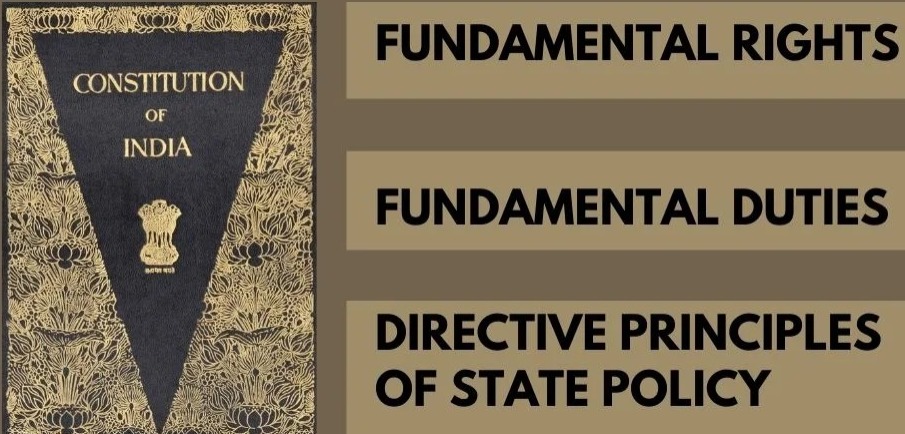
Fundamental Rights & Directive Principles: The Twin Pillars of Justice
Balancing enforceable rights with aspirational goals
How India’s courts shaped harmony between Parts III and IV
By Vishwas Kumar
New Delhi: June 10, 2026:
India’s Constitution is often described as a living document, one that breathes life into democracy by protecting individual freedoms while guiding the state toward social and economic justice. At the heart of this framework lie two distinct but interconnected pillars: Fundamental Rights (Part III) and Directive Principles of State Policy (Part IV). Fundamental Rights are enforceable guarantees that empower citizens to challenge violations in court, while Directive Principles are aspirational guidelines meant to steer governance toward welfare and equity.
The tension between these two pillars has defined much of India’s constitutional journey. Should enforceable rights always prevail over aspirational goals? Or should the state’s duty to promote social justice sometimes outweigh individual freedoms? The judiciary has played a decisive role in answering these questions, crafting doctrines and precedents that attempt to harmonize the two.
Constitutional Foundations
- Fundamental Rights (Articles 12–35): Equality, freedoms, protection against exploitation, freedom of religion, cultural rights, and remedies.
- Directive Principles (Articles 36–51): State duties like equitable distribution of resources, promotion of education, protection of environment, and fostering international peace.
- Article 37: Declares Directive Principles non‑justiciable but “fundamental in the governance of the country.”
This duality reflects the framers’ vision: rights safeguard liberty, while principles guide collective justice.
Judicial Precedents: Harmonizing Rights and Principles
The Indian judiciary has played a pivotal role in reconciling the tension between Fundamental Rights and Directive Principles of State Policy (DPSPs). While Fundamental Rights are enforceable guarantees, DPSPs are aspirational guidelines meant to direct governance. Over the decades, courts have crafted doctrines and delivered judgments that attempt to harmonize these two pillars, ensuring neither is sacrificed at the expense of the other.
Kesavananda Bharati v. State of Kerala (1973)
This landmark case introduced the basic structure doctrine, holding that Parliament cannot amend the Constitution in ways that damage its essential framework. The Court emphasized that both Fundamental Rights and Directive Principles must coexist harmoniously, preventing the state from undermining liberty in the name of social justice.
Minerva Mills v. Union of India (1980)
The Court struck down amendments that gave primacy to DPSPs over Fundamental Rights, declaring that the Constitution is founded on a balance between Parts III and IV. It famously stated that rights and principles are “complementary and not antagonistic,” reinforcing the idea that neither can dominate the other.
Unni Krishnan v. State of Andhra Pradesh (1993)
Here, the Court elevated the right to education from a Directive Principle (Article 45) into an enforceable Fundamental Right under Article 21. This judgment paved the way for the 86th Constitutional Amendment, which inserted Article 21A, making free and compulsory education a guaranteed right for children aged 6–14.
Olga Tellis v. Bombay Municipal Corporation (1985)
The Court recognized the right to livelihood as part of Article 21, ruling that eviction of pavement dwellers without alternative arrangements violated their dignity. This case exemplifies how socio‑economic aspirations embedded in DPSPs were judicially transformed into enforceable rights.
State of Kerala v. N.M. Thomas (1976)
The Court upheld reservations in promotions, interpreting equality under Article 14 in light of DPSPs promoting social justice. This case demonstrated how DPSPs could shape the meaning of Fundamental Rights, ensuring substantive equality rather than mere formal equality.
Mohini Jain v. State of Karnataka (1992)
Often called the “capitation fee case,” the Court held that charging exorbitant fees for education violated the right to education under Article 21. This ruling reinforced the idea that DPSPs like Article 45 could be judicially enforced through expansive interpretation of rights.
Paschim Banga Khet Mazdoor Samity v. State of West Bengal (1996)
The Court ruled that the state has a constitutional obligation to provide adequate medical facilities, expanding Article 21 to include the right to health. Though health is a Directive Principle, the Court made it enforceable by linking it to the right to life.
Vishaka v. State of Rajasthan (1997)
In the absence of legislation, the Court laid down guidelines against sexual harassment at the workplace, drawing inspiration from international conventions and DPSPs promoting gender equality. This case illustrates how courts bridge legislative gaps by elevating aspirational principles into enforceable norms.
T.M.A. Pai Foundation v. State of Karnataka (2002)
The Court balanced the right of minorities to establish educational institutions (Article 30) with the state’s duty to regulate education under DPSPs. It highlighted the delicate interplay between individual rights and collective welfare.
Chameli Singh v. State of Uttar Pradesh (1996)
The Court recognized the right to shelter as part of Article 21, linking it to dignity and livelihood. This case again demonstrates how socio‑economic aspirations in DPSPs were judicially enforced.
Analysis
These precedents reveal a consistent judicial trend: expanding the scope of Fundamental Rights by reading them in light of Directive Principles. The judiciary has often blurred the rigid line between enforceable and aspirational provisions, ensuring that DPSPs do not remain mere moral guidelines but actively shape governance.
This harmonization has profound implications:
- Sociological: It empowers marginalized communities by judicially enforcing socio‑economic rights.
- Economic: It influences policies on education, health, labour, and environment, sometimes imposing obligations on the state and industries.
- Ethical: It reflects the judiciary’s commitment to constitutional morality, ensuring liberty and justice coexist.
At the same time, critics argue that such judicial creativity risks undermining the separation of powers, as courts effectively legislate from the bench. Yet, in a system where legislative inertia often delays social reforms, judicial precedents have ensured that constitutional promises translate into lived realities.
Conclusion
From Kesavananda Bharati to Chameli Singh, the Indian judiciary has consistently sought to harmonize Fundamental Rights and Directive Principles. By expanding Article 21 to include education, livelihood, health, shelter, and environment, courts have transformed aspirational goals into enforceable rights. This jurisprudence underscores the Constitution’s vision: a democracy that protects individual liberty while striving for collective justice.
Comparative Perspectives
- Ireland: Source of India’s DPSPs, but courts remain restrained.
- South Africa: Socio‑economic rights are directly enforceable.
- United States: Strong focus on enforceable rights, no equivalent to DPSPs.
India’s model is unique in judicially elevating aspirational principles into enforceable rights.
Sociological, Economic, and Ethical Impacts
- Sociological: Rights empower individuals; principles push reforms like abolition of untouchability and promotion of education.
- Economic: DPSPs influence land reforms, labor rights, and welfare schemes.
- Ethical: Reflects India’s commitment to liberty and justice, but raises debates about judicial policymaking.
Case Studies & Narratives
- Right to Education: From Directive Principle (Article 45) to Fundamental Right (Article 21A), transforming millions of lives.
- Environmental Protection: Article 48A inspired rulings expanding Article 21 to include clean environment.
- Social Justice: Land reforms upheld as necessary for equality despite property rights challenges.
Extended FAQ (40 Questions with 2–3 Line Answers)
- What are Fundamental Rights?
They are enforceable constitutional guarantees protecting liberty, equality, and dignity, available to all citizens. - What are Directive Principles?
They are aspirational guidelines for governance, non‑justiciable but fundamental in shaping state policies. - Can DPSPs override rights?
No, but courts harmonize them by interpreting rights in light of principles. - Which case balanced them?
Minerva Mills v. Union of India (1980) declared rights and principles complementary. - How did right to education evolve?
It moved from a Directive Principle (Article 45) to a Fundamental Right (Article 21A). - Do other countries have DPSPs?
Yes, Ireland inspired India’s DPSPs, and South Africa enforces socio‑economic rights. - Why are DPSPs important?
They guide welfare policy, ensuring governance aims at social and economic justice. - Can courts enforce DPSPs?
Not directly, but they interpret Fundamental Rights to include Directive Principles. - What ethical debates arise?
Whether unelected judges should elevate aspirational goals into enforceable rights. - What is the future?
Continued judicial innovation, balanced with caution to respect democratic processes. - What is Article 37’s role?
It makes DPSPs non‑justiciable but declares them fundamental in governance. - How do Fundamental Rights empower citizens?
They allow individuals to challenge violations directly in courts under Articles 32 and 226. - What is Article 21’s significance?
It has been expansively interpreted to include rights to livelihood, environment, and dignity. - How did Kesavananda Bharati impact rights and principles?
It established the basic structure doctrine, ensuring harmony between Parts III and IV. - What is the difference between enforceable and aspirational provisions?
Fundamental Rights are enforceable in courts, while DPSPs are aspirational guidelines. - Can Parliament amend Fundamental Rights?
Yes, but not in ways that damage the Constitution’s basic structure. - What is the role of Article 32?
It provides the right to constitutional remedies, empowering citizens to enforce rights. - How do DPSPs influence legislation?
They inspire welfare laws like land reforms, labour protections, and education policies. - What is Article 39’s importance?
It directs the state to ensure equitable distribution of resources and prevent exploitation. - How did Olga Tellis v. BMC expand rights?
It recognized the right to livelihood under Article 21, linking socio‑economic justice. - What is Article 45 about?
It originally directed the state to provide free education for children up to 14 years. - How did Article 21A emerge?
Through the 86th Amendment, making free education a Fundamental Right. - What is Article 48A’s role?
It directs the state to protect and improve the environment. - How do courts use Article 48A?
By interpreting Article 21 to include the right to a clean environment. - What is Article 51’s significance?
It guides India’s foreign policy toward international peace and cooperation. - How do DPSPs affect economic policy?
They influence land redistribution, labour rights, and welfare schemes. - What is the ethical vision behind DPSPs?
They reflect the Constitution’s commitment to justice, equality, and dignity. - Can DPSPs be ignored by the state?
No, though non‑justiciable, they are fundamental in governance and policymaking. - What is the role of judiciary in DPSPs?
Courts interpret rights expansively to incorporate principles. - How do DPSPs promote social justice?
They mandate policies against inequality, exploitation, and discrimination. - What is Article 14’s link to DPSPs?
Equality under Article 14 is often interpreted alongside DPSPs promoting fairness. - How do DPSPs affect gender justice?
They inspire laws and rulings promoting equality and protection for women. - What is Article 23’s role?
It prohibits forced labour, aligning with DPSPs on social justice. - How do DPSPs influence environmental law?
They inspire judicial rulings mandating pollution control and conservation. - What is Article 29’s importance?
It protects cultural rights, complementing DPSPs on promoting heritage. - How do DPSPs affect minority rights?
They guide policies ensuring protection and promotion of minority interests. - What is Article 38’s role?
It directs the state to promote welfare and reduce inequalities. - How do DPSPs affect labour rights?
They inspire laws on fair wages, humane working conditions, and social security. - What is the judiciary’s creative role?
By elevating DPSPs into enforceable rights, courts bridge gaps in governance. - What is the long‑term vision of DPSPs?
To build a welfare state where liberty and justice coexist, ensuring dignity for all.
Op‑Ed Style Closing Vision
The coexistence of Fundamental Rights and Directive Principles is one of the most remarkable features of India’s Constitution. It reflects a vision that democracy must protect individual liberty while also striving for collective justice. Rights without principles risk creating an unequal society, while principles without rights risk becoming hollow promises.
The judiciary’s role in harmonizing these pillars has been transformative. By expanding Article 21 to include education, livelihood, and environment, courts have ensured that Directive Principles do not remain dead letters. Yet, this judicial creativity raises questions about separation of powers. Should courts legislate from the bench? Or should they merely nudge the legislature to act?
The answer lies in balance. Judicial innovation must remain a corrective mechanism, stepping in when governance fails, but not replacing the legislature’s role. The future of India’s constitutional journey depends on this delicate equilibrium.
As India faces challenges of inequality, climate change, and rapid economic growth, the twin pillars of rights and principles will remain central. Rights will continue to empower individuals, while principles will guide the state toward inclusive development. Together, they embody the ethical vision of the Constitution: liberty with justice, freedom with responsibility, and democracy with dignity.
In the end, the harmony between Fundamental Rights and Directive Principles is not just a legal doctrine; it is a moral compass for the nation. It reminds us that democracy is not merely about elections or institutions, but about building a society where every citizen can live with dignity, equality, and hope.