
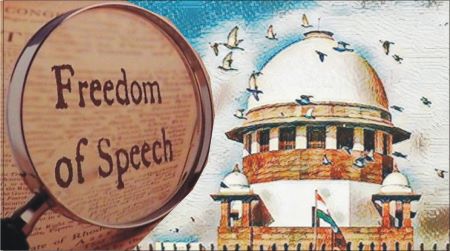
Freedom of Speech in India: Between Liberty and Limits
How Article 19 Shapes Expression in a Democracy
Digital Age Challenges and Global Comparisons
By Vishwas Kumar
New Delhi: June 10, 2026:
Freedom of speech and expression is often described as the lifeblood of democracy. In India, this principle is enshrined in Article 19(1)(a) of the Constitution, guaranteeing every citizen the right to express opinions, share ideas, and engage in dialogue without fear of repression. Yet, this freedom is not absolute. The framers of the Constitution, mindful of India’s diversity and fragility as a newly independent nation, introduced Article 19(2) to impose “reasonable restrictions” in the interests of sovereignty, public order, morality, and other vital concerns. This duality—liberty tempered by responsibility—has defined India’s free speech jurisprudence for over seven decades.
The importance of free speech lies in its role as a safeguard against authoritarianism. It enables dissent, fosters accountability, and ensures that citizens can question those in power. Early judicial pronouncements underscored this principle. In Romesh Thapar v. State of Madras (1950), the Supreme Court struck down censorship orders, affirming that free speech is essential to democracy. Similarly, in Brij Bhushan v. State of Delhi (1950), preventive censorship was declared unconstitutional. These cases set the tone for a judiciary that would act as a sentinel of liberty, ensuring that state power did not stifle expression.
Over time, the scope of free speech has expanded. The Court recognized that freedom of press, though not explicitly mentioned, is implicit in Article 19(1)(a). In Bennett Coleman v. Union of India (1973), restrictions on newsprint were struck down, reinforcing press independence. More recently, in Shreya Singhal v. Union of India (2015), the Court struck down Section 66A of the IT Act, which had been misused to arrest individuals for online posts. This landmark judgment safeguarded digital expression, adapting constitutional principles to the realities of the internet age. In Kaushal Kishore v. State of UP (2023), the Court clarified that free speech protections can extend even against non-state actors, broadening the ambit of liberty.
Comparative perspectives highlight India’s distinctive approach. The United States, through the First Amendment, offers robust protection, with very limited restrictions. The United Kingdom balances free speech with hate speech laws and defamation protections. The European Union, under the European Convention on Human Rights, protects expression but allows proportional restrictions. India’s model, with explicit codification of restrictions, reflects its socio-political diversity and the need to balance liberty with communal harmony. This makes India’s framework more restrictive than the US but more expansive than many European systems.
The sociological impact of free speech is profound. It empowers marginalized voices, enabling movements for gender justice, LGBTQ+ rights, and environmental protection. Economically, it supports transparency and accountability, vital for investor confidence and governance. Ethically, it raises dilemmas about balancing liberty with harm prevention. Hate speech, misinformation, and obscenity challenge the boundaries of free speech, especially in the digital age where content spreads rapidly and globally.
Case studies illustrate these tensions. The Shreya Singhal case humanized free speech by protecting ordinary citizens from arbitrary arrests for online posts. The Bennett Coleman case highlighted the press’s role in democracy. Contemporary debates around sedition laws and fake news regulation show how free speech continues to evolve, testing the balance between liberty and responsibility.
Yet, challenges remain. Sedition laws under Section 124A IPC are often misused against dissenters, raising calls for repeal. Defamation suits and contempt proceedings sometimes chill legitimate criticism. Online regulation, while necessary to curb misinformation, risks overreach. The judiciary has acted as a guardian of liberty, but enforcement is uneven, and executive actions often test constitutional boundaries.
In essence, freedom of speech in India is both a constitutional guarantee and a contested terrain. It is not static but evolves with each judicial pronouncement, legislative reform, and social movement. The enduring challenge is to ensure that liberty is not curtailed under the guise of order, and that responsibility does not become a tool for suppression. As India navigates the complexities of the digital age, the promise of free speech must remain central to its democratic journey, ensuring that every citizen can speak, dissent, and dream without fear.
Constitutional Foundations of Free Speech
- Article 19(1)(a): Guarantees freedom of speech and expression to all citizens.
- Reasonable Restrictions (Article 19(2)): Allows limits in the interests of sovereignty, public order, morality, defamation, contempt of court, and incitement to offenses.
- Judicial Role: Courts have consistently balanced liberty with restrictions, expanding the scope of free speech while upholding constitutional boundaries.
Judicial Precedents Expanding Free Speech
- Romesh Thapar v. State of Madras (1950): Early case striking down censorship, affirming free speech as essential to democracy.
- Brij Bhushan v. State of Delhi (1950): Preventive censorship declared unconstitutional.
- Bennett Coleman v. Union of India (1973): Freedom of press upheld against government restrictions on newsprint.
- Shreya Singhal v. Union of India (2015): Struck down Section 66A of the IT Act, protecting online speech.
- Kaushal Kishore v. State of UP (2023): Clarified that free speech applies even against non-state actors in certain contexts.
Comparative Perspectives
- United States: First Amendment provides robust protection, with limited restrictions.
- United Kingdom: Balances free speech with hate speech laws and defamation protections.
- European Union: European Convention on Human Rights protects expression but allows proportional restrictions.
- India’s uniqueness: Explicitly codifies restrictions, reflecting its diverse and sensitive socio-political landscape.
Sociological, Economic, and Ethical Impacts
- Sociological: Free speech empowers marginalized voices, but hate speech and misinformation challenge social harmony.
- Economic: Freedom of press and expression supports transparency, accountability, and investor confidence.
- Ethical: Balancing liberty with responsibility is critical, especially in digital platforms where speech can spread rapidly.
Case Studies
- Shreya Singhal (2015): Humanized free speech by protecting citizens from arbitrary arrests for online posts.
- Bennett Coleman (1973): Highlighted press freedom as essential for democracy.
- Romesh Thapar (1950): Early assertion of free speech against censorship.
- Contemporary Social Media Cases: Show tensions between liberty, misinformation, and regulation.
Extended FAQ: Quick Legal Understanding
1. What is Article 19(1)(a)?
It guarantees freedom of speech and expression to all citizens, forming the backbone of democratic dialogue in India.
2. What are reasonable restrictions?
Article 19(2) allows limits on speech in the interests of sovereignty, public order, morality, defamation, contempt of court, and incitement to offenses.
3. What is Romesh Thapar case?
In 1950, the Supreme Court struck down censorship orders, affirming free speech as essential to democracy.
4. What is Brij Bhushan case?
The Court held preventive censorship unconstitutional, reinforcing liberty of the press.
5. What is Bennett Coleman case?
It upheld press freedom against government restrictions on newsprint, protecting media independence.
6. What is Shreya Singhal case?
In 2015, the Court struck down Section 66A of the IT Act for vagueness, safeguarding online speech.
7. What is Kaushal Kishore case?
It clarified that free speech protections can apply even against non-state actors in certain contexts.
8. What is freedom of press?
Though not explicitly mentioned, it is implicit in Article 19(1)(a) and protected by judicial interpretation.
9. What is sedition law?
Section 124A IPC criminalizes speech against the State, but its use is highly controversial and debated.
10. What is defamation law?
It protects individual reputation, limiting speech that harms others’ dignity.
11. What is contempt of court?
It restricts speech that undermines the authority or dignity of the judiciary.
12. What is obscenity law?
It prohibits speech or expression considered immoral or indecent under community standards.
13. What is hate speech?
Speech that incites violence, hostility, or discrimination against groups based on identity.
14. How does India regulate online speech?
Through the IT Act, intermediary guidelines, and judicial oversight of digital platforms.
15. What is Section 66A?
A provision of the IT Act struck down for vagueness and misuse against online speech.
16. What is prior restraint?
Preventive censorship before publication, generally unconstitutional in India.
17. What is proportionality test?
A judicial method to balance liberty with restrictions, ensuring limits are fair and necessary.
18. How does US protect speech?
The First Amendment provides broad protection, with very limited restrictions.
19. How does UK regulate speech?
It balances free speech with hate speech laws, defamation protections, and public order concerns.
20. How does EU protect speech?
The European Convention on Human Rights protects expression but allows proportional restrictions.
21. What is freedom of assembly?
Article 19(1)(b) protects peaceful gatherings, linked to free speech rights.
22. What is freedom of association?
Article 19(1)(c) allows citizens to form groups and organizations, supporting collective expression.
23. What is freedom of press in emergencies?
It can be restricted during national emergencies under constitutional provisions.
24. What is sedition debate?
There are growing calls for repeal due to misuse against dissent and criticism.
25. What is right to information?
It is linked to free speech, enabling citizens to access government data for accountability.
26. What is media regulation?
Bodies like the Press Council and broadcasting laws oversee standards and ethics.
27. What is censorship in films?
The CBFC regulates films under reasonable restrictions for morality and public order.
28. What is artistic freedom?
Protected under free speech, though subject to limits like obscenity or defamation.
29. What is academic freedom?
Linked to free expression, allowing scholars to pursue inquiry without undue restriction.
30. What is whistleblower protection?
It encourages free speech against corruption, safeguarding those who expose wrongdoing.
31. What is freedom in digital age?
Online speech is protected but regulated to address misuse, misinformation, and hate speech.
32. What is intermediary liability?
Digital platforms are responsible for unlawful content under certain conditions.
33. What is fake news regulation?
An emerging challenge where governments and courts seek to balance liberty with truth.
34. What is privacy vs speech?
Courts balance free expression with the right to privacy, ensuring neither is absolute.
35. What is freedom of satire?
Protected as free speech unless it crosses into defamation or obscenity.
36. What is freedom of criticism?
Essential for democracy, allowing citizens to question government and institutions.
37. What is freedom in workplace?
Employees have speech rights but are limited by organizational rules and discipline.
38. What is freedom in elections?
Campaign speech is protected but regulated to ensure fairness and prevent misinformation.
39. What is freedom in protests?
Protected under Article 19 but subject to restrictions for public order and safety.
40. What is the future of free speech?
It lies in balancing liberty with digital regulation, ensuring rights adapt to new technologies.
Long Op‑Ed Style Closing Vision
Freedom of speech in India is both a constitutional guarantee and a contested terrain. Article 19(1)(a) enshrines liberty, but Article 19(2) tempers it with reasonable restrictions. This duality reflects India’s complex social fabric, where liberty must coexist with order. Judicial activism has expanded the scope of free speech, striking down arbitrary laws and protecting citizens against censorship. Yet, challenges persist in the digital age, where misinformation, hate speech, and surveillance complicate the balance.
Cases like Romesh Thapar and Bennett Coleman established press freedom as essential to democracy. Shreya Singhal protected online speech, while Kaushal Kishore extended free speech beyond state action. These judgments show how courts have adapted constitutional principles to evolving contexts. However, sedition laws, defamation suits, and censorship continue to test the boundaries of liberty.
Comparatively, India’s framework is more restrictive than the US First Amendment but more expansive than many European models. South Africa’s Constitution explicitly protects socio-economic rights alongside free speech, reflecting its unique history. India’s model, rooted in diversity and sensitivity, balances liberty with responsibility, though enforcement remains uneven.
Sociologically, free speech empowers marginalized voices, enabling social movements and dissent. Economically, it supports transparency and accountability, vital for investor confidence and governance. Ethically, it raises dilemmas about balancing liberty with harm prevention, especially in digital platforms where speech spreads rapidly.
The future of free speech in India requires a multi-pronged approach. Sedition laws must be revisited to prevent misuse. Digital regulation must balance liberty with accountability, ensuring platforms do not become vehicles for misinformation. Education and awareness must empower citizens to exercise speech responsibly. International collaborations can enrich India’s framework, aligning it with global standards while respecting local realities.
Ultimately, free speech is not just a constitutional text but a lived reality. It is the lifeblood of democracy, enabling dissent, dialogue, and accountability. India’s constitutional vision, enriched by judicial creativity and social movements, must continue to expand the horizons of liberty. The promise of justice, liberty, equality, and fraternity remains the guiding light, but its realization depends on collective commitment to protect and nurture free speech in all its forms.