
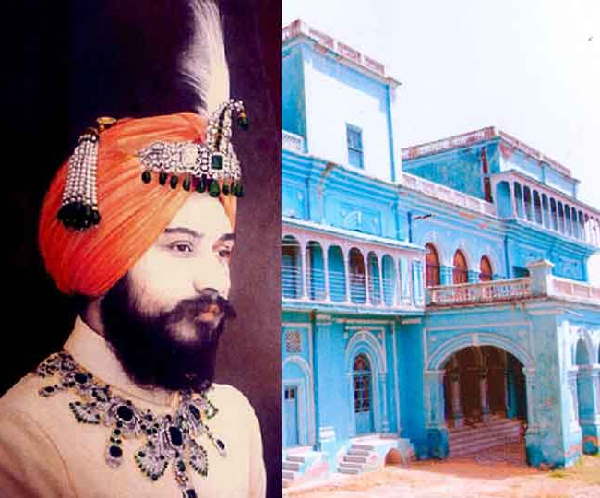
Faridkot Royal Inheritance Battle Nears End: Supreme Court Mediation Offers Hope in ₹25,000-Crore Dispute
Decades-long succession fights over princely estate heads for settlement
SC stresses mediation, status quo, and equitable division of assets
By Legal Reporter
New Delhi: May 16, 2026:
India’s Supreme Court has stepped in to mediate one of the country’s longest-running inheritance disputes — the 34-year-old Faridkot royal estate battle worth ₹25,000 crore. The case highlights critical aspects of succession law, will validity, trust structures, and mediation under Indian legal frameworks.
For insights into property ownership disputes, succession claims, and civil litigation procedures, readers may refer to the Jagmail Singh Anr vs Karamjit Singh Ors judgment which highlights how courts assess legal heir rights, documentary evidence, and contested claims in family and property-related disputes.
Key Legal Issues and Rules Highlighted
1. Validity of Wills under Indian Succession Law
- The dispute began when Amrit Kaur, daughter of Harinder Singh Brar, challenged the authenticity of her father’s 1982 will.
- District Court (2013): Declared the will in favor of Maharawal Khewaji Trust as illegal, void, and non-existent.
- Legal Principle: Under the Indian Succession Act, 1925, a will must be executed voluntarily, without coercion, and with mental capacity. Courts can strike down wills if fraud, undue influence, or lack of testamentary capacity is proven.
2. Trust Law and Property Transfer
- The will attempted to transfer vast assets to a trust.
- Courts examined whether the trust was validly constituted and whether such transfer violated heirs’ rights.
- Key Rule: Trusts must comply with the Indian Trusts Act, 1882, and cannot override statutory inheritance rights.
3. Inheritance Rights of Legal Heirs
- After the district court ruling, Brar’s daughters were declared rightful heirs.
- Punjab & Haryana High Court (2020): Modified the order to also grant a share to the family of Brar’s brother.
- Legal Principle: In absence of a valid will, property devolves upon legal heirs under Hindu Succession Act, 1956.
4. Supreme Court’s Role in Mediation
- The SC appointed Justice Rajesh Bindal (Retd.) as mediator.
- Order: Parties must maintain status quo — no possession changes, construction, or alienation of assets until settlement.
- Legal Principle: Under Section 89 of the Code of Civil Procedure (CPC), courts can refer disputes to mediation, arbitration, or conciliation to encourage amicable resolution.
5. Execution Proceedings
- Fresh litigation arose when Amrinder Singh (grandson of Brar’s brother) filed an execution application in 2025.
- Legal Principle: Execution proceedings enforce court decrees, but disputes over shares often prolong litigation.
Properties Involved
- Raj Mahal, Faridkot (14 acres)
- Qila Mubarak, Faridkot
- Faridkot House, Copernicus Marg, New Delhi
- Plot in Sector 17, Chandigarh
- Fort at Manimajra, Chandigarh
- Multiple other estates across India
FAQ: Quick Legal Understanding
Q1. Why was the will declared void?
Because the court found it was executed when Harinder Singh Brar was mentally unstable after his son’s death, raising doubts about testamentary capacity.
Q2. What happens if a will is invalid in India?
Property devolves upon legal heirs as per the Hindu Succession Act, 1956.
Q3. Can property be transferred to a trust through a will?
Yes, but only if the trust is legally valid and does not infringe upon heirs’ statutory rights.
Q4. Why did the Supreme Court order mediation?
To avoid prolonged litigation and ensure equitable division. Mediation under Section 89 CPC allows disputes to be resolved outside adversarial proceedings.
Q5. What does “status quo” mean in legal terms?
It means no party can alter possession, sell, or construct on disputed properties until the court or mediator decides.
Q6. Who are the current claimants?
Brar’s daughters and the family of his brother, Kanwar Manjit Inder Singh.
Q7. What is the significance of this case?
It demonstrates how succession disputes in royal/princely estates intersect with modern Indian inheritance law, trust law, and mediation practices.
Conclusion
The Faridkot inheritance case is a landmark in Indian succession law, showing how courts balance will validity, trust structures, and heirs’ rights. The Supreme Court’s mediation push reflects a broader judicial trend toward amicable settlements in complex property disputes, potentially ending one of India’s most high-value litigations.