
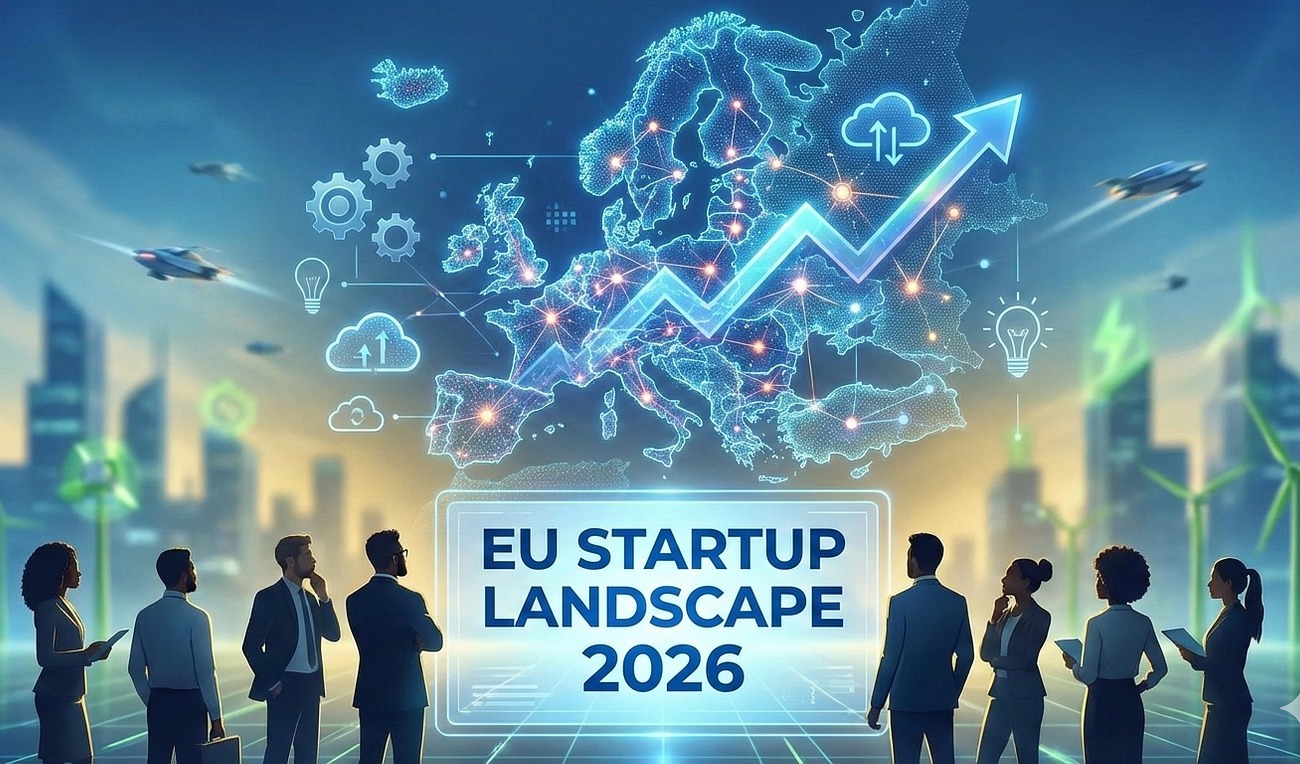
Europe’s Startup Landscape: Where Should Indian Entrepreneurs Go?
Germany, France, Nordics Lead Innovation
Eastern Europe Offers Cost Advantage but Needs Ecosystem Maturity
By Vishwas Kumar
New Delhi: April 20, 2026:
Expanding your Indian startup into Europe offers diverse opportunities, but each EU nation has unique strengths and challenges. Germany, France, Ireland, and the Nordics stand out for innovation and funding, while Southern and Eastern Europe provide cost advantages but face infrastructure gaps.
SWOT Analysis of Key EU Nations for Startups
| Country | Strengths | Weaknesses | Opportunities | Threats |
| Germany | Strong industrial base, EU market access, Berlin startup scene | High costs, bureaucracy | Industry 4.0, green tech | Regulations, strong competition |
| France | Govt support, Paris hub, talent pool | Language barrier, labour laws | AI, fintech | Strikes, slow reforms |
| Ireland | Low tax, English-speaking, EU gateway | Small market | Fintech, SaaS | Foreign dependency |
| Netherlands | Logistics, startup ecosystem | High costs | E-commerce, renewables | Housing shortage |
| Sweden & Nordics | Innovation, digital adoption | High taxes | Gaming, health-tech | Market saturation |
| Spain | Startup hubs, lower cost | Slow bureaucracy | Tourism-tech | Economic instability |
| Italy | Design, fashion | Weak funding | Agri-tech | Political instability |
| Poland & Eastern Europe | Affordable talent | Low visibility | AI outsourcing | Brain drain |
[Read all probate law judgments here. Click the link here: https://www.courtkutchehry.com/pages/blog/123-supreme-court-judgments-on-wills/]
Analysis:
Expanding into Europe is a strategic move for Indian startup where global ambitions are rising. The European Union offers a diverse landscape, but each nation presents a different mix of opportunities and challenges.
Germany remains the powerhouse of Europe. Berlin is a magnet for startups, particularly in fintech, AI, and green energy. The country’s industrial base and access to the EU’s largest consumer market make it highly attractive. However, entrepreneurs must navigate high costs and complex regulations. For Indian startups, Germany is ideal for scaling industrial-tech or sustainability ventures.
France has transformed into a startup-friendly nation with its “La French Tech” initiative. Paris is now a global hub for AI and fintech. The government provides strong support, but rigid labour laws and language barriers can slow progress. Still, for startups in luxury-tech, fashion-tech, or AI, France offers unmatched opportunities.
Ireland is a gateway to Europe, especially post-Brexit. Its low corporate tax and English-speaking environment make it appealing for Indian founders. Dublin hosts many US and EU headquarters, creating fertile ground for SaaS and fintech startups. The challenge lies in its small domestic market, but the global connectivity compensates.
The Netherlands is another attractive destination. Amsterdam’s startup ecosystem thrives on logistics, e-commerce, and renewable energy. English proficiency and excellent infrastructure make it easy for Indian entrepreneurs to integrate. However, high living costs and housing shortages are notable drawbacks.
Sweden and the Nordics are innovation leaders. Stockholm has produced unicorns like Spotify and Klarna. The region excels in gaming, health-tech, and sustainability. High taxes and small populations are limitations, but the strong digital adoption and welfare systems provide stability. For Indian startups in digital health or gaming, the Nordics are promising.
Southern Europe—Spain and Italy—offers lower costs and emerging hubs. Barcelona and Madrid are growing rapidly, especially in tourism-tech and renewable energy. Italy’s strengths lie in fashion-tech and agri-tech. However, bureaucracy and limited funding remain obstacles. These markets are best suited for startups seeking cost efficiency and niche industries.
Eastern Europe, particularly Poland, Bulgaria, and Romania, provides affordable talent and strong IT outsourcing capabilities. These nations are increasingly attractive for AI and fintech outsourcing. Yet, limited funding and weaker global visibility pose challenges. Indian startups can leverage these regions for back-end operations while maintaining customer-facing hubs in Western Europe.
In conclusion, Germany, France, Ireland, and the Nordics are best for innovation-driven startups, while Spain, Italy, and Eastern Europe offer cost advantages and niche opportunities. Indian entrepreneurs should align their expansion strategy with their industry focus: tech-heavy ventures thrive in Western Europe, while outsourcing and niche industries fit better in the East and South.
[RESEARCH RESOURCES
BUY & READ THE BOOK, WILL WRITING SIMPLIFIED, By Dr Ravinder Kumar Anand. [📘 Buy Will Writing Simplified online: Amazon | Flipkart ]
FAQs
Q1: Which EU country is best for tech startups?
Germany and France lead in AI, fintech, and industrial tech, while Sweden excels in digital innovation.
Q2: Where can Indian startups find cost advantages?
Spain, Italy, and Eastern Europe provide lower costs but weaker funding ecosystems.
Q3: Is language a barrier in Europe?
Yes, in France and Italy, but countries like Ireland, Netherlands, and Nordics have high English proficiency.
Q4: Which country offers the easiest entry for Indian entrepreneurs?
Ireland, due to its English-speaking environment and low corporate tax, is often the simplest entry point.